France has accused Russia’s military intelligence service, the GRU, of conducting a covert “silent war” against the nation for nearly a decade, with a series of cyberattacks, disinformation campaigns, and attempts to disrupt key events such as the 2024 Paris Olympics. In an unprecedented move, the French government has officially named the GRU as the mastermind behind these operations, which began as early as 2015.
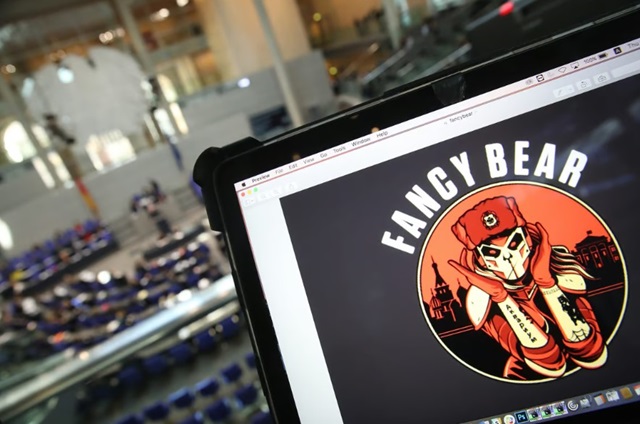
The accusations, detailed by France’s foreign ministry, include a wide range of hostile activities, from hacking into President Macron’s 2017 election campaign to orchestrating online disinformation campaigns aimed at destabilizing French society. The GRU, through a hacker group known as Advanced Persistent Threat 28 (APT28) or Fancy Bear, has been a central figure in these efforts, using cyberattacks to gather intelligence and sow distrust among the French population.
Jean-Noël Barrot, France’s Foreign Minister, spoke out against the escalating Russian interference, calling it an attempt to undermine France’s social and political fabric. “Behind these initials hides the new face of a silent war waged by Russia against France,” Barrot said in a video posted by the ministry. “At the controls are agents of the GRU, infiltrating French digital networks to destabilize our society and collect intelligence for the Kremlin.”
The GRU’s activities have intensified since 2021, targeting a wide range of French sectors, including government ministries, local authorities, aerospace, and arms industries. The French government has been bolstering its defenses against such attacks, creating the National Agency for Information System Security (ANSSI) to monitor and report on the activities of hostile states, including Russia, Iran, and China.
This heightened focus on Russia comes in the wake of growing concerns over France’s vulnerability to external influence, particularly since Russia’s full-scale invasion of Ukraine in 2022. According to leaked intelligence documents from an unnamed European state, the Kremlin has increasingly focused on France to destabilize European support for Ukraine, capitalizing on the country’s political sensitivities.
President Macron, who has long been a vocal critic of Russia, has also been personally targeted in online campaigns, with false and defamatory claims about his personal life and political affiliations spread across Europe by Kremlin-backed media, including Russia Today (RT). The French government has accused Russia of orchestrating physical stunts, such as the placement of five coffins draped in French flags near the Eiffel Tower in June 2024, which were inscribed with “French soldiers of Ukraine.”
Despite Moscow’s repeated denials of involvement, the allegations have sparked fierce debates in France. While far-right leader Marine Le Pen and left-wing politician Jean-Luc Mélenchon have dismissed Macron’s claims of Russian interference, accusing him of exaggerating the threat, the French government remains resolute in its stance. Macron, who once sought a diplomatic rapport with President Putin, has since taken a stronger, more hawkish position on Russia, particularly in relation to the ongoing war in Ukraine. He recently emphasized the need for Western allies to apply more pressure on Russia in the coming days, urging for tougher measures.
France’s response to Russian interference highlights the growing tensions between the two nations, as well as Europe’s broader struggle to defend against cyber and disinformation warfare. As the 2024 Olympic Games approach, French authorities remain on high alert for further attempts to destabilize the country’s political and social landscape, underscoring the ongoing “silent war” that Russia is waging on the international stage.