by Luxman Aravind
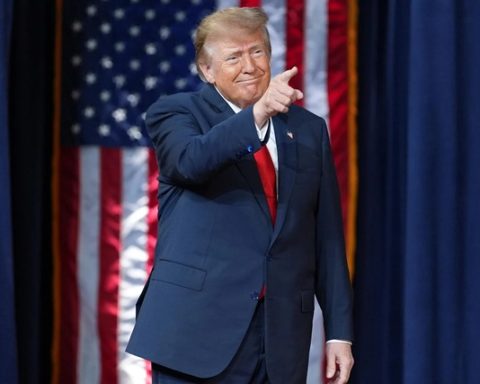
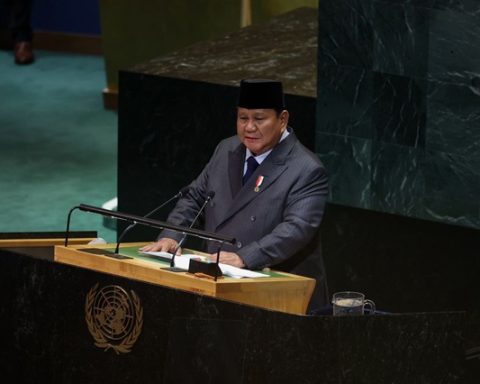
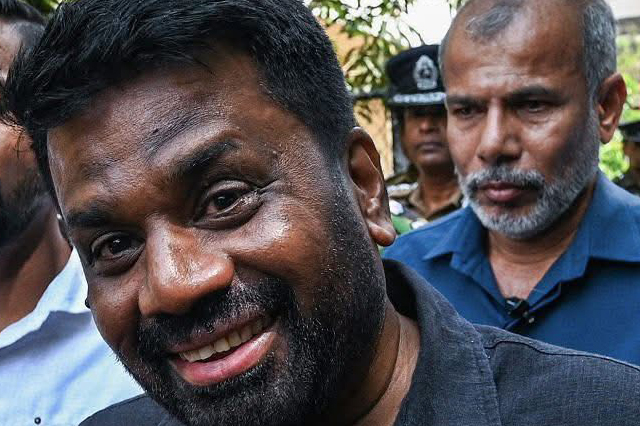
Since assuming office as Sri Lanka’s ninth executive president, Anura Kumara Dissanayake has completed a brief but symbolically charged seven months. In this short period, two deeply evocative images have surfaced, igniting concern and speculation about his emotional/mental state. The first, from the recent May Day rally, shows the president with his hand raised skywards, his gaze fixed into the heavens—a gesture evocative not of triumph, but of entreaty, almost supplication. The second image, captured upon his return from Vietnam and immediately after casting his ballot during the local government elections yesterday, on 6 May 2025, portrays him staring into the camera with an intensity bordering on the spectral—hollow, strained, and detached. These moments, isolated perhaps, yet cumulatively resonant, demand far more than superficial commentary. They compel a national conversation about leadership and mental health—topics too often cloaked in taboo.
We are told the president sleeps scarcely four hours each night. He neither smokes nor drinks, a picture of outward discipline. Yet we know nothing of his inner rituals—his methods of psychological restoration, the practices, hobbies or spaces that nourish his mental resilience. Does he walk alone by the ocean? Does he confide in a therapist or spiritual advisor? Or does he carry his burdens silently, with no valve for release? In this void of information, the public has a right to be concerned. For the nation cannot afford to be governed by a man whose inner architecture may be silently collapsing.
Leadership, especially in times of national economic hardship and political volatility, is a crucible of stress and exhaustion. But when this pressure goes unchecked—when stoicism is mistaken for strength and silence for composure—the result is often emotional implosion. The annals of history, both ancient and contemporary, are littered with such cautionary tales.
Consider Marcus Aurelius, Roman emperor and philosopher, who during the Antonine plague and Germanic invasions governed a crumbling empire while writing a journal to himself—the Meditations—not as propaganda but as a survival mechanism. “At dawn, when you have trouble getting out of bed, tell yourself: I have to go to work—as a human being.” In another reflection, he writes, “You have power over your mind—not outside events. Realise this, and you will find strength.” These were not the words of a man drunk on imperial power, but of one trying to hold onto his mind while holding up a dying world.
Closer to our political ancestry is the story of Abraham Lincoln, a man revered not only for saving the American Union but for doing so while plagued by what modern psychiatry would diagnose as clinical depression. His law partner, William Herndon, recalled how “melancholy dripped from him as he walked.” After the death of Ann Rutledge, Lincoln confessed in a letter, “I am now the most miserable man living. If what I feel were equally distributed to the whole human family, there would not be one cheerful face on the earth.” His suffering, far from weakening his leadership, deepened it. His depression endowed him with empathy, restraint, and moral gravitas—virtues so often lacking in times of war.
Winston Churchill, a man remembered for rallying Britain against the Nazi onslaught, was similarly stalked by what he called his “black dog.” His physician, Lord Moran, in The Struggle for Survival, documented Churchill’s emotional collapses, suicidal ideation, and mood vacillations. Churchill, however, found lifelines: painting, naps, long solitary walks, and structured rest. He knew that to carry a nation’s burdens, one must care for the shoulders doing the lifting. “If you’re going through hell, keep going,” he once said—a quip not borne of flippancy but of grave inner travail.
These leaders did not hide their suffering behind the armature of power. They integrated it. They allowed vulnerability to become the source of their wisdom, not its enemy.
President Dissanayake, however, seems perilously close to following the opposite course. His public image has grown increasingly severe, inward-looking, and withdrawn. The optics of boarding a private jet and disembarking onto a red carpet—especially for a leader known for his anti-elitist roots—only amplify the sense of psychic dissonance. One does not require a psychiatric diagnosis to recognise the aesthetic of burnout or the haunted gaze of a man fraying at the edges.
We must also confront the dark underbelly of political culture, where overwork is glorified and self-erasure is framed as dedication. The notion that sleep deprivation, the absence of leisure, and emotional invulnerability are virtues, is an archaic and dangerous myth. Cognitive science tells us otherwise. Chronic sleep loss impairs judgement, increases anxiety, diminishes empathy, and heightens the risk of major depressive episodes. Leaders are not exempt from biology. The human brain, even the one that wears a crown, must rest and renew.
Robert F. Kennedy, following the assassination of his brother, was so overwhelmed by grief he would cry himself to sleep. Evan Thomas notes in his biography that Kennedy’s emotional candour eventually translated into political courage—marching through the ghettos of Mississippi and speaking to the pain of the disenfranchised. Similarly, Theodore Roosevelt, after losing his wife and mother on the same day, wrote in his diary, “The light has gone out of my life.” He then withdrew into the Dakota Badlands, engaging in physical labour and solitude before returning stronger.
In the contemporary era, Barack Obama, under the weight of racial scrutiny and global crises, built his life around emotional preservation. “You’ll see I wear only grey or blue suits… I don’t want to make decisions about what I’m eating or wearing. Because I have too many other decisions to make.” His discipline extended to psychological economy—minimising trivial decisions to conserve emotional energy.
Jacinda Ardern of New Zealand, perhaps the most humanly transparent modern leader, resigned at the height of her popularity, stating, “I no longer feel I can do the job justice… I am human.” In doing so, she did not abdicate responsibility; she redefined it. Her resignation was not a failure, but a moral lesson: governance must be sustainable, and sustainability begins with mental health.
In contrast, when leaders suppress their decline, catastrophe often ensues. Richard Nixon’s paranoia and cognitive instability during Watergate stemmed partly from emotional implosion. Nicolas II of Russia became emotionally paralysed in the face of revolution. Even King Saul of the Hebrew Bible suffered psychological collapse, swinging between manic confidence and homicidal despair, a trajectory that ended in national disarray and personal tragedy.
President Dissanayake is not at that point. But the warning signs are enough to merit concern. If he is indeed approaching or in the early stages of emotional disintegration, it would not diminish him to acknowledge it. It would ennoble him. Leadership is not the performance of invincibility. It is the art of resilience, and resilience demands pause, reflection, and repair.
Let it be stated plainly: a nation has the moral right—and indeed the constitutional obligation—to ensure its head of state is not only physically fit but mentally sound. This is not voyeurism. It is democratic hygiene. The health of the leader is the health of the state. Just as we demand transparency about corruption or constitutional reform, so too must we demand openness about cognitive and emotional wellness.
Let us not delay until whispers become breakdowns. Let the president retreat if needed. Let him reflect. Let him consult those trained in psychological care. Let his advisors not shield him from this truth, but guide him towards it. The republic is not served by stoic decay. It is served by renewal. As Marcus Aurelius observed, “The impediment to action advances action. What stands in the way becomes the way.” Let the current burden be not the tombstone of President Dissanayake’s promise, but the gateway to his maturation as a leader of deeper conscience and deeper care.
This presidency—so long-awaited, so hard-won by a movement that promised incorruptible change—must now pause and confront its own inner fractures. President Dissanayake must recognise that fear of losing power, anxiety over perception, and internal insecurity—especially regarding his English proficiency in diplomatic spheres—are not personal failings but political vulnerabilities. These can and will be exploited if left unaddressed.
Leadership on the international stage requires more than ideological purity; it demands psychological poise. If the president feels diminished in rooms where English is spoken fluently, or where protocol masks condescension, then he must either find trusted translators, fortify his confidence, or adjust the setting. Pretending the vulnerability does not exist will not protect him; it will expose him further. The era of national leadership that prioritises national dignity must also accommodate personal honesty. No revolutionary survives long if he becomes captive to his own shame.
Equally urgent is the growing suspicion that certain individuals now embedded in his inner circle are not allies but opportunists. The appointment of the niece of a well-known deal-maker from the time of Chandrika Bandaranaike’s regime as ambassador to a Middle Eastern country, along with the inexplicable closeness of self-proclaimed economists—some of whom have a documented history of deception—are not merely embarrassing incidents. They are existential threats. These people do not serve the vision of the JVP or the hopes of the electorate; they serve themselves. They feed on the president’s mental strain, cloaking their manipulation in jargon and flattery. If left unchecked, these actors will reduce this presidency to a cautionary tale.
The JVP, a party forged in fire and sacrifice, must urgently re-examine this environment before it degenerates further. Loyalty to the leader must now mean intervening before implosion—not applauding toward ruin. Dissanayake does not need to be perfect, but he must be protected—from his enemies, yes, but above all, from those who claim to be his friends.