by Our Correspondent in London
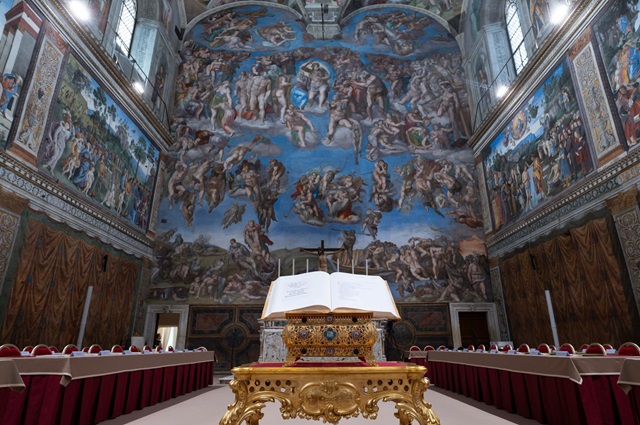
The Sistine Chapel, with its awe-inspiring Renaissance frescoes, serves as the majestic stage for the Catholic Church’s most sacred ritual: the election of a new pope. Yet, beneath the sacred decor, conclaves have long been arenas of ruthless political maneuvering, espionage, and human drama that have shaped the papacy over centuries.
The term “conclave” originates from the Latin cum clave, meaning “with a key,” reflecting the practice of locking away the cardinal electors until they reach a decision. This tradition began in the 13th century, notably after the protracted election of Pope Gregory X in 1271, which lasted nearly three years. Frustrated by the delay, local authorities in Viterbo resorted to drastic measures, including reducing the cardinals’ food rations and even removing the roof of the palace to hasten a decision. In response, Pope Gregory X formalized the conclave procedures in 1274, mandating the seclusion of cardinals to expedite future elections.
Despite these measures, conclaves have often been arenas for political maneuvering. The 1492 conclave, for instance, saw Cardinal Rodrigo Borgia ascend to the papacy as Alexander VI amid allegations of simony, where votes were allegedly bought with promises of lucrative positions and gifts. European monarchs, particularly from France, Spain, and Austria, claimed the jus exclusivae, or the right to veto papal candidates, a practice that persisted until it was formally abolished by Pope Pius X in 1904.
Espionage was rampant, with cardinals often bringing attendants who acted as spies, relaying information to external powers. Messages were smuggled in and out, sometimes hidden in food deliveries, despite the supposed seclusion. Betting on the outcome of conclaves was also widespread, with bookmakers seeking information from anyone with access to the proceedings, including cooks and servants.
In contemporary times, the Vatican has implemented stringent measures to preserve the sanctity and secrecy of the conclave. Cardinals are housed in the Domus Sanctae Marthae and are prohibited from using electronic devices. Signal jammers are employed to prevent unauthorized communications. Meals are simple and monitored to prevent any form of clandestine messaging, a practice dating back to concerns over poisoning and information leaks.
The iconic smoke signals from the Sistine Chapel chimney continue to inform the world of the conclave’s progress: black smoke indicates no decision has been reached, while white smoke announces the election of a new pope. This tradition, combined with the rich history of the conclave, underscores the enduring blend of sacred ritual and human complexity that defines the selection of the leader of the Catholic Church.