


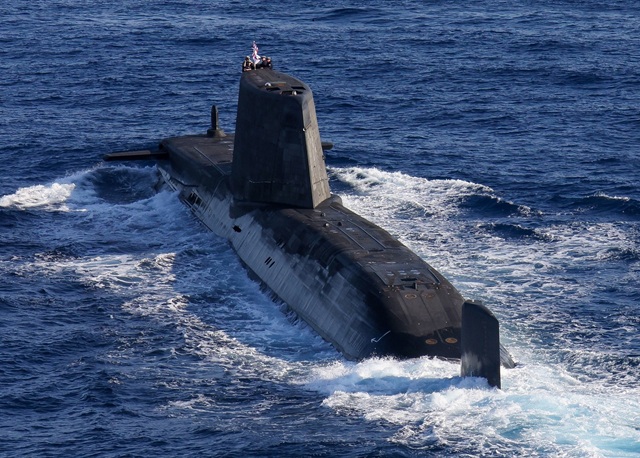
The UK government is set to embark on one of its most ambitious military rearmament programmes in decades, with Prime Minister Sir Keir Starmer announcing plans to construct up to 12 new attack submarines as part of a sweeping strategic defence review. The initiative marks a significant shift in Britain’s defence posture, moving the country towards what officials describe as a “warfighting readiness” footing.
According to the Financial Times, the prime minister will unveil the programme on Monday during the official launch of the long-awaited Strategic Defence Review (SDR). The new submarines, conventionally armed and nuclear-powered, are expected to be delivered by the late 2030s, replacing the aging Astute class fleet. This effort is a cornerstone of the trilateral Aukus partnership between the UK, Australia, and the United States.
Alongside the submarine expansion, the government has pledged £1.5 billion to construct at least six new munitions factories and committed to procuring up to 7,000 domestically-built long-range missiles. Investment will also target cyber defence, high-tech warfare capabilities, and the integration of artificial intelligence into military operations.
Defence Secretary John Healey, speaking ahead of the announcement, acknowledged challenges in achieving the government’s military spending goals. While Starmer aims to raise defence expenditure to 3% of GDP in the next parliament, Healey would not confirm whether Chancellor Rachel Reeves has guaranteed funding for that ambition. The current commitment is to increase the budget to 2.5% of GDP by 2027.
Healey also admitted that the army continues to struggle with recruitment and retention, describing a “15-year recruitment and retention crisis.” The army remains below its target strength, with numbers hovering around 71,000—roughly 2,000 short of the goal.
The SDR, which Starmer commissioned last year, was led by former NATO secretary-general Lord George Robertson, with input from former U.S. National Security Council Russia adviser Fiona Hill and retired General Sir Richard Barrons. Their report, finalized in March, urges the UK to prepare for a world of growing threats, particularly from adversaries like Russia and China, and to shift focus from expeditionary operations to home defence and cyber warfare.
In a recent visit to a Vanguard-class submarine off the coast of Scotland, Starmer and Healey highlighted the symbolic and strategic importance of submarine deterrence. While neither confirmed reports that the UK is considering purchasing U.S.-made fighter jets capable of firing tactical nuclear weapons, Healey did not deny the speculation when pressed by the BBC.
The opposition has responded with skepticism. Shadow Defence Secretary James Cartlidge said the government’s pledges should be treated “with a pinch of salt” unless they are backed by solid financial guarantees.
As the UK prepares to modernise and expand its defence capabilities, Starmer will argue that the investment will not only enhance national security but also support domestic industry and create jobs across the country.









