


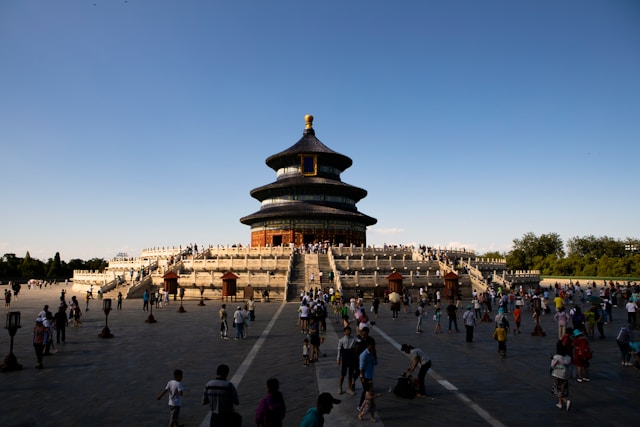
Editorial Note: The following column is based on a presentation delivered by Wu Ruoshan, Dean of the New Era Cultural Tourism Research Institute in Beijing, China on China-Inspired Strategies for Building World-Featured Tourist Cities at the China–Sri Lanka–Maldives Tourism Forum, held in Colombo on 16 June 2025.
In the contemporary epoch, where globalisation inexorably reshapes both cultural topographies and economic imperatives, the cultivation of world-class tourist cities has emerged not merely as a sectoral ambition but as an emblematic pursuit of national identity, soft power projection, and urban modernity. Nowhere is this more vividly demonstrated than in the developmental trajectory and strategic recalibrations underpinning China’s ascendancy in the global tourism arena. The metamorphosis of its urban locales from resource-laden hinterlands to experiential epicentres of transnational allure is a narrative dense with ideological, infrastructural, and cultural palimpsests. Embedded within this progression is a confluence of statecraft, market mechanisms, and socio-spatial innovations that collectively challenge Eurocentric orthodoxies of tourism urbanism.

The trajectory of China’s tourist city evolution is neither linear nor monolithic. It has unfurled through successive paradigms that mirror the broader arc of China’s economic liberalisation and sociopolitical recalibration. The initial phase, anchored between 1978 and 1999, was dominantly resource-driven—an era in which the commodification of natural landscapes and heritage sites functioned as the foundational logic for tourism development. However, this period was marked by a rudimentary conceptualisation of tourism as an extractive enterprise, largely devoid of nuanced engagements with visitor experience or urban synergies. As China’s market mechanisms matured, the second phase (2000–2014) witnessed a market-driven optimisation of tourism practices, characterised by institutional restructuring, infrastructural modernisation, and an incipient appreciation of destination branding. Yet, it is the third and ongoing phase—from 2015 onwards—that heralds a paradigmatic rupture: a pivot towards immersive, experience-centric innovation wherein urban environments are not merely backdrops but protagonists in the touristic encounter.
This contemporary phase epitomises a conscious reframing of tourism from a transactional activity into a cultural praxis imbued with affective resonance and participatory spatiality. It is within this context that the Five-Dimensional Competitiveness Model acquires salience—not as a theoretical abstraction but as an operative matrix for urban-touristic transformation. At the epicentre of this model is the primacy accorded to policy leadership. China’s top-down strategic design—manifested through centralised planning, regulatory harmonisation, and interdepartmental synchrony—functions as a gravitational core that orchestrates tourism development with surgical precision. The leverage effect of such policy coherence is evident in the seamless alignment between macroeconomic goals and tourism imperatives, exemplifying the state’s capacity to reengineer urban environments as vessels of national aspiration.
Complementing policy acumen is the dimension of supply capacity, which elucidates a shift from mere augmentation of attractions to the curatorship of experiential milieus. China’s tourist cities have increasingly embraced scenario innovation, orchestrating multisensory, narrativised encounters that dissolve the boundary between observer and environment. This is most conspicuously evident in the emergence of urban exploration models and the valorisation of museum-centric tourism, where spatial heritage is not passively preserved but dynamically activated. Such initiatives exemplify the aestheticisation of everyday spaces and their reconstitution into semiotic landscapes of memory, identity, and performativity. Indeed, the synergetic embedding of hospitality into urban planning gestures towards an anthropocentric reimagining of tourism—one that valorises the cohabitation of residents and visitors within convivial, dialogic spaces.
Equally critical is the infrastructural substratum of accessibility, bifurcated into the macrological and micrological domains. The former pertains to the extensive integration of railways, highways, and airports that weave a national tapestry of mobility, effectively situating China’s tourist cities within a global cartography of connectivity. The latter, micro-transport, represents an incursion of digital intelligence into the quotidian rhythms of mobility—manifest in smart traffic systems, shared mobility platforms, and app-based navigational aids. This dual-level approach embodies a technocratic ethos that undergirds the tourist experience with predictability, efficiency, and customisation, thereby recalibrating the temporality and spatiality of travel itself.
Yet, no discussion of touristic ascendancy can circumvent the exigencies of urban livability, a concept that transcends utilitarian indices to encompass the phenomenological texture of place. Here, the benchmark effect of service standards—whether in the form of intuitive signage systems, pedestrian-friendly trails, or the improbable yet symbolically potent five-star restrooms—signals a semiotic reframing of the tourist city. These micro-interventions, while ostensibly banal, constitute the infrastructural grammar through which cities articulate their hospitable disposition. They are, in essence, the ligaments that bind the tourist to the urban corpus, rendering the city legible, navigable, and ultimately inhabitable.
Perhaps the most esoteric yet geopolitically potent dimension of China’s tourism model lies in its cultivation of global recognition through the mobilisation of cultural symbols. In a global economy saturated with homogeneous visual and experiential lexicons, the amplification of idiosyncratic cultural narratives constitutes a formidable strategy of differentiation. Cities such as Chongqing, with its “8D Magic City” branding, transcend their geographic boundedness to become imaginal constructs circulating within global media ecologies. Culinary festivals, cultural events, and curated influencer campaigns are not mere spectacles; they are strategic modalities of soft power that render the city simultaneously hyperlocal and transnational. This dialectic—of rootedness and reach—exemplifies the recalibration of cultural capital into a fungible asset within the global tourism economy.
In extrapolating from China’s paradigmatic innovations, the collaborative strategies proposed for building world-class tourist cities attain both a prescriptive and aspirational character. The first strategic thrust—strategic development planning—underscores the necessity of anticipatory governance and long-horizon visioning. In a volatile global milieu marked by pandemics, climate crises, and geopolitical flux, the capacity to envisage and architect resilient tourism futures is not merely advantageous but imperative. This calls for the enmeshing of tourism planning within broader urban and ecological planning frameworks, ensuring that tourism development is not an exogenous imposition but an endogenous evolution.
The second strategic axis—tourism standardisation—aims at entrenching quality assurance through codified practices, accreditation systems, and evaluative metrics. However, the challenge lies in avoiding the ossification of creativity and the commodification of cultural authenticity. Standardisation must not devolve into homogenisation; rather, it should function as a scaffolding that upholds excellence while permitting vernacular improvisation. In this regard, China’s nuanced approach to blending uniformity with local distinctiveness offers a cautionary yet instructive exemplar.
Finally, the integration of smart tourism technologies for operational excellence represents the apotheosis of digital modernity within the tourism sphere. Yet, the deployment of such technologies must be critically appraised for their implications on surveillance, data sovereignty, and algorithmic bias. While the frictionless experiences they engender are alluring, they also risk effacing the serendipity and unpredictability that constitute the soul of travel. Thus, a delicate balance must be struck between optimisation and openness, between control and chaos.
China’s trajectory in constructing world-featured tourist cities, then, is not merely a case study in urban-touristic development; it is a paradigmatic reframing of how cities can become ontological sites of encounter, imagination, and negotiation. By interlacing infrastructural prowess with cultural specificity, and by conjoining statecraft with experiential innovation, China offers a provocative blueprint for other nations navigating the exigencies of tourism modernity. However, it also raises profound questions about authenticity, equity, and sustainability. In the rush towards global visibility, whose voices are amplified, and whose are effaced? What ecologies are compromised in the pursuit of photogenic spectacle? And to what extent can the tourist city remain a site of pluralistic engagement in an age increasingly defined by spectacle, simulation, and commodification?
In contemplating these questions, one must acknowledge the dialectical tensions inherent in the ambition to build world-class tourist cities. They are, at once, loci of national aspiration and vectors of global integration; repositories of cultural heritage and laboratories of technocratic futurism. They are cities in the Foucauldian sense—not inert spaces, but power-saturated nodes where meaning is produced, contested, and circulated. As Asia, led by China’s formidable example, continues to reposition itself as the epicentre of global tourism dynamism, the need for critical, reflective, and ethically grounded approaches becomes ever more urgent. Tourism, after all, is not merely an economic sector—it is a modality of world-making.










