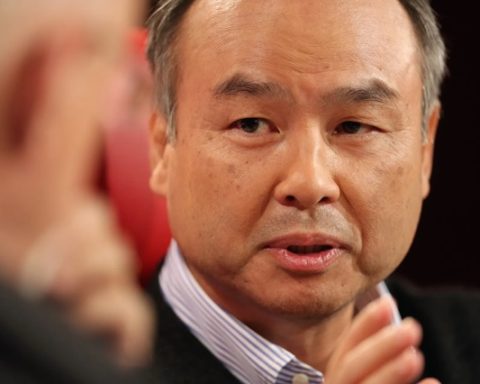
Smith, who only stepped down as FedEx’s chief executive in 2022, remained executive chairman of the company he established in 1973 with just 14 Dassault Falcon 20 jets. Over the course of five decades, he grew FedEx into a global logistics giant, with a fleet of nearly 700 aircraft and an average daily parcel volume exceeding 16 million.
Raj Subramaniam, FedEx’s current CEO and Smith’s successor, described the announcement as being made “with profound sadness and a heavy heart.” In a letter posted on the company’s website, he paid tribute to Smith as “more than just the pioneer of an industry” and “the heart and soul of FedEx.”
The concept that launched the company originated in Smith’s undergraduate days at Yale, where he wrote an economics paper proposing an overnight package delivery service. Ironically, the idea was graded poorly at the time, with his professor dismissing it as impractical.
Smith’s key innovation was the introduction of a centralised hub-and-spoke system for overnight delivery, based in Memphis, Tennessee—a location that remains the busiest hub in FedEx’s global network. The model revolutionised logistics and has since been replicated worldwide, including by rival UPS, which established its own hub in Louisville, Kentucky.
As the Financial Times reported, Smith’s entrepreneurial journey was not without its dramatic moments. In 1975, facing a critical cash shortage, he famously took the company’s last $5,000 to Las Vegas, where he won $27,000 at blackjack—just enough to cover a fuel bill and keep operations going.
In recent years, Smith remained an influential figure in both business and policy circles. A staunch believer in free markets and globalisation, he credited FedEx’s early entry into Asia, particularly China, as a decisive factor in the company’s international growth.
His military service also deeply shaped his leadership ethos. A former US Marine, Smith completed two tours in the Vietnam War, earning two Purple Hearts, a Bronze Star, and a Silver Star. Speaking at Yale in 2006, he described military leadership as “the best” training for running a business.
FedEx’s latest move under Smith’s legacy came just last month, when the company announced a new deal to deliver large packages for Amazon—reversing Smith’s 2019 decision to cut ties with the e-commerce giant over its efforts to build a competing logistics network.
Tributes poured in over the weekend. Paul Young, Mayor of Memphis, said: “When he founded FedEx, he didn’t just launch a company; he changed the way the world moves.”
Subramaniam echoed those sentiments, describing Smith as “a mentor to many and a source of inspiration to all… a proud father, grandfather, husband, Marine, and friend.”
Fred Smith leaves behind a towering legacy in global commerce—a man whose ideas not only redefined how packages are delivered, but how the world connects.