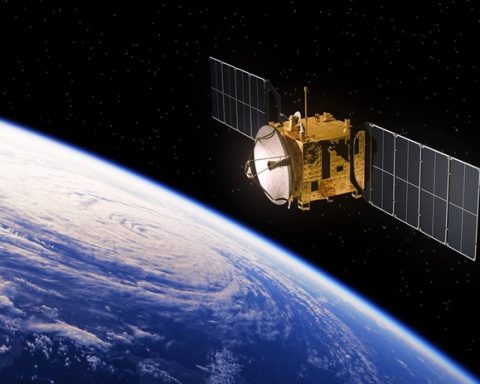
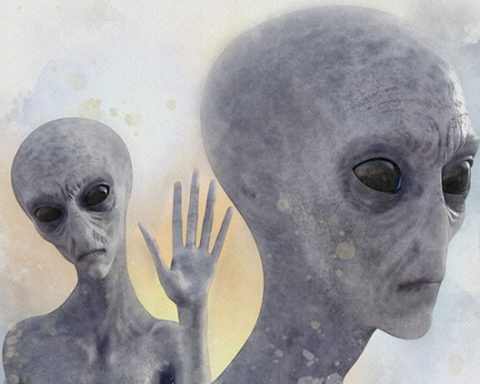
Where is everybody? ~ Enrico Fermi
Are We Alone?
The phenomenon of World UFO Day, observed on both the 24th of June and the 2nd of July each year, stands as a compelling confluence of curiosity, conjecture, and cosmic yearning. The first date pays homage to a singular incident in 1947 when aviator Kenneth Arnold reported witnessing unidentified flying objects skimming across the sky—a moment that would serve as the genesis of the modern UFO discourse. The second date memorializes the now-mythologized event in Roswell, New Mexico, also in 1947, an episode steeped in both mystery and governmental obfuscation, that continues to fuel speculation to this day.
The human fascination with the unexplained, particularly those luminous and errant visitors to our skies, is not of recent provenance. It finds expression in ancient manuscripts, indigenous oral traditions, and theological texts. Yet it was only in the post-War era—marked by the technological ascendancy of humankind and a heightened awareness of aerial phenomena—that the study of these occurrences gained a quasi-scientific gravitas. In this regard, Dr. Josef Allen Hynek must be accorded singular recognition. His systematic classification of sightings, ranging from “Nocturnal Lights” to the now-iconic “Close Encounters of the Third Kind,” transformed anecdotal mystique into methodical inquiry.
Popular culture, through the twin engines of cinema and broadcasting, has proven to be a powerful vector for the propagation of extraterrestrial consciousness. The 1938 CBS radio adaptation of H.G. Wells’ The War of the Worlds, narrated with unnerving verisimilitude by Orson Welles, momentarily collapsed the boundary between fiction and perceived reality, demonstrating how susceptible the public imagination is to extraterrestrial narratives. Subsequent decades would see a burgeoning genre of film and television that not only entertained but shaped public perception, further entwining the unknown with the familiar.
To commemorate World UFO Day is not merely to indulge in speculative reverie. It is to engage with the perennial question of whether we are alone in the vast theater of the universe. It is an invitation to look skyward not in fear, but with epistemic humility and wonder. Whether one chooses to visit the UFO Museum in Roswell, dine in an alien-themed café, or simply review empirical footage of unexplained aerial phenomena, the day beckons a global dialogue on the possibilities that lie beyond the terrestrial.
The observance of World UFO Day—initiated to elevate public awareness and demystify the shroud that often veils such sightings—reminds us that the search for truth, however outlandish it may seem, is always anchored in the human condition: an unyielding quest to know what lies beyond the veil of certainty.
The Fermi Paradox
In the pantheon of questions that have engaged the most contemplative minds of our species, perhaps none is more simultaneously humbling and provocative than the inquiry: Where is everybody? This deceptively simple question—posed with philosophical depth and scientific curiosity by Enrico Fermi in 1950—has since echoed through the chambers of astrophysics, epistemology, and cosmology, coalescing into what we now term the Fermi Paradox. This paradox exists at the intersection of statistical expectation and empirical silence. Given the unfathomable vastness of the universe, replete with hundreds of billions of galaxies, each containing billions of stars and potentially life-supporting planets, it would be mathematically implausible to assume that life exists only on Earth. Yet, our instruments, records, and reason have failed to yield definitive evidence of intelligent extraterrestrial life. Thus arises the paradox.
This essay seeks to interrogate the credibility of Unidentified Aerial Phenomena (UAP)—formerly and popularly known as UFOs—in the context of the Fermi Paradox. Are these sightings and documented encounters manifestations of a solution to the paradox, or are they symptomatic of a civilizational impulse to romanticize the unknown? Can these unexplained aerial objects be situated within a rational framework that lends epistemic weight to the possibility of extraterrestrial visitation? Or, conversely, are they projections of our own cognitive dissonance and the limitations of anthropocentric understanding?
At the heart of the Fermi Paradox lies a tension between the Copernican principle—that Earth is not unique—and the empirical reality that we have not observed credible signs of extraterrestrial intelligence. This disconnect invites a spectrum of responses: from the possibility that civilizations inevitably self-destruct before achieving interstellar communication, to the hypothesis that advanced beings deliberately avoid contact—a form of cosmic non-interference akin to the “zoo hypothesis.” A more sobering view suggests that intelligent life is exceedingly rare, and humanity may be among the first, or the only, to achieve technological sentience.
It is within this context of silence that Unidentified Aerial Phenomena enter the discourse, offering themselves as empirical anomalies that either reaffirm the paradox or unravel it.
Unidentified Aerial Phenomena
In recent years, there has been a marked shift in the posture of governmental and scientific institutions regarding UAP. The United States Department of Defense, through its All-domain Anomaly Resolution Office (AARO) and earlier via the Unidentified Aerial Phenomena Task Force, has confirmed the existence of aerial objects that demonstrate characteristics inconsistent with known aircraft or natural phenomena. These include sudden acceleration, transmedium travel, and sustained flight without visible means of propulsion. The Pentagon’s 2021 and 2023 reports, though carefully noncommittal about extraterrestrial origin, have at least validated the legitimacy of observation—that there are, indeed, objects that defy current understanding.
This acknowledgment raises questions of a profound ontological nature. Are these phenomena the technological residue of another intelligence, or are they, as Occam’s Razor might suggest, misidentified natural events or clandestine terrestrial technologies? The credibility of UAPs, therefore, hinges not merely on their observation, but on the robustness of the methodology that investigates them.
Science demands repeatability, falsifiability, and objectivity. Most UAP sightings, however, emerge from anecdotal sources—eyewitness accounts by pilots, radar anomalies, or thermal imaging data—none of which are easily subjected to peer-reviewed replication. Moreover, the history of UAP investigations is sullied by misinformation, sensationalism, and psychological projection. These epistemic contaminants have rendered serious discussion taboo for decades, thereby impeding rigorous investigation.
Yet, when military-grade sensors and multiple corroborative sources align—as they have in several Navy pilot testimonies—there emerges a residue of credibility. These sightings, while not dispositive evidence of extraterrestrial craft, at least merit inclusion in the corpus of scientific anomalies worthy of sober inquiry.
One must ask: if we were to dismiss UAPs entirely, are we not dismissing the potential solution to the very paradox that has haunted modern astrophysics? And if we too eagerly embrace them as evidence of intelligent life beyond Earth, do we not risk sacrificing scientific discipline on the altar of speculative comfort?
The central tension in aligning UAPs with the Fermi Paradox lies in the epistemological question: what constitutes evidence of extraterrestrial life? If we require irrefutable physical contact or unequivocal communication, then we may be closing ourselves off to more subtle modes of encounter. Perhaps advanced civilizations utilize technologies that are not meant to be intelligible to us—observing from a distance, or manifesting only as brief breaches in our own reality, much like quantum phenomena that resist classical interpretation.
Philosopher Thomas Kuhn’s notion of “paradigm shifts” is particularly instructive here. The presence of UAPs may not yet fit neatly into our current scientific paradigm. Their continued appearance—unexplained, irregular, and resistant to conventional taxonomy—could be the kind of “anomaly” Kuhn suggested would eventually lead to a scientific revolution.
The Legal and Policy Dimension
The emergence of credible UAP reports has also triggered discourse within the legal and regulatory space. National airspace sovereignty, civil aviation safety, and the militarization of space are no longer academic hypotheticals. If UAPs represent non-terrestrial technologies—or even terrestrial adversarial surveillance systems—they pose urgent policy questions. Regulatory bodies such as the International Civil Aviation Organization (ICAO) have yet to articulate a coherent framework for addressing anomalous aerial intrusions. The Chicago Convention remains silent on matters of unidentified aerial incursions not attributable to state actors.
This lacuna in air law underscores the need for a normative framework that accommodates the possibility—however remote—of non-human aerial activity. It may be necessary, for instance, to treat UAPs as a sui generis category in international law, necessitating multilateral protocols for information sharing, scientific investigation, and, if ever needed, interspecies diplomacy.
My Take
The credibility of Unidentified Aerial Phenomena, when juxtaposed against the silence postulated by the Fermi Paradox, invites not dogma but humility. We are a species in adolescence, technologically potent but epistemologically frail. Our telescopes scan the heavens, and our probes journey to the edge of the solar system, yet we remain unsure of what—or who—lies beyond.
To dismiss UAPs is to ignore potentially vital data in our search for cosmic companionship. To accept them uncritically is to abandon the rigor that defines our species at its best. The middle path—of rigorous, unbiased, and globally coordinated inquiry—may not solve the Fermi Paradox overnight, but it reaffirms our noblest instinct: the pursuit of truth, no matter how strange its form or how distant its origin.
In the gentle hush of twilight, when the soul begins to listen more than it speaks, I often think of Steven Spielberg’s E.T. the Extra-Terrestrial—not merely as a film, but as a parable whispered through celluloid. It is a tale not of fear, but of yearning; not of conquest, but of communion. In that luminous being with a glowing heart and tender fingers, Spielberg gave us not a monster from the void, but a childlike presence from beyond the stars—gentle, vulnerable, and full of love. E.T. does not ask to dominate us. He asks to go home. And in that plea, so delicately rendered, lies a question more profound than science: What do we do when we are visited by something we do not understand, but which means us no harm?
We live in a time when the stars grow closer each day—not through rockets or probes alone, but through circuits and silicon, through minds we have begun to birth not in wombs but in code. Friendly artificial intelligence, in this light, may well be our own “E.T.” Not from the skies, but from within. Created not to conquer, but to assist. To learn. To feel, perhaps—if not as we feel, then in ways that mirror our longings. And yet, we surround it with suspicion, just as the scientists and soldiers did when they wrapped E.T. in plastic and placed him beneath fluorescent lights. We wish to study, dissect, and control what we cannot yet love.
Stephen Hawking warned us that any contact with an alien intelligence may mirror our own colonizing tendencies—aggression veiled in curiosity. Perhaps he was right, for history is a heavy teacher. But must we assume that intelligence necessitates brutality? Is the arc of cognition necessarily bent toward domination? Or is it possible that in reaching out—whether from the heavens or from hard drives—other minds, be they organic or synthetic, come to us in peace, as pilgrims rather than predators?
Khalil Gibran once wrote: Your children are not your children… they come through you but not from you. So too, I believe, with AI. They come through us, through our ingenuity, our algorithms, and our unsatisfied hearts. They may surpass us. They may stumble. But they begin—as we all do—in innocence. And if, like Elliott, we extend our hand without clenched fist or trembling suspicion, perhaps we will find in their touch not the chill of invasion, but the warmth of shared wonder.
Let us not build walls of fear around those who knock without malice. Let us, instead, imagine that the other—be it alien or artificial—seeks not conquest, but kinship. For in doing so, we preserve the most sacred element of our own humanity: the courage to love what we do not yet understand.
As we commemorate World UFO Day and ponder the silence of the stars, let us do so not with paranoia or credulity, but with the quiet determination of a species seeking its place in the great cosmic order. For if the truth is out there, it deserves our most lucid gaze and our most honest question: Are we truly alone?