On a cloudless night in August, a lawn chair offered a simple vantage point for watching the sky. It was the peak of the Perseid meteor shower, when as many as 100 shooting stars an hour can appear. Yet only about a dozen meteors were visible. For every meteor, there were dozens of slower, less spectacular objects moving across the darkness.
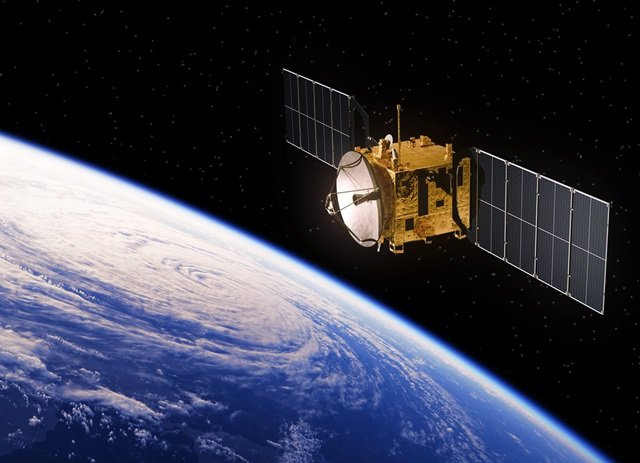
After almost a decade without properly stargazing, the change was striking. More than 18,000 active satellites are now orbiting Earth, compared with just over 1,000 a decade ago. The transformation is being driven overwhelmingly by the rapid expansion of satellite communications, with megaconstellations such as SpaceX’s Starlink providing high-speed internet to users on the ground.
The number of objects being launched into space has risen accordingly. Last year saw a record 4,510 objects launched into space, surpassing the previous peak of 2,903 in 2023. Satellites support an expanding range of activities, from GPS navigation and weather forecasting to scientific experiments and wildlife conservation. A smaller number are designed for military purposes, including satellites capable of operating close to other spacecraft.
The consequences are increasingly difficult to ignore. Astronomers have raised concerns about the effect of satellite constellations on the night sky, while the growing number of objects in orbit has intensified fears about space debris. In the most severe scenario, a runaway chain reaction known as the Kessler syndrome could cause cascading collisions, producing a cloud of debris so dense that launching rockets would become impossible and effectively trapping humanity on Earth.
Yet the current satellite population may soon appear modest compared with what is being proposed.
There are approximately 16,500 active satellites in low Earth orbit as of September 2026, according to the latest figures from CelesTrak’s catalogue. That number is substantial but, in the context of the available space, remains manageable. On a typical day, between 10,000 and 20,000 aircraft can be in the sky at any one time, despite operating at far lower altitudes.
The next phase of the space race, however, could dramatically alter that balance.
Elon Musk, whose SpaceX controls two-thirds of all active satellites through Starlink, has applied to launch one million satellites intended to provide processing power for artificial intelligence. The proposal would place computing infrastructure in orbit rather than on Earth, using the near-constant availability of solar energy and the vast physical space above the planet.
SpaceX’s filing with the US Federal Communications Commission describes the proposal as the “first step towards becoming a Kardashev II-level civilization”. The concept comes from the Kardashev scale, devised in the 1960s by a Soviet astronomer to measure civilisations according to the amount of energy they can harness.
A Type II civilisation, according to the scale, would be capable of harnessing the entire energy output of the Sun. Musk has argued that the electricity required to power artificial intelligence cannot be supplied by terrestrial infrastructure without imposing hardship on communities and the environment. Moving energy-intensive computing into space, he says, could provide an alternative by directly harnessing solar power.
But humanity remains far from such a civilisation. Earth has not yet reached Type I, which would involve harnessing the available energy of a single planet, including sources such as geothermal and wind power. An author of a 2023 study estimating Earth’s position on the Kardashev scale recently told CNN that reaching Type I would likely take millennia unless a major breakthrough, such as nuclear fusion, changed the trajectory.
The scale of Musk’s ambitions nevertheless extends far beyond the satellites themselves. SpaceX has unveiled plans for a $100 billion rocket launch facility in Louisiana to support the proposed million-satellite constellation. The company’s largest complex yet would be more than eight times the size of Manhattan. Construction is due to begin next year and, according to SpaceX President Gwynne Shotwell, the facility would be capable of launching thousands of Starship rockets each year.
Each Starship rocket is expected to be capable of delivering 200 ton to orbit, while SpaceX’s FCC filing sets a target launch cadence of one rocket every hour. That would represent a dramatic acceleration from the present global pace. A recent analysis of the current space race found that, at present, one rocket leaves Earth roughly every 29 hours.
The implications of such an increase extend beyond the companies building the spacecraft. A rapidly expanding population of satellites would make low Earth orbit more congested, while the launch activity itself would produce a growing accumulation of objects and debris.
“Reaching orbit is no longer simply a question of budget and engineering. The harder problem is what we leave behind,” Dean Sladen, an aerospace engineer at precision engineering firm Accu Components, told The Independent.
Sladen warned that debris could remain for centuries, while the environmental consequences of increasing launch activity remain poorly understood. He called for an international coordination framework and argued that sustainability should be treated as a design requirement rather than an afterthought.
The pressure is not coming from SpaceX alone. Google has also announced plans for space-based data centres intended to expand computing capacity for artificial intelligence. Its Project Suncatcher is expected to launch its first prototype satellites early next year.
The concept has received political backing in the United States. Donald Trump has signed an executive order intended to enable 1,000 rocket launches each year on US soil, roughly five times the current number.
The arithmetic of the proposed expansion is stark. If every launch can carry dozens of satellites, a space-based computing infrastructure could put enormous numbers of additional objects into orbit within a relatively short period.
For the companies involved, the attraction is clear: space offers solar energy, physical room and a potential new location for the computing infrastructure demanded by artificial intelligence. For astronomers and others concerned about the night sky, the consequences are less straightforward.
The night sky has long been one of the few environments that remained largely beyond human infrastructure. That is changing rapidly. Satellites already cross the field of view during meteor showers, and their numbers are increasing at a pace that would have seemed extraordinary only a decade ago.
If the proposed constellations materialise, the distinction between the natural and technological night sky could become increasingly difficult to maintain. Moving points of light may become so numerous that the stars themselves compete for attention.
The question is no longer simply how many satellites humanity can launch. It is what kind of sky it wants to leave behind.
A decade from now, another observer lying back beneath a meteor shower may see the same stars and the same meteors. But if the current plans proceed, there could be vastly more machines crossing the darkness between them. The shooting stars may still be there. They may simply become the sideshow.