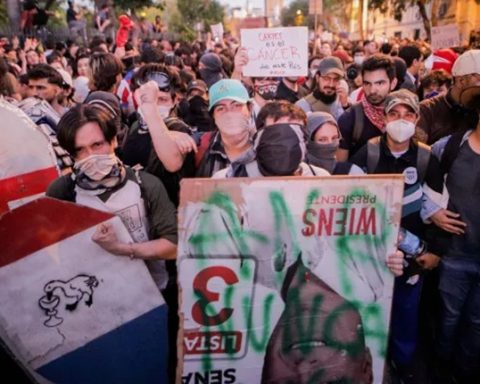
India’s effort to strengthen its water security against China is generating a domestic crisis along its strategically sensitive northeastern frontier. On October 23, 2026, protests against the proposed 11,200-megawatt Siang Upper Multipurpose Project (SUMP) in Arunachal Pradesh escalated into clashes, arson and attacks on government-linked facilities, exposing tensions between national-security priorities and indigenous rights.
According to India Today’s October 24 report, police used tear gas during demonstrations, with four women reportedly injured. Subsequent violence targeted an office of the National Hydroelectric Power Corporation (NHPC), police facilities and properties associated with political figures.
By October 27, police had reported 26 apprehensions, including five juveniles, while additional security deployments intensified concerns over the handling of dissent.
The confrontation raises a fundamental question: can India address external water-security vulnerabilities without undermining political trust among communities whose ancestral lands may bear the consequences?
China’s Mega-Dam and India’s Strategic Calculations
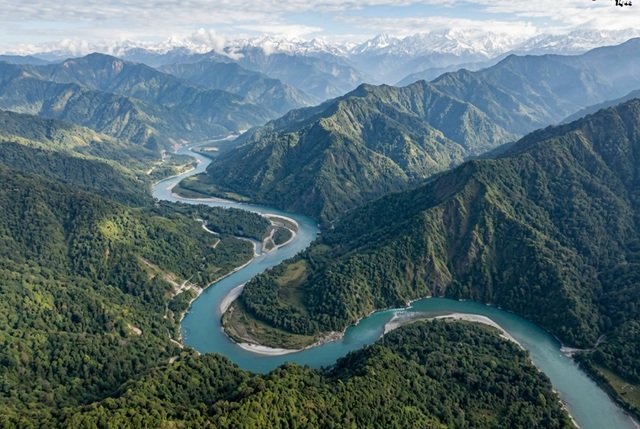
The Siang originates in Tibet as the Yarlung Tsangpo before entering Arunachal Pradesh and joining the Brahmaputra river system, which eventually flows into Bangladesh.
On July 19, 2025, China formally launched construction of a massive hydropower complex on the lower Yarlung Tsangpo. Comprising five cascade hydropower stations, the project carries an estimated investment of 1.2 trillion yuan, approximately $168 billion.
Its upstream location has heightened Indian concerns about river-flow regulation, flood risks and limited hydrological information.
New Delhi presents the proposed Siang dam partly as a strategic response.
The project envisages 11,200 MW of electricity-generation capacity. On October 5, Arunachal Pradesh Deputy Chief Minister Chowna Mein cited approximately 9.2 billion cubic metres of proposed live storage, arguing that the reservoir could regulate downstream discharge and mitigate flooding.
However, these remain projected benefits rather than demonstrated capabilities.
Actual effectiveness would depend on hydrological modelling, reservoir operations, seasonal flows and geological conditions. Storage capacity alone cannot establish whether the dam could adequately counter disruptions originating upstream in Tibet.
Independent technical assessments are therefore essential before strategic benefits are treated as assured.
Indigenous Resistance and the Question of Consent
For Arunachal Pradesh’s indigenous Adi communities, the Siang is more than an energy resource.
It sustains agriculture, fisheries, livelihoods and cultural traditions rooted in ancestral relationships with the surrounding landscape.
Residents fear that a massive reservoir could submerge settlements, displace families and permanently alter their environment.
According to Mongabay India’s October reporting, opponents have raised concerns that 27 villages, including areas surrounding Yingkiong, could face submergence. The precise displacement footprint remains unconfirmed pending project assessments.
Opposition, however, is not uniform.
Some indigenous organisations reject the dam because of anticipated displacement and ecological damage. Others emphasise halting preliminary surveys, withdrawing security deployments, releasing detained activists and ensuring meaningful consultation.
These concerns overlap but are not identical.
The government maintains that surveys assess technical viability and do not constitute construction approval. Chief Minister Pema Khandu has stated that environmental, social and statutory assessments would precede any final decision.
Yet residents fear that permitting surveys could initiate an administrative process increasingly difficult to reverse.
The dispute therefore concerns not only technical feasibility, but whether affected communities can influence decisions before major commitments are made.
October Protests Expose a Governance Crisis
Tensions intensified following arrests, security deployments and efforts to facilitate pre-feasibility surveys.
The Indian Express reported on October 13 that detentions and security deployments had deepened opposition.
The October 23 shutdown subsequently escalated into clashes and attacks on public facilities.
Police accused demonstrators of violence and property destruction, while protest organisations alleged excessive force and demanded accountability.
These competing claims require independent examination. Violence against individuals and public property warrants accountability, but it does not invalidate peaceful opposition or underlying community grievances.
Following the unrest, approximately 250 Rapid Action Force personnel were deployed.
Security measures may restore order, but cannot resolve disputes over consultation.
Sustained resistance also creates practical obstacles. Surveys, environmental assessments, land acquisition and rehabilitation planning depend partly on cooperation with affected communities.
Even a technically viable project could face delays and additional costs if public confidence deteriorates.
The Contradiction in India’s Water Diplomacy
The Siang dispute exposes a tension in India’s approach to water security.
New Delhi has repeatedly sought greater transparency from China concerning upstream hydropower development, hydrological data and potential downstream consequences.
These demands address legitimate concerns about shared water resources.
Yet comparable principles of transparency and accountability matter when India proposes infrastructure affecting its own indigenous communities.
The situations are not legally interchangeable. International obligations governing transboundary rivers differ from domestic protections and consultation procedures.
Their shared governance principle, however, is that decisions exposing communities to significant environmental and economic consequences require credible information and meaningful engagement.
India’s strategic concerns about China do not remove the need for domestic consultation, environmental scrutiny and safeguards for affected residents.
Nor should opposition to a particular dam automatically be equated with opposition to national security.
A More Credible Path to Water Security
India’s immediate priority should be restoring dialogue while independently assessing the project’s technical, environmental and social implications.
Authorities should make feasibility findings accessible, examine seismic and displacement risks, and engage affected communities through recognised traditional Adi institutions before advancing major decisions.
Transparent procedures could address concerns that preliminary surveys might predetermine construction.
India also needs sustained diplomatic engagement with China over hydrological information, upstream operations and emergency communication. Bangladesh, as a downstream country, has a direct interest in effective Brahmaputra basin management.
These measures would not eliminate uncertainty surrounding China’s hydropower development. They could, however, reduce the risk of India’s response generating additional instability within its own territory.
India’s proposed Siang dam may strengthen its ability to manage water-security risks originating in China. Yet without independently demonstrated benefits and meaningful participation by affected indigenous communities, a project intended to enhance national security could deepen insecurity within India’s own borderlands. Lasting water security requires protecting both the river system and the people whose future depends upon it.