As the BRICS Summit takes place in Rio de Janeiro, the growing global weight of the bloc is clearer than ever. Comprising Brazil, Russia, India, China, South Africa, and the newly admitted members Saudi Arabia, Egypt, the United Arab Emirates, Ethiopia, and Iran, BRICS has emerged as a strategic alliance of Global South nations with increasing economic and political influence. Together, these eleven countries account for 48.5% of the world’s population, 36% of the Earth’s land area, 40% of global GDP in purchasing power parity, and 21.6% of international trade, according to data from TradeMap and the World Bank.
Brazil’s engagement with the group continues to deepen. In 2024 alone, the country’s trade flow with BRICS nations reached US$210 billion, representing 35% of Brazil’s total trade. Exports totaled US$121 billion while imports from the group stood at US$88 billion. In the previous year, BRICS countries invested roughly US$51 billion in Brazil, according to the Central Bank. Speaking at the opening of the BRICS Business Forum on July 5, President Luiz Inácio Lula da Silva underscored the economic strength and cohesion of the group. He noted that while the global economy expanded by 3.3% in 2024, BRICS countries grew at an average rate of 4%, and emphasized that the pace would accelerate this year. Lula pointed to BRICS’ potential to lead a new model of development rooted in sustainable agriculture, green industry, resilient infrastructure, and the bioeconomy. Brazil alone exported US$71 billion in agribusiness products to BRICS, and the bloc collectively holds 33% of the world’s arable land and produces 42% of global agricultural output.
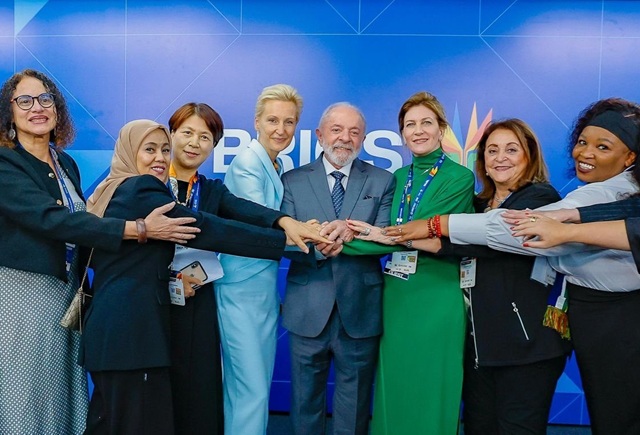
Despite these achievements, BRICS still faces serious structural challenges, particularly regarding gender equity in trade and entrepreneurship. On July 4, the BRICS Women’s Business Alliance convened in Rio to encourage female entrepreneurship and expand women’s roles in the economy. Lula acknowledged these efforts in his address, applauding the Alliance’s work and emphasizing that expanding women’s participation in the labor market not only promotes equality but also boosts productivity and accelerates growth.
However, the data reveals persistent inequalities. According to the World Trade Organization, just 15% of internationally active companies are led by women. The Women Entrepreneurs Finance Initiative (WE-FI) reports that only one-third of small and medium-sized businesses globally are led by women, and 70% of these face major hurdles in accessing credit, training, and support networks. Within the BRICS countries, the gender gap is even more stark. In India, fewer than 1% of women are formal entrepreneurs, while in South Africa, only 22% of companies are led by women. These figures reflect deeper issues tied to informality, cultural norms, and limited access to financial services. In Brazil, recent data from the Ministry of Development, Industry, Commerce and Services shows some improvement. Between recent years, female participation in Brazilian exporting firms rose from 29.2% to 31.8%, and in importing firms from 32.5% to 34.7%. Still, only 14.5% of Brazil’s exporting companies are majority female-owned, and a mere 2% of the country’s total exports come from women-led businesses.
While BRICS consolidates its position as a major economic bloc with impressive growth and influence, achieving its full potential will depend on addressing these internal disparities. President Lula’s emphasis on inclusion, peace, and cooperation points to a vision for development that goes beyond economic metrics. For BRICS to serve as a model for global progress, it must ensure that the opportunities it generates are shared by all—especially the women who continue to face systemic barriers in the world of business and trade.