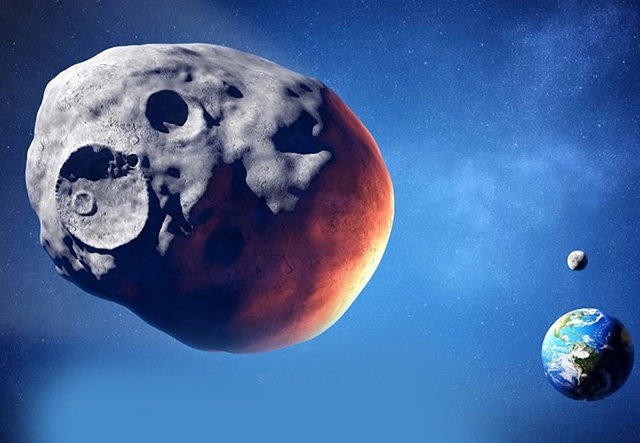
In late December 2024, the discovery of asteroid 2024 YR4 triggered a flurry of activity among astronomers and planetary defence experts worldwide. The asteroid was first detected on 27 December—crucially, two days after it had already made its closest approach to Earth—highlighting a gap in early detection capabilities. The fact that it had slipped past unnoticed initially sent shockwaves through the scientific community, underscoring how easily potentially hazardous objects might evade observation. This close shave was widely reported in the media, with MIT Technology Review providing in-depth coverage of the unfolding events and the international efforts to track and assess the asteroid’s threat.
The International Asteroid Warning Network (IAWN), an organisation endorsed by the United Nations to coordinate planetary defence, swiftly alerted governments and space agencies. As the asteroid faded rapidly from view, astronomers scrambled to gather as much observational data as possible. Karen Denneau, part of the University of Hawaii’s ATLAS (Asteroid Terrestrial-impact Last Alert System), received urgent calls from NASA’s Planetary Defense Coordination Office to mobilise observatories worldwide in a race against time. However, tracking 2024 YR4 was challenging; by the time of discovery, it was already retreating into the darkness of space, making it increasingly faint and difficult to monitor.
The urgency of the situation soon became apparent. If astronomers had failed to detect the asteroid before it disappeared from view, uncertainty about its orbit and potential impact would have persisted until its next expected return in 2028, leaving only four years to prepare for a possible collision in 2032. As one expert from the Near-Earth Object Coordination Centre (NEOCC) admitted, “In that situation, we would have been… in trouble.” This stark realisation propelled rapid discussions among global space agencies, including the UN’s Space Mission Planning Advisory Group in Vienna, about the viability of intervention strategies.
Plans to avert the threat ranged from deflection missions involving multiple spacecraft ramming the asteroid, to more controversial ideas such as deploying nuclear devices in space. Yet, these options were fraught with technical, legal, and geopolitical complications. Nuclear strikes in space have never been tested and carry the risk of fragmenting the asteroid, potentially increasing the danger. Moreover, 2024 YR4’s likely fractured structure could make deflection efforts far more complex, potentially requiring precision approaches that are difficult to achieve given the tight timeline.
Meanwhile, astronomers focused on refining the asteroid’s orbit. Using data from powerful orbit-modelling systems like Sentry, Aegis, and NEODyS, scientists narrowed down potential trajectories. Initial calculations in early February 2025 indicated a 2.3% chance of Earth impact—a figure that, while still low, was significant enough to warrant attention. For context, this level of risk had not been seen since the infamous Apophis asteroid stirred fears in 2004 with a similar probability.
One critical challenge was determining the asteroid’s size. Visible-light observations alone cannot distinguish whether an asteroid is small and shiny or large and dark, since both can reflect similar amounts of sunlight. Infrared measurements are crucial because a larger body emits more heat, revealing its true size. Earth-based infrared telescopes, however, struggle with atmospheric interference, limiting their effectiveness.
Enter the James Webb Space Telescope (JWST), orbiting about a million miles from Earth. Equipped with advanced infrared instruments, JWST was repurposed as a key planetary defence asset in the wake of the asteroid’s discovery. By early March, JWST’s Near-Infrared Camera (NIRCam) and Mid-Infrared Instrument (MIRI) began capturing thermal data on 2024 YR4, extending observation capabilities beyond what ground telescopes could offer. These observations proved invaluable in estimating the asteroid’s size and refining its orbit well into May.
In parallel, ground-based observatories such as the Gemini South telescope in Chile and the Magdalena Ridge Observatory (MRO) in New Mexico continued their relentless pursuit. The Gemini South’s observations in early February helped reduce the impact probability slightly to 2.2%, while the agile MRO telescope—operated by just two astronomers with experience tracking fast-moving objects for the US Air Force—played a vital role in data collection.
However, nature presented a hurdle: a full moon in mid-February blinded telescopes for nearly a week, halting observations at a critical moment. Despite this setback, astronomers resumed their work as soon as skies darkened, gathering new data that gradually lowered the odds of impact. By 19 February, observations from the Very Large Telescope (VLT) in Chile and MRO further reduced the chance to 1.5%. The Subaru Telescope in Hawaii added its observations on 20 February, pushing the probability down to just 0.3%.
Amidst this uncertainty, the asteroid briefly held a 3.1% chance of impact on 18 February 2025—the highest recorded risk for a newly discovered asteroid of this size. This alarming figure made international headlines, with MIT Technology Review running detailed analyses explaining the complexities behind impact probability calculations and the challenges of planetary defence. Despite the dramatic spike, scientists remained cautiously hopeful that ongoing observations would rule out the threat.
Hopes that NASA’s Lucy spacecraft might perform a flyby to gather more data dimmed due to timing and velocity constraints, placing even greater reliance on JWST’s infrared observations. Thankfully, JWST’s data indicated that 2024 YR4 was smaller than some of the initial worst-case estimates, significantly reducing its hazard potential.
By 24 February 2025, the International Asteroid Warning Network confidently announced that the impact probability had dropped to a negligible 0.004%, effectively eliminating the threat for 2032. While this brought relief, the episode served as a stark reminder of the ever-present risks posed by near-Earth objects and the importance of vigilant monitoring and rapid international cooperation.
Karen Denneau reflected on the tense weeks following discovery: “It was wild to watch it all play out. We were just weeks away from needing to mobilise serious mitigation plans.” The near-miss demonstrated the crucial role of advanced technology, global collaboration, and preparedness in planetary defence—topics extensively covered by MIT Technology Review throughout the unfolding story. The event highlighted both the strengths and vulnerabilities of current asteroid detection and response systems, underlining the need for continued investment and innovation to safeguard our planet from future cosmic threats.