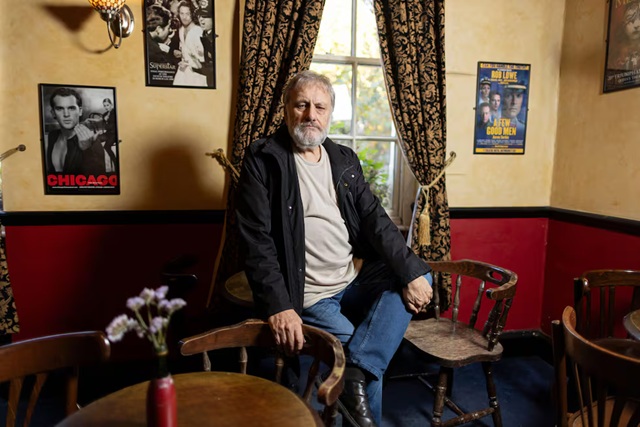
In a characteristically unfiltered and provocative interview with El País, Slovenian philosopher Slavoj Žižek opens the floodgates on his personal misanthropy, political despair, and philosophical radicalism, delivering a stream of consciousness that is both bleak and fiercely lucid. Conducted via videoconference at his own insistence — he hates traveling, hates crowds, and, as he put it bluntly, “I hate people” — the 76-year-old intellectual titan lays bare his disillusionment with both the world and himself.
“I hate parties, I hate small talk, I hate long dinners, and I even hate teaching,” Žižek told El País, half-laughing, half-grimacing. “In my old age, I’m becoming very misanthropic.” Yet, this isn’t the withdrawn bitterness of an aging man. Rather, it’s the sharpened edge of someone who still sees the world in urgent, radical terms and refuses to play nice.
Žižek, a self-described “moderately conservative communist,” is best known for his work fusing German idealism, Marxism, and Lacanian psychoanalysis. His career has produced more than 50 books — including The Sublime Object of Ideology, The Ticklish Subject, and the recently published Too Late to Awaken — and his voice remains as polarizing as ever. As philosopher Marina Garcés aptly puts it, Žižek treats philosophy as “an act of uncomfortable radicalism that doesn’t have to please anyone.”
That ethos permeates his latest collection of essays, Against Progress, where Žižek dismantles the sacred mythologies surrounding technological and social advancement. “Progress is a totem,” he said. “What hides beneath it is terrifying. We think we’re advancing, but we’re actually preparing for collapse.”
Žižek was flattered but unsurprised when told that German philosopher Peter Sloterdijk had named him one of today’s most relevant thinkers. “Paradoxically,” he said, “Sloterdijk is one of the few contemporary philosophers I feel truly connected to. He sees the dangers of what we call progress. He knows the era of the European social welfare state is over.”
Sloterdijk had also praised Žižek’s unique contribution to philosophical discourse — injecting it with dark humor. “I accept that,” Žižek replied. “But I think I’m just reflecting reality. Look at Israel. They’re conducting an ethnic cleansing of Gaza, justifying it with religious texts. They say it’s for the good of the Palestinians, that they can’t live in Gaza. If that isn’t dark humor, what is?”
On politics, Žižek once again delivered the unexpected: “Trump is the one carrying out a revolution. Not a socialist revolution, of course, but he’s radically transforming capitalism. He declared a national emergency for all the wrong reasons — immigration, the wall — but the fact is, we are in a global emergency.”
He lamented what he sees as the impotence of contemporary democracy. “I support democracy, of course. I’m not crazy,” he said, half-mockingly. “But it’s become ineffective. We need faster, coordinated responses to crises like climate change, AI, and the possibility of nuclear war. During COVID, Spain did a good job with centralized emergency measures. That’s the model.”
Still, Žižek warns against confusing efficiency with authoritarianism. “I’m not against charismatic leaders,” he clarified. “Mandela ended apartheid, and he was a symbol. Sometimes you need a figure to carry hope. But I also admire China’s long-term thinking. Unlike Western democracies, they’re not obsessed with the next election cycle.”
While critical of capitalism, Žižek also doesn’t romanticize alternatives. “We shouldn’t dream of returning to the pre-Trumpian, neoliberal welfare state,” he argued. “That path led to the mess we’re in. The left must invent something new — stronger collective control, maybe not abolishing capitalism, but managing it beyond national boundaries.”
His views on culture and society are no less controversial. “I’m against cancel culture,” he said. “Woke culture claims to promote inclusion, but it ends up excluding anyone who doesn’t agree with its own definitions. It’s an upper-middle-class phenomenon attacking the working class.”
On sex, Žižek diverges from mainstream liberal views. “Consent is not everything. There can be consensual prostitution, sure. But violence and exploitation often hide behind consent. Sex should be intimate. I’m old-fashioned — maybe even naïve.”
He didn’t hold back when talking about himself, either. “I’m panicking because I’m getting old. I don’t work to live; I live to work. And now I’m losing my ability to work. I hate it. People say age brings wisdom — but wisdom is the worst. In Slovenia, we say, ‘You can’t piss against the wind.’ Wisdom is just conformist stupidity.”
And what about death? “I don’t want to think about death,” he said. “But if I had to die, I’d prefer a heart attack, like my friend Fredric Jameson. I don’t want a slow, painful death. I couldn’t bear it. I’d even take my own life. I don’t fear death. I fear dying like an idiot, unable to work.”
Even as he veers toward despair, Žižek remains defiantly engaged. His pessimism isn’t paralyzing; it’s clarifying. Through El País, his message is stark but honest: forget utopias, forget illusions — we are already in a state of emergency. And Slavoj Žižek, grumpy, brilliant, and utterly unwilling to conform, may be one of the few still willing to sound the alarm.