by Durga
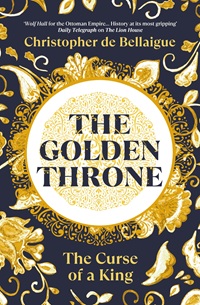
Christopher de Bellaigue’s The Golden Throne: The Curse of a King is a masterful work of historical biography and narrative, weaving a vivid tapestry of the late Ottoman Empire under the reign of Suleyman the Magnificent. What distinguishes this volume from the legion of works on the Ottomans is not simply its scholarly rigour or literary elegance—both of which are formidable—but its haunting psychological excavation of Suleyman’s reign and the machinery of power that surrounded him. This is not merely a chronicle of imperial expansion or courtly intrigue; it is an inquiry into the profound moral costs of absolutism, and the human price of empire.
From the very first act, De Bellaigue destabilises romanticised visions of Suleyman, challenging the mythos of the “lawgiver” and “magnificent” sovereign. Instead, the reader is ushered into a world where kings “sit on a low throne,” not in majesty but in abasement to “the baser realms of existence”. The throne itself becomes a synecdoche for power’s burdens—a golden seat whose lustre belies the bloodstains beneath. Every campaign, every familial execution, every alliance is weighed against a backdrop of betrayal and divine reckoning. When Suleyman tells his disabled son Cihangir, “Mustafa will be Sultan and he will kill you all,” we hear not just a father’s grim prophecy but the voice of a man enthralled by a logic in which love must be sacrificed at the altar of sovereignty.
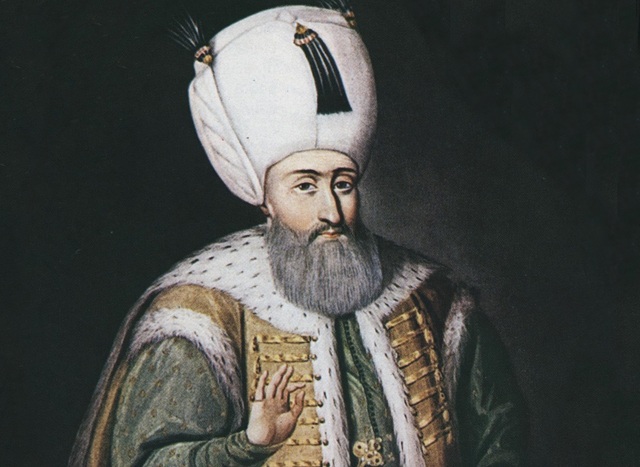
In De Bellaigue’s portrayal, Suleyman is less a triumphant emperor than a tragic figure of Shakespearean depth. His transformation from a sensualist and lover to an ascetic and lawgiver is documented with exquisite detail. The once flamboyant Sultan, “in caftans of gorgeous crimson embroidered with gold thread,” comes to favour “humble robes of wool or cotton,” abandoning wine for “soft water” and burning “all the musical instruments in the palace”. The deliberate aesthetic shift signifies more than personal piety; it reflects the Sultan’s increasing alienation from the world he once ruled with verve. His reign becomes a study in entropy, not decay through weakness, but through the weight of moral contradiction.
One of the book’s most poignant contributions lies in its portrayal of women and the domestic sphere as not merely ancillary to power but central to its reproduction and corruption. Hurrem—Roxelana, the Sultan’s ruthlessly ambitious consort—is less villain than archetype, both architect and victim of the empire’s blood-soaked succession logic. Her political cunning and strategic marriage to Suleyman shattered centuries of dynastic precedent, leading to the unprecedented elevation of a haseki from concubinage to quasi-sovereignty. Yet this victory is shadowed by the haunting outcomes of her manoeuvres: the deaths of her rivals’ children, the manipulation of her own sons, and her ultimate inability to halt the empire’s descent into fratricidal barbarity.
Nowhere is this clearer than in the meticulously recounted tale of Prince Mustafa’s downfall—a sequence that stands among the most devastating passages in recent historical literature. The Janissaries’ devotion to Mustafa, “ignoring [Hurrem’s] sons” and directing “their passion and affection only at Mustafa,” lays bare the tensions between court and corps, legitimacy and affection, state and self. Mustafa’s execution, carried out under the chillingly bureaucratic phrase “the order of the Sultan is that you must die,” reveals the Ottoman state’s calculus of loyalty and threat. De Bellaigue’s prose achieves what academic historiography often cannot: the simultaneous capture of granular detail and grand thematic architecture. His account of Suleyman’s campaigns, particularly the doomed march on Tabriz, evokes the futility of empire-building in desolate lands. “There is nothing to eat,” he writes of the Shah’s scorched-earth retreat, and “the death toll of Ottoman beasts of burden quickly reaches five thousand horses, camels and mules”. Such lines are not merely logistical notations—they are metaphors for the human and imperial exhaustion that define Suleyman’s latter years.
The intellectual breadth of the book is also noteworthy. De Bellaigue enlists a wide cast of thinkers, travellers, and chroniclers—Machiavelli, Parmigianino, Luther, and others—integrating their voices without diluting the narrative focus. His digressions on Machiavellian statecraft, for instance, do not merely ornament the text but contextualise Suleyman’s reign within broader currents of European and Islamic political thought. “The merit of Machiavelli,” he notes, “is that he considers politics as it is, not as it should be,” contrasting this with Suleyman’s tortured effort to reconcile holy kingship with the practicalities of conquest and governance.
Particularly commendable is De Bellaigue’s use of primary voices and Ottoman idiom. The poetic declaration, “I am the slave of Allah, in the government of the world I am Sultan,” is not simply an exercise in bombast but a theological-political credo that underwrites the empire’s entire ontological structure. These lines, coupled with details such as Suleyman’s lavish receptions—“Arab horses and harnesses embroidered with precious stones… shirts, quilts and sheets with brocade tassels that the Sultan’s wife has lovingly sewn her royal brother”—offer a sensory immersion into the courtly world.
Yet De Bellaigue does not shy away from irony or critique. The reader is made to see the hypocrisies of Suleyman’s “justice.” Legal reforms by Ebussuud, while extensive, are hedged by the Sultan’s prerogatives: “No sultanic law or kanun may challenge the sharia… but the sharia is silent on many things”. The state may claim divine guidance, but it remains a human contrivance, forged in ambiguity and executed through violence. Even Suleyman’s triumphs are rendered ambivalently. His alliance with France against the Habsburgs, his extravagant campaigns across Hungary and the Mediterranean, and his court’s glittering festivals—all are presented with an eye to their hollowness. When “Jews with sweet voices… toss new coins under the horses’ hooves” during a victory parade, and “the truly legless are brought before the judge who sentences them to two hundred blows on the soles,” one feels the grotesquery beneath the glitter.
There is a philosophical resonance that runs through the book like a subterranean current. “What men call the sultanate is but a fight over the world,” De Bellaigue writes, voicing Suleyman’s weary communion with Rumi. The real tragedy of The Golden Throne is not merely that power corrupts, but that it isolates, deceives, and ultimately devours those who cling to it. In Suleyman’s final turn to asceticism, in his burnings of instruments and eschewing of adornment, one senses a yearning not for redemption but for silence—a retreat from the unbearable clangour of command.