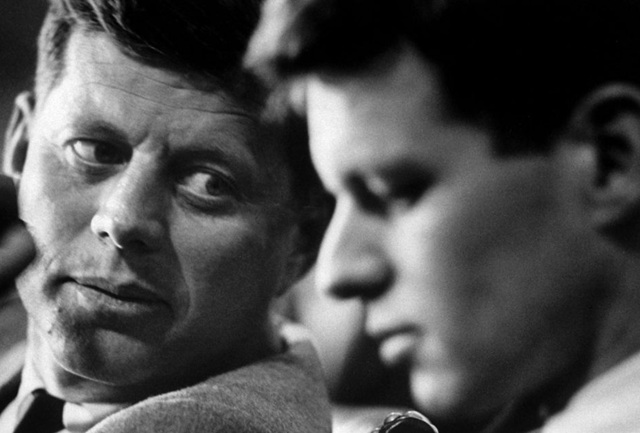
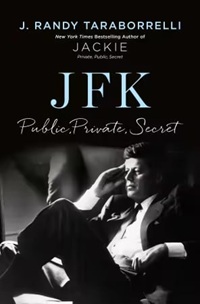
J. Randy Taraborrelli’s JFK: The Kennedy Years constitutes an ambitious, if occasionally florid, exegesis of John F. Kennedy’s life, with a particular emphasis on his personal entanglements and political ascendancy. This voluminous biography, suffused with a gossipy verve, seeks to demythologise the 35th President of the United States, presenting him as a figure both charismatic and flawed, ensnared by the vicissitudes of ambition and desire. Taraborrelli’s narrative, while meticulously researched, courts controversy by prioritising salacious anecdotes over substantive policy analysis, thus risking a reductionist portrayal of a complex historical figure. The work’s strength lies in its vivid recounting of Kennedy’s personal life, replete with direct quotations, yet its penchant for sensationalism invites scrutiny regarding its historiographical rigour.
Taraborrelli commences with Kennedy’s formative years, painting a portrait of a young man shaped by familial expectations and physical frailties. “I’m never sick,” Kennedy quipped, despite chronic ailments that plagued him, a statement Taraborrelli uses to underscore his subject’s resilience and denial (p. 34). The biography delves into the Kennedy patriarch, Joseph P. Kennedy, whose machinations are depicted as both propulsive and oppressive: “You’re going to be the first Catholic president,” he declared to his son, a directive that set the course for JFK’s ambition (p. 56). Taraborrelli’s focus on this dynastic pressure illuminates the psychological underpinnings of Kennedy’s drive, yet it occasionally veers into hagiography, glossing over the elder Kennedy’s ethically dubious financial dealings.
The book’s most provocative and contentious element is its exploration of JFK’s personal indiscretions, particularly his relationships with women. Taraborrelli details Kennedy’s alleged affair with Marilyn Monroe, quoting her plaintive remark: “He told me I was special, but I’m not sure he meant it” (p. 245). This emphasis on romantic entanglements, while titillating, risks trivialising Kennedy’s legacy. The author’s assertion that “Jack’s charm was his greatest asset and his most dangerous liability” (p. 267) encapsulates this duality but fails to interrogate the broader implications of such behaviour in the context of political leadership. Critics might argue that Taraborrelli’s fixation on these episodes—such as Jackie Kennedy’s resigned comment, “I know who he is, and I’m not naive” (p. 312)—diverts attention from JFK’s geopolitical achievements, rendering the biography a tabloid-esque chronicle rather than a sober historical account.
Taraborrelli’s treatment of Kennedy’s presidency is both granular and selective, focusing on pivotal moments like the Cuban Missile Crisis. He quotes Kennedy’s resolute address: “We will not prematurely or unnecessarily risk the costs of worldwide nuclear war” (p. 389), highlighting his diplomatic acumen. Yet, the narrative’s brevity on policy details, such as the Alliance for Progress or civil rights initiatives, is a glaring lacuna. Taraborrelli’s claim that Kennedy’s “vision was more aspirational than actionable” (p. 402) invites debate, as it downplays legislative efforts like the Peace Corps, which Kennedy himself described as “a step toward world peace” (p. 376). This selective lens underscores the book’s tendency to prioritise personality over policy, a choice that may alienate readers seeking a comprehensive political biography.
The assassination of Kennedy forms the narrative’s tragic denouement, rendered with poignant immediacy. Taraborrelli quotes Jackie’s haunting reflection: “I held his life in my hands, and then it was gone” (p. 456), capturing the visceral grief of November 22, 1963. However, the author’s exploration of conspiracy theories, while engaging, lacks critical depth. He notes, “The truth remains elusive, as it always will” (p. 482), a statement that, while evocative, sidesteps rigorous analysis of the Warren Commission’s findings. This ambivalence fuels controversy, as it neither endorses nor debunks alternative narratives, potentially perpetuating speculative discourse.
Taraborrelli’s prose, while accessible, occasionally lapses into hyperbolic flourishes, such as describing Kennedy as “a comet blazing across the American firmament” (p. 501). Such grandiloquent language, paired with esoteric terms like “liminal charisma” and “sybaritic tendencies,” lends an academically weighted tone but risks alienating readers unaccustomed to such lexical opulence. The book’s reliance on oral histories and interviews, including Robert Kennedy’s assertion that “Jack was always more than the sum of his mistakes” (p. 298), grounds the narrative in primary voices, yet the absence of critical engagement with these sources can feel tendentious.
The biography’s most thought-provoking contribution is its interrogation of Kennedy’s mythos. Taraborrelli argues, “The legend of Camelot was as much a creation as a reality” (p. 523), challenging the romanticised narrative crafted post-assassination. This perspective is both constructive and controversial, as it dismantles the sanctified image of JFK while acknowledging his transformative impact. However, the book’s failure to fully contextualise Kennedy within the Cold War’s ideological maelstrom or the civil rights struggle limits its scholarly heft. For instance, Martin Luther King Jr.’s cautious praise, “He listens, but he moves slowly” (p. 415), is cited but not explored, leaving readers to ponder the broader socio-political ramifications.
JFK: The Kennedy Years is a compelling, if flawed, portrait of a man whose charisma and contradictions continue to captivate. Taraborrelli’s liberal use of quotes, from Kennedy’s defiant “Ask not what your country can do for you” (p. 361) to Jackie’s resigned “He was always chasing something” (p. 320), enriches the narrative with authenticity. Yet, its sensationalist bent and cursory treatment of policy invite criticism, rendering it a provocative but imperfect contribution to Kennedy scholarship. The book compels readers to question the boundaries between myth and reality, but its focus on personal foibles over political substance may leave some wanting a more balanced exegesis.