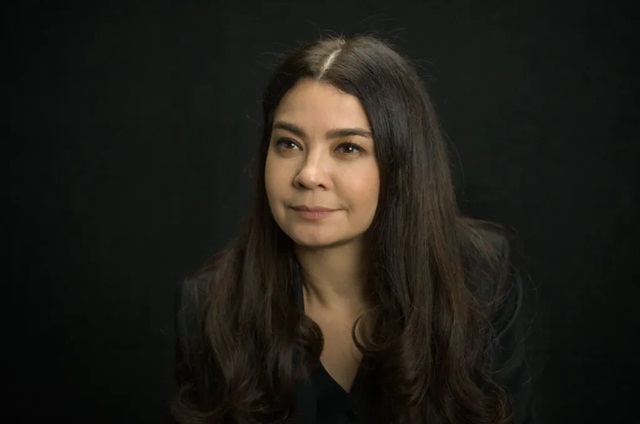
Ukrainian President Volodymyr Zelensky is facing mounting accusations of suppressing press freedom after the editor-in-chief of Ukrainska Pravda, the country’s most influential political news outlet, claimed the government has targeted the site in retaliation for its investigative reporting. In an interview with The Times UK, Sevgil Musayeva warned that the government is undermining Ukraine’s independent anti-corruption infrastructure while attempting to silence critical voices.
Musayeva alleges that since publishing an investigation into former Deputy Prime Minister Oleksiy Chernyshov in June, her newsroom has been shut out of military briefings and cut off from key government contacts. “President Zelensky and his chief of staff, Andriy Yermak, have crossed a red line,” she told The Times UK. “They are dismantling the country’s independent anti-corruption infrastructure. Ukrainska Pravda is the next target.”
According to Musayeva, pressure from the presidential administration has led major advertisers to sever ties with the outlet, slashing its revenue and forcing it to introduce a paywall for readers in October. She claims six of Ukraine’s largest companies withdrew sponsorships after receiving warnings from the president’s office, costing the site over $240,000 annually.
The presidential office has denied the allegations, including claims that officials have been barred from engaging with Ukrainska Pravda staff or reprimanded for doing so. Dmytro Lytvyn, Zelensky’s communications adviser, rejected the accusations as baseless, saying the outlet has “repeatedly published unfounded claims” about him.
Musayeva also claimed that Ukraine’s state security service, the SBU, raided the offices of anti-corruption investigators shortly after Chernyshov was charged. This came amid controversy over a newly passed law that places the National Anti-Corruption Bureau of Ukraine (NABU) and the Specialised Anti-Corruption Prosecutor’s Office (SAPO) under the influence of a presidential appointee. The government argues the law is necessary to root out Russian infiltration, but critics say it guts the independence of Ukraine’s most vital anti-corruption institutions.
Public backlash has been swift. Tens of thousands of Ukrainians took to the streets of Kyiv and other major cities in protest, marking the first major demonstrations against Zelensky’s administration since Russia’s full-scale invasion in 2022. The European Union condemned the legislation, and German Chancellor Friedrich Merz, along with French President Emmanuel Macron, is said to be planning high-level discussions with Zelensky over the matter.
In response to the outcry, Zelensky introduced a new bill on Wednesday night aimed at “safeguarding” the independence of the anti-corruption agencies, but critics remain unconvinced.
Further complicating the situation, diplomatic sources told The Times UK that the presidential administration is considering sanctions against Ukrainska Pravda’s owner, Dragon Capital — a move that could pave the way for a hostile takeover. While Musayeva declined to comment on the potential sanctions, Dragon Capital CEO Tomas Fiala acknowledged longstanding government hostility toward the outlet’s critical reporting. “Unfortunately, there are some tendencies from the top of the authorities against freedom of speech,” he said.
Despite these pressures, Ukrainian media watchdogs say that free speech in Ukraine, while under strain, is not yet extinguished. “The government is leaning authoritarian, although I wouldn’t say free speech is gone,” said Nataliya Ligachova of Detektor Media. “But they do try to control key voices where they can.”
Founded in 2000, Ukrainska Pravda has a legacy of fearless journalism. Its founder, Georgiy Gongadze, was abducted and murdered under the pro-Kremlin presidency of Leonid Kuchma. In 2016, its journalist Pavel Sheremet was killed in a car bombing — another case still unsolved. Musayeva said the outlet’s mission today remains the same as it was at its inception: to defend democracy and expose corruption.
“During the early days of the war, we were very supportive of our president,” she told The Times UK. “Later, we decided there is still corruption in Ukraine and we need to challenge it. Now, our goal is simply not to become like Russia. Ukraine has only one path forward — democracy.”