by Durga Velayutham
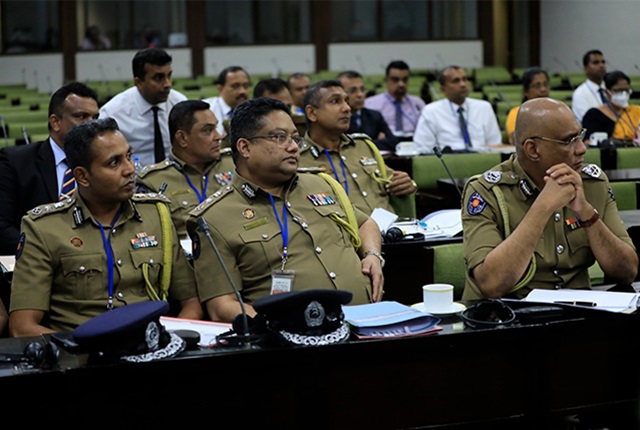
Spies are human beings too—though society treats them as disposable tools, useful only when convenient. They bleed, they age, they falter. Like anyone else, they navigate twenty-four hours burdened with the impossible balance of duty and family. Yet, their existence is only acknowledged in failure. No medals for lives saved, no tributes for disasters averted. But when a crack appears, when the system missteps, vengeance descends—not just upon them, but upon their families too. No legal shield, no institutional sympathy. Just abandonment. Efforts to protect them have crumbled under invisible pressures. In a country battered by three decades of bloodshed, the collective ignorance surrounding the intelligence apparatus is not just staggering—it’s dangerous.
Take Jude Krishantha, a so-called media voice of the Catholic Church, who stood before cameras and declared that Senior DIG Nilantha Jayawardena should be hanged. Hanged—like some medieval criminal. Had such vitriol escaped the lips of Venerable Gnanasara Thero, the outrage would have drowned the nation. The digital lynch mobs would have feasted. But in Jude’s case? Silence. No retraction. No apology. Just the quiet comfort of ecclesiastical impunity. A day later, Fr. Cyril Gamini attempted a feeble dissociation, claiming the remarks were not those of the Church. And yet, Jude still walks proudly, with neither shame nor consequence. What drives a man to so openly peddle hatred beneath the veil of piety? It’s not moral conviction—it’s political calculation, pure and simple.
This week, a group of concerned Catholic citizens pierced the veil. They spoke of a Church corrupted—of faith weaponised since the Easter carnage. According to them, in the aftermath of the attacks, Muslim organisations contributed a staggering sum—one hundred thousand rupees, multiplied to a billion—purportedly in solidarity. Even if this act was rooted in compassion, should it not have triggered scrutiny? No audit. No forensic trail. Just the pious mantra: “Let not the left hand know what the right hand gives.” But should this biblical discretion shield potential complicity?
Even more damning was Cardinal Malcolm Ranjith’s pronouncement: that the Easter massacre was orchestrated by a Western power, part of a conspiracy to resurrect a southern political force. With this narrative, the Cardinal did not merely offer a theory—he assumed the role of political architect. Since that fateful day, four regimes have risen and fallen, each with his shadow looming behind. His sermons no longer speak of salvation, but of ultimatums: deliver our justice, or perish. The justice he demands is not blind—it listens only to those who speak his language, nod to his politics, bow to his vision. Is this divine intervention or clerical theatre?
One must ask: who truly benefits from this sustained spectacle of blame? It was clear that following the attacks, the State required a legal framework to de-radicalise those entranced by Zahran’s death cult. The Cardinal and his allies torpedoed it. Why? Some whisper about the timing of that Muslim donation. Coincidence or currency? Among the arrested were women, young and indoctrinated, poised for martyrdom. The State’s intention to rehabilitate them crumbled under religious pressure masquerading as moral high ground. Instead of addressing the structural rot that bred such violence, the Church and its satellites busied themselves with optics. Films were made, careers launched, funds raised. For some, it was tragedy; for others, a lucrative brand.
But the real crisis—unspoken, festering—was not political. It was spiritual. The Easter attacks shattered not just churches, but the faith of the flock. The Cardinal’s absence from the pews that day was less scandalous than the spiritual vacuum that followed. To fill it, a convenient villain was summoned: the intelligence community. Blame became liturgy. But this attack, like so many before it, thrived on negligence at every level. If punishment must follow, it should be total—not selective, not performative. Yet here we are: one official promoted, another humiliated, pushed to the brink of suicide.
Hours after the bombs, a letter surfaced on social media. It confirmed that Nilantha Jayawardena had warned of an imminent attack, based on intelligence from India’s IB. He did his duty. He passed the message on. In fact, more than 350 intelligence briefs were issued about the growing spectre of Islamic extremism in Sri Lanka. The record is there, waiting to be read. But who dares read it? It’s far easier to burn the messenger and canonise the narrative.
And so, a national trauma becomes a tragicomedy—part grief, part power play. At its centre, not just the dead, but the truth itself—buried under sanctimonious politics and manufactured outrage.