by Mendaka Samarasinghe
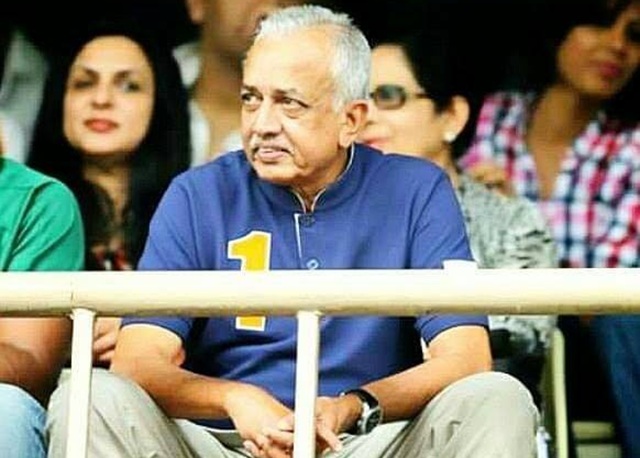
“Do you really believe Anura is running this show alone?” a senior business editor asked me recently over coffee in Cinnamon Gardens. “He’s got help—old help.” I didn’t have to ask who. The answer was already walking through political backchannels, whispering through ministries, making calls that aren’t logged. Malik Samarawickrama. Not retired. Not fading. Still very much inside the room.
And yet, this same man, now actively working with the President’s top economic circle, speaks freely about corruption—as if it were a sin invented by others. With the tone of a monk and the muscle of a fixer, Malik has remade himself once more, now as a grey cardinal in Sri Lanka’s self-proclaimed Renaissance Government. His only consistent ideology? Proximity to power.
His journey here is anything but accidental. After his dramatic departure from Ranil Wickremesinghe’s inner circle—once his political soulmate—he made a calculated shift to Sajith Premadasa’s camp. But the Premadasa project had no room for his brand of boardroom politics and backroom influence. Malik was frozen out. Not with drama, but with slow, deliberate indifference. And he didn’t take it well. He is a man accustomed to access, not waiting.
So he watched, waited, read the room. And as the tides shifted toward Anura Kumara Dissanayake’s camp—a movement built on anti-elitism, socialist rhetoric, and an appetite for systemic reform—Malik saw something else: a vacuum. A young government with no real grasp of economic diplomacy. No international capital playbook. No muscle in Buddhist politics. That’s where he came in. Not as a formal appointee, but as something more insidious: the one who knows how the old levers work.
And work them he has. Today, Malik operates not as a retired strategist, but as an unofficial architect of the new order. His influence runs close to the President’s inner policy unit, particularly with the President’s senior economic adviser—a man who, astonishingly, continues to serve as a partner at a major global accountancy firm while advising the executive branch. This adviser is not just carrying baggage from a firm long riddled with allegations of enabling corruption across continents—he is still on the payroll. The brazen defiance of any semblance of conflict-of-interest ethics has barely drawn a reaction from the government that so loudly promised to be different.
When this very adviser was pressed during a widely watched TV segment about how he balances his commercial interests with national duty, his response was breathtaking in its arrogance. “I believe in myself,” he said coolly, sidestepping every fact laid before him. No shame, no apology. Just a personalised gospel of self-certainty—a modern gospel that fits seamlessly within the political culture Malik helped nurture: accountability is optional, and ethics are negotiable.
His fingerprints are also smeared across the government’s recent flirtation with religious legitimacy. Behind the scenes, Malik brokered the talks between the Malwatte and Asgiriya Chapters in Kandy, nudging them toward a united endorsement of the government through a high-profile Dalada Exposition. It backfired spectacularly. Clerical egos clashed, protocol was breached, and Buddhist sentiment was bruised. It became a minor disaster—both symbolically and reputationally.
Yet the government absorbed the blow, thanks in part to Malik’s clean-up operation. Apologies were issued. The story was reframed. Once again, the man who engineered the mistake also managed the recovery. It is, in many ways, his signature move: cause the fire, then walk out holding the hose.
And this is not merely the stuff of speculation. At a recent confidential political debriefing, a former President, upon hearing a political analyst claim that “Malik is now drafting strategies and statements for the new administration,” responded with dark amusement. “Malik? He can’t write. Never could. But he knows how to use people. I’ll give him that. In that sense—yes—he’s a sort of strategist.”
A strategist without a desk. A minister without a title. A policymaker with no electorate. Yet his influence flows like voltage through the state. It’s Malik who ensures the Buddhist clergy isn’t fully alienated. Malik who reassures jittery investors. Malik who drafts the language of economic pragmatism while the front bench shouts slogans of justice. His position is unofficial, but real—possibly the most powerful man in Sri Lanka who doesn’t need a nameplate.
And yet, amidst all this, he continues to publicly posture as a moralist. In interviews, he solemnly laments that “corruption began with the open economy and grew with every regime.” There is no irony, no shame. This, from a man who once signed controversial trade MoUs abroad with no parliamentary oversight. Who has faced scrutiny for land deals and backroom access. Who now works side-by-side with an economic adviser that refuses to sever ties with corporate giants—because no one is forcing him to.
What does it say about the moral compass of this administration that it now relies on a figure like Malik Samarawickrama to guide its most sensitive internal strategies?
And what does it say about Sri Lankan voters that they are told this is a clean government—while the same unelected hands continue to operate the machinery behind the screen?
This is not revolution. This is replacement.
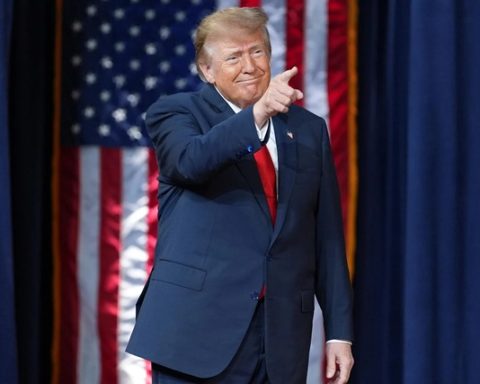
The public sees Anura at the microphone, delivering confident speeches about sovereignty and reform. What they don’t see is who writes the notes, who brokers the deals, who calls the monks, who sits quietly in the meeting after the meeting. They don’t see Malik, because Malik doesn’t want to be seen. He prefers shadows—where the deals are made, the narratives crafted, the contradictions quietly managed.
In many ways, he is the perfect figure for this moment in Sri Lanka. A man with no ideology but remarkable survival instincts. Someone who understands that power today does not require a title, only a seat at the right table. He has outlived the UNP, outmanoeuvred Sajith, and now inserts himself quietly into the bloodstream of a government that claims to be radically different.
The Renaissance Government may think it’s writing a new story. But if Malik is holding the pen, don’t be surprised if it’s just another chapter in the same old book.