Editorial
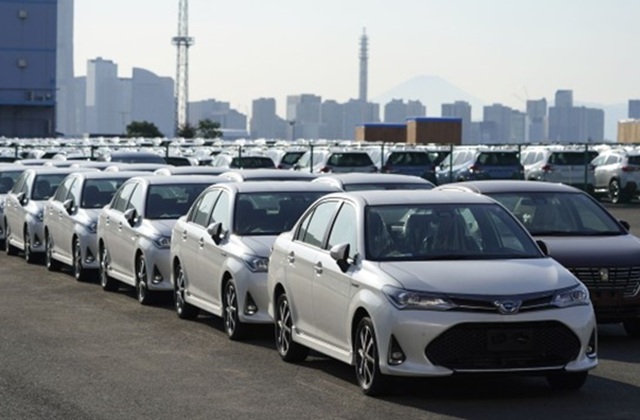
In Sri Lanka’s socio-economic corpus, there festers a malignant industry—one whose roots burrow deeper than commerce and whose consequences are far more sinister than mere consumer discontent. It is not agriculture, nor garment exports, nor tourism, but the vehicle import and trade racket—a serpentine, labyrinthine, and wholly unregulated leviathan that thrives in the absence of governance, justice, or conscience. This is not simply a corrupt sector; it is, unreservedly, an institutionalised mafia—ruthless, predatory, and unrepentant. It is, in scope and impunity, rivalled only by the narcotics trade.
For decades, a cabal of orchestrators—strategically situated in automobile heartlands such as Japan, India, and select nexus points in Southeast Asia—has manipulated the flow, price, and distribution of vehicles into Sri Lanka. These aren’t mere importers. They are economic vandals. They are the barons of a parallel economy who, under the guise of ‘market facilitation,’ have constructed a cartel that bleeds the average citizen dry while gorging themselves on public naiveté and bureaucratic complicity.
These actors are not operating in vacuo. Their parasitic grip is strengthened by connivance with local stakeholders—most notably, the Sri Lankan Customs. There, within the walls, thrives a subculture of transactional loyalty and systemic malfeasance. The “duty” collected is not a sovereign revenue, but a well-negotiated bribe. For those who know the choreography of under-the-table diplomacy, the customs process becomes not a matter of law but of leverage. And those who are left out of the performance? The citizenry, who foot the inflated costs, and the state, which is robbed of its rightful dues.
As electric vehicles (EVs) have emerged on the global stage as the messianic alternative to the internal combustion engine, Sri Lanka, too, has leapt into the fray—albeit with its usual disorganisation and shortsightedness. Ostensibly, EVs are the emblem of sustainability, whispering promises of carbon neutrality, modernity, and technological emancipation. But beneath the glossy surface lies a far more perilous terrain.
Firstly, it is worth interrogating the ecological gospel of EVs. While they ostensibly reduce emissions, their reliance on lithium-ion batteries—often produced under exploitative labour conditions in the Global South—invokes its own ethical and environmental quagmire. Moreover, Sri Lanka has no established infrastructure for battery recycling. Thus, each imported EV, cheered as a symbol of green progress, may in time become an ecological landmine.
Secondly, the financial architecture surrounding EVs in Sri Lanka is grotesquely ill-conceived. Commercial banks, desperate to anchor themselves to what appears to be a growing trend, are offering handsome loans—luxury-sized debts for an economy that is already haemorrhaging. This financial enthusiasm is tragically ironic in a nation where over two-thirds of the rural population still struggle to access three meals a day. For these citizens, the EV is not just unaffordable—it is absurd. It is the techno-utopian dream of a disconnected elite, while the rural poor remain invisible to the policymakers who govern in theory, but not in reality.
And yet, EVs have become the latest battleground in the automotive mafia’s territory war. As reports trickle in about a handful of politically-aligned conglomerates cornering the EV market, traditional petrol vehicle dealers—whose empire rests on graft and logistical chokeholds—feel their kingdom crumbling. They will not go quietly. Expect sabotage campaigns, expect media hysteria, expect performative outrage cloaked in environmental rhetoric. This is not just about cars. This is about power. And power, once contested, unleashes carnage.
This brings us to the elephant in the room—the government’s role, or more precisely, its embarrassing abdication thereof. One must marvel at the spectacle of a ruling administration so proficient at self-sabotage. From education to medicine to food security, its interventions have been cacophonous misadventures devoid of direction or dignity. And now, the vehicle sector joins this charade. Recent revelations allege the unauthorised release of over 350 shipping containers, including six known to contain non-cleared salt—a mundane commodity, yes, but one whose illegal importation reflects an underlying rot. If salt, the oldest trade good in human history, cannot be regulated, what hope is there for lithium, cobalt, or high-tech automotive components?
It is tempting to believe this is merely incompetence, but the pattern is too deliberate, too choreographed. When officials with no expertise are appointed to manage national commerce, when policy is dictated by backroom cliques, and when whistleblowers are silenced or exiled, what we witness is not failure, but a new kind of governance: criminalised governance. A system in which regulation is weaponised, not enforced; where the state becomes a collaborator in its own economic dismemberment.
It is here that comparative case studies are useful—not merely to indict, but to envision. Consider Singapore. Its vehicle import system is one of the most tightly regulated in the world, with a quota-based Certificate of Entitlement (COE) system that not only restricts congestion but ensures transparency, traceability, and revenue generation. Or Norway, where EV imports are subsidised transparently and tied to nationwide infrastructure development, making them accessible across income brackets. Even Rwanda, often dismissed by the West, has built a vehicle registration system that is digitalised, accountable, and resistant to manipulation.
What distinguishes these nations from Sri Lanka is not wealth, nor geography, nor luck. It is political will. It is the refusal to be held hostage by smugglers in suits and ministers with secret bank accounts. It is the capacity to value the collective over the cartel.
But Sri Lanka today teeters on the edge of a crisis whose full magnitude is yet to unfold. The political elite, far from reforming the vehicle sector, appear to be complicit in its most grotesque excesses. Those who once managed drugs are now managing trade. The same logic applies: monopolise, corrupt, profit. The citizens—confused, exhausted, disenfranchised—are reduced to spectators in a theatre of ruin.
This nation has reached an inflection point. If vehicle policy becomes another battleground for ideological inertia and economic pillaging, the consequences will go beyond expensive cars or battery waste. They will metastasise into something darker—a country where legality is optional, and survival is conditional on one’s proximity to power.
What we require now is not another cosmetic committee or hollow press release. We need a forensic audit of vehicle imports over the past decade. We need a digitalised, publicly accessible registry of all imported vehicles and their corresponding duties. We need punitive repercussions for those who have gamed the system, and above all, we need a new lexicon of civic accountability—one in which governance is not theatre, but responsibility.
Until then, the mafia will continue to drive the country—quite literally—into a ditch of its own design. And we, the public, will pay the toll, with our wallets, our dignity, and our future.