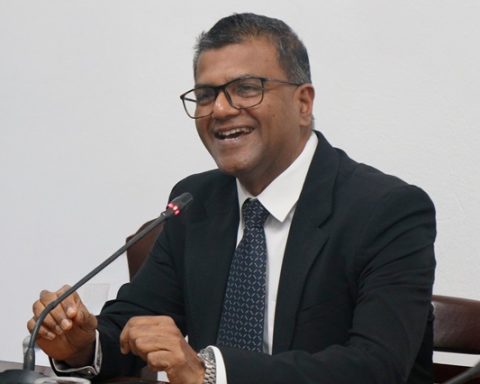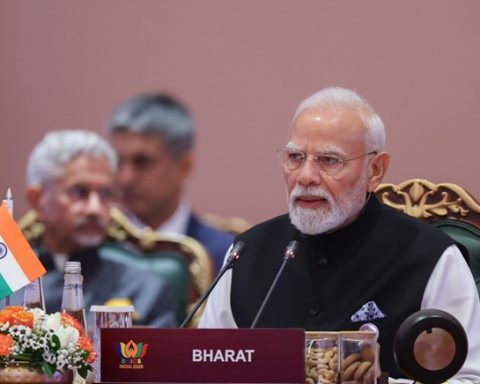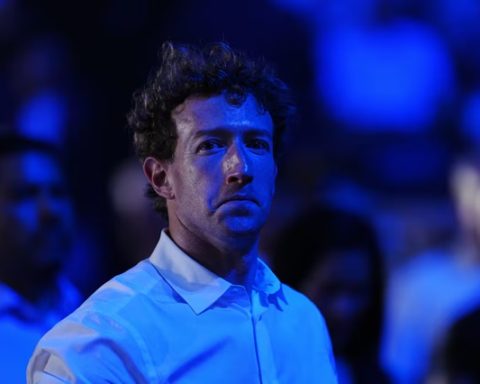
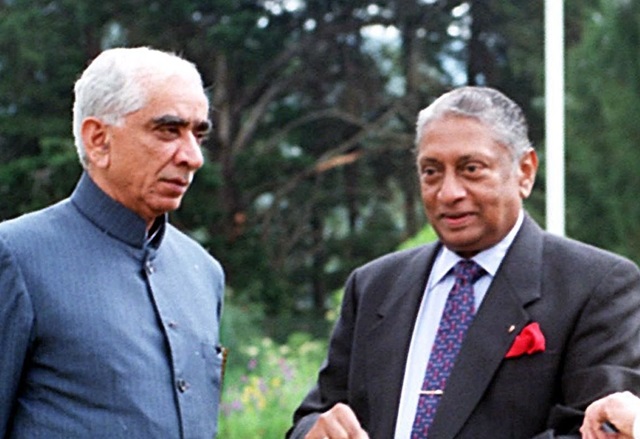
Remarks by the author at a panel discussion on the late Lakshman Kadirgamar, held in aid of the Peter Weerasekara Children’s Home, Yakkala. The event took place at the International Women’s Club Auditorium, Colombo 7, and featured fellow panellists Prof. Rajiva Wijesinha and Dr. Sakuntala Kadirgamar. It was organised by Ms. Mala Weerasekara.
Lakshman Kadirgamar befriended me after the death of his friend, my father Mervyn de Silva, in 1999. At some event he had suddenly turned around – he told me – because he heard a laugh just like Mervyn’s. He knew Mervyn had died and he did not know who it was. It happened to be me. So that’s how we got to know each other personally.
My father Mervyn, and Lakshman Kadirgamar had been students at university. Dr. Gamani Corea and Mervyn de Silva commenced the Foreign Affairs Study Group (FASG) to review and restructure Sri Lanka’s foreign relations after the debacle of the late-eighties, the airdrop and so on, The FASG was then approached by President Premadasa who appointed Bradman Weerakoon, his Senior Advisor on Foreign Affairs, to be a member of that Group and to liaise with it. Mervyn invited his old friend, Lakshman Kadirgamar, who had come back to Sri Lanka after his stint at WIPO, to join, and inducted him into the FASG. That was Kadirgamar’s transition from international law to international relations and international politics proper.
After my father died, Mr. Kadirgamar used to invite me home. If his wife Sugandhi is in this audience, she would confirm that he would send the car for me; it brought me to his place by 8 p.m. and took me back at 3 a.m. He used to have this bottle of dark rum from the Caribbean (but not Cuban) which he saved for me and we used to discuss the problems of Sri Lankan politics at the time – very complex issues of war and peace, the Norwegian negotiations, the ceasefire agreement of Prime Minister Ranil Wickremasinghe and Velupillai Prabhakaran, the knock-on effects on our security and India’s. He seemed to think that inviting me over for those overnight one-on-one chats was of some value and use.
To move from personal acquaintance to Lakshman Kadirgamar’s thinking, which is what he leaves us, I was privy to that not only through my conversations, but in the sense that all of us are, because he was a public person, and there is nothing that he said in private that was at variance with his publicly held positions. I would go so far as to say that whenever we mourn the absence of Lakshman Kadirgamar, we should remember what he thought and did, and try to extract from that the principles concerned, which we may then apply and fight for in the political and international arena today.
Lakshman Kadirgamar did what was very difficult to do. He balanced antinomies, managed contradictions, reconciled and synthesised opposites. He was a principled man who took principled positions on difficult matters, but did so while remaining perhaps the most civilised, cultured, cultivated, and charming personality in public life that we have seen for a very long time. His affability and his wit were in no way at the expense of principle.
I would say that the problems with which Lakshman Kadirgamar grappled are in one way or the other are essentially the same problems that we face today, and which will intensify in the new period in international affairs we have stepped into with the second Trump administration.
Lakshman Kadirgamar reconciled the need for an autonomy-based or devolution-based political solution to what was known as the Tamil question, the question of the coexistence of the constituent communities of Sri Lanka – one side of the equation – with the need for safeguarding national sovereignty, independence, and territorial integrity.
This was very difficult to do, because in Sri Lanka during wartime, you had a schism between the narrow nationalists who were opposed to devolution, just as they were opposed to peace; and those who were for devolution, but were prone to engage in negotiations leading to policies which Kadirgamar considered to be those of appeasement, and which he opposed.
He advocated devolution. When President Kumaratunga presented her August 2000 constitutional reform package, a draft constitution, he made a very impassioned plea to Parliament that it be supported. I was at his residence because he had wanted me to come over, and when he came back from Parliament, he was crestfallen because Mr. Sambandan and the TULF, having promised him their support, had let him down.
Kadirgamar never stopped being for an autonomy-based solution, but he was also very strongly, very firmly, opposed to separatism and the LTTE, as well as to excessive unilateral concessions which he thought were being made by the Norwegian facilitators. He and President Kumaratunga tried, but not with sustainable success, to manage that by trying to change the mix at the Norwegian end, bringing in Vidar Helgesen over Erich Solheim.
Lakshman Kadirgamar was a very strong votary of national sovereignty, and he went on a war or battle of ideas on the matter. When Prime Minister Ranil Wickremasinghe signed the ceasefire agreement (CFA), Mr. Kadirgamar made a landmark speech in Parliament, and then ensured its publication in a mainstream Sunday paper. The Foreign Ministry’s top official who had the ear of President Kumaratunga was quite unsure as to whether he should publish it, so LK brought the Editor or Political Columnist home and coaxed them to publish his speech.
Remarks at a panel discussion on the late Lakshman Kadirgamar at a charity event in aid of the Peter Weerasekara Children’s Home, Yakkala, held at the International Women’s Club Auditorium, Colombo 7. Other panellists were Prof Rajiva Wijesinha and Dr Sakuntala Kadirgamar. The event was organised by Mala Weerasekara.
In his speech he made the point that Ranil Wickremesinghe’s ceasefire agreement contained the danger of a division, of separation, in that it had a ‘line of control’ which recognised a demarcation of the island into two territories and could become a ‘hard border’.
I re-emphasise that Kadirgamar was very strong on the issues of national independence, national sovereignty, and territorial integrity, but was at one and the same time a very strong advocate of devolution and autonomy.
Sri Lankan society, especially Colombo society, tends to be polarised between those who are nativist, anti-Western elements, Sinhalese ultra-nationalists, and those others who are cosmopolitan liberals or neoliberals, who have very little respect or affection for issues of national sovereignty. To reiterate, you have ultra-nationalists, and you have those who are supplicants of the West. Lakshman Kadirgamar was neither, and was opposed to both.
Kadirgamar was very clear about the role of the United Nations and the limits it should observe in the Sri Lankan conflict, but he also made a powerful speech endorsing universal human rights at the UN Human Rights Council.
Kadirgamar was a close personal friend of US Secretary of State Colin Powell. They were on first name terms, but I recall his dismay which he shared with me that Colin Powell had told him, “Lakshman you know that you cannot possibly win this war”. That was a negative notion which Kadirgamar did not adhere to. Moreover, he was saddened by the less than robust commitment and solidarity from a friend.
Lakshman Kadirgamar did what is now seen as impossible in Sri Lanka, but was perfectly possible because he proved it so by practicing it. He was friends with the United States, China and India but as a Sri Lankan he knew what to take from each major global player, where to stop, and where a line had to be drawn.
In his adroit, ambidextrous balancing of the United States and China, and India and China, he never permitted (and would never have permitted) any large footprint for the USA, India or China on the soil on this small island. Kadirgamar knew that balancing between the two, India and China, or even the United States and China, does not mean giving each one a foothold in parts of your small island. He knew that you have to operate in the interstices, in the space between the US and China, between India and China, not give our small space to any one of the three.
I conclude by recalling to you the famous interview that he gave the BBC’s Zeinab Badawi about which I heard from Badawi herself in Geneva. The BBC programme is out there and is a model of how Sri Lanka must present its case. Kadirgamar rejected the idea of an ethnic or narrow ethnic identification by saying famously, I am not a tribalist. That is something that we must all remember and adhere to, whether it is Tamil or Sinhala tribalism. But he was no less firm and resolute in his pushback on issues of the secessionist war, terrorism, national sovereignty and independence. Zeinab Badawi who began the interview with her usual flair and challenging attitude, told me that at the end of it, not only was she pretty much convinced, but she and her husband became Lakshman’s friends from that point on.
Lakshman Kadirgamar showed us how to defend the country while being friends with all; how to establish personal relations at the highest level but not giving an inch on issues of national security, national sovereignty, territorial integrity and national independence. We must return to the Kadirgamar doctrine. I think the Kadirgamar doctrine, if I may call it that, must be rediscovered, re-excavated as it were, and should be enshrined as the guiding foreign policy doctrine of the Sri Lankan state in these troubled times.