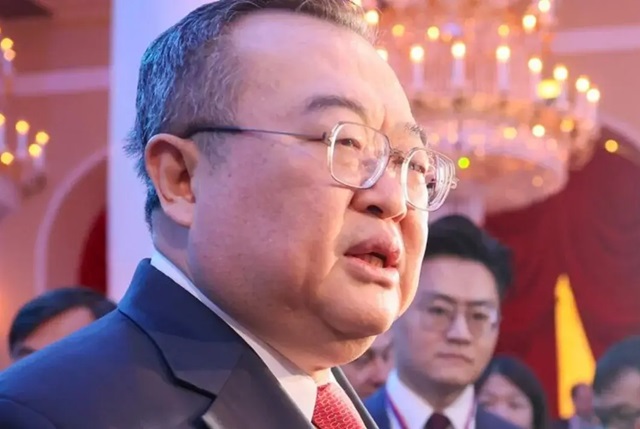
China’s foreign-policy apparatus is encountering a leadership crisis following the reported questioning of senior diplomat Liu Jianchao, who had been widely regarded as the likely successor to Foreign Minister Wang Yi, Bloomberg reports.
Liu, who currently heads the Communist Party’s International Department—an influential body overseeing outreach to political parties and civic organizations globally—was reportedly detained for reasons that remain unclear. This development comes just two years after the unexpected removal of former Foreign Minister Qin Gang and adds to concerns about continuity in Beijing’s foreign policy leadership.
Dylan Loh, assistant professor at Singapore’s Nanyang Technological University, told Bloomberg that if Liu is officially removed, it could create a significant leadership vacuum and negatively impact morale within China’s foreign policy circles. Wang Yi, who is currently 71 and has already surpassed China’s typical retirement age for senior officials, continues to lead both the Foreign Ministry and the party’s international affairs, consolidating responsibilities previously held by multiple officials.
Despite Liu’s uncertain status, his recent engagements included meetings with high-profile figures such as South African President Cyril Ramaphosa and the foreign ministers of India and Singapore. Analysts note that senior Chinese officials facing questioning are often investigated for corruption-related issues, though no official statement has been made.
Liu Jianchao has long been considered a reform-minded diplomat, known for his relatively candid and friendly demeanor toward Western media, a rarity among Chinese officials. His departure could signal a shift in China’s approach amid President Xi Jinping’s efforts to present China as a more reliable global partner.
If a successor to Wang Yi is sought, Bloomberg identifies several potential candidates, including:
- Ma Zhaoxu, executive vice foreign minister since 2023, who manages daily ministry operations and holds a ministerial rank.
- Liu Haixing, executive deputy director of the Central National Security Commission’s office, closely linked to Xi Jinping’s top aide Cai Qi.
- Sun Weidong, vice foreign minister overseeing Asia relations, a region growing in importance under Xi’s “neighborhood diplomacy” agenda.
- Hua Chunying, a former Foreign Ministry spokeswoman and now a vice foreign minister, noted for her fast rise and extensive public presence, though lacking ambassadorial experience.
- Lu Kang, deputy director of the party’s International Department and former ambassador to Indonesia, considered part of the younger generation of diplomats.
As Wang Yi nears retirement age and Liu Jianchao’s future remains uncertain, China’s foreign policy leadership faces an unprecedented moment of transition, with broad implications for Beijing’s international diplomacy amid a complex geopolitical environment.