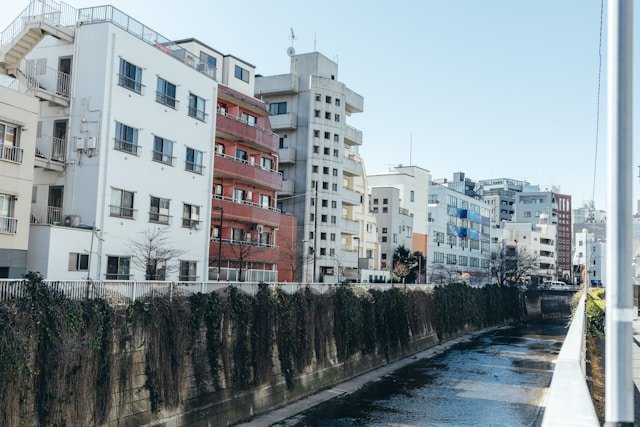
Japan’s property market is facing fresh scrutiny from international investors as the government introduces a rule requiring buyers to declare their nationality and the Bank of Japan’s interest rate increases raise financing costs, according to industry analysts.
The regulatory change, which took effect on 5 October, requires both Japanese nationals and foreign citizens to provide nationality information when registering new property ownership or transferring ownership. Although the measure does not restrict foreign purchases, investors are watching for signs that it could precede tighter controls on overseas ownership.
Japan attracted US$27.2 billion in property investment during the first half of the year, ranking second in the Asia-Pacific region behind mainland China, according to data tracked by financial services company MSCI. However, transaction volume was 7 per cent lower than during the same period in 2025, suggesting that investment activity has moderated.
Neil Brookes, head of Asia-Pacific capital markets at property consultancy Savills, said Japan had experienced a strong investment period over the previous seven or eight years, but higher interest rates were weighing on demand.
“Japan has had a really strong run for the last seven or eight years,” Brookes said. “But generally, because interest rates have gone up so much, there’s definitely less demand for Japan.”
The Bank of Japan’s quarter-point increase last month brought its benchmark interest rate to 1.25 per cent, the highest level in 31 years. The increase has raised borrowing costs, particularly for investors who rely heavily on debt to finance property acquisitions.
Yasuyuki Nozawa, president and chief executive of Tokyo-based LogProstyle, said higher financing costs were likely to dampen demand for speculative transactions. The real estate and hospitality group, listed on the NYSE American and focused on small and mid-tier companies, counts international customers among its important target markets, particularly for renovated residential properties.
Government figures released last month showed that foreign nationals and businesses purchased 68 of Japan’s 9,573 large-scale land deals during the six months to December 2025, accounting for 0.7 per cent of the total. Chinese individuals and businesses were the most frequent foreign investors, completing 28 deals covering a combined 42 hectares.
The nationality disclosure requirement follows renewed concern in Japan about overseas buyers acquiring land and property, particularly near sensitive sites, and about foreign investment contributing to price increases that place homes beyond the reach of some Japanese residents.
Kingston Lai, founder and chief executive of Hong Kong-based Asia Bankers Club, said the new rule was unlikely to deter his clients from investing in Japanese real estate because it applied equally to Japanese citizens and foreign buyers.
“It’s a disclosure rule, not a restriction, and Japanese buyers have to declare their nationality too,” Lai said.
He added that his clients, largely bankers, lawyers and business owners, were accustomed to providing personal information through know-your-customer compliance procedures. Declaring nationality on a property title, he said, would not itself change investment decisions.
However, Lai acknowledged that some investors were questioning whether the requirement could be an early indication of tougher restrictions similar to measures introduced in Singapore and Canada. Singapore imposes substantial levies on residential property transactions by foreign buyers, while Canada has restricted home purchases by most foreign nationals since 2023.
“That’s fair, but for now nothing stops a foreigner [from] buying in Tokyo or Osaka, and Japan’s real draws haven’t changed,” Lai said.
Nozawa said the government’s increased scrutiny meant international investors needed to monitor regulatory developments, while maintaining that legitimate foreign investment and inbound tourism remained important to Japan’s economy.
“Clear and predictable rules are ultimately positive for serious long-term investors because they give everyone greater confidence in the market,” he said.
Richard Hill, senior managing director and head of global research and strategy for real estate at Principal Asset Management, said investors should focus on the nature and financial structure of individual property investments.
“When you consider foreign investment into Japan, you have to be careful about what type of investment that is,” Hill said. “Is it levered or non-levered? That’s a big question to begin with. Is it driven by income returns or capital returns? These are questions that investors are beginning to ask.”