Editor’s Note: Historian Andrew Roberts is joined by former U.S. Secretary of State and current Director of the Hoover Institution Condoleezza Rice for a deep dive into today’s international hotspots—including Russia’s invasion of Ukraine, rising tensions with China over Taiwan, and the complex relationships among Russia, China, Iran, and North Korea. Their discussion also covers how leaders draw lessons from history, what might tip the world into a new Cold War, and how nations might address these evolving challenges. Director Rice also gives her thoughts on the rapid rise of artificial intelligence—which includes her recommended read, The Worlds I See by Fei-Fei Li, the Founding Co-Director of Stanford’s Human-Centered AI Institute. Speaking with candour and precision, Rice rejects easy analogies such as “Cold War 2.0,” warns against strategic complacency, and urges the West to engage with clarity, historical insight, and resolve—whether countering authoritarian influence in Africa, strengthening NATO’s deterrence, defending Ukraine’s sovereignty, or anticipating China’s long-game over Taiwan—insisting that history must serve as a compass rather than a cage in navigating today’s turbulent world.
***
Condoleezza Rice’s reflections on contemporary global affairs are rooted in her deep conviction that history is an indispensable tool for understanding and shaping the present. As she put it, “you can’t really understand today’s events unless you understand where they’ve come from,” and this grounding in the past is not an academic indulgence but, in her view, “a depth of understanding that allows for better decision making.” Her approach to history is measured and pragmatic. She recognises its power but warns of its distortions, cautioning that “everybody loves to analogise” and that this temptation can lead to false conclusions. The impulse to label the current geopolitical climate as “Cold War 2.0” is one such analogy she resists, arguing that it “can cloud your views of what’s actually going on” if the historical comparison is inapt.
Rice is careful to draw a distinction between using history as a foundation and misusing it as a crutch. For her, leaders must “connect where they’ve been to where they are now to where they want to go,” and to do that they must understand “the history of a people, the history of a country, even the history of certain leaders.” This was evident in her experience during 9/11, a moment that, for the United States, had “very few precedents” in recent history. The shock, she recalls, came in part from the nation’s long-standing assumption that security threats were external, “the idea that you would have people inside the country who used something as simple as commercial aircraft to blow a hole in the Pentagon… it was really unimaginable.” Yet even in such unprecedented circumstances, historical knowledge informed decision-making. She remembers Colin Powell’s observation that “decent countries don’t launch surprise attacks,” a reminder drawn from past crises. Similarly, the Cold War experience with the Soviet Union prompted a precaution: to ensure Vladimir Putin was aware of U.S. forces going on alert so that Russia could de-alert its own and avoid a “spiral of alerts.” Without an understanding of “our history as countries in the nuclear age,” such a step might never have been taken.
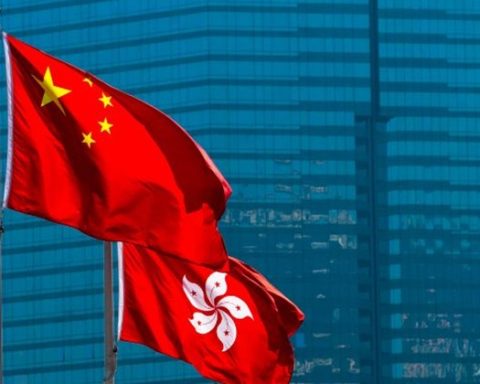
This pragmatic engagement with history informs her rejection of the notion that we are currently in a Cold War. She sets out three principal reasons why the analogy fails. First, the Cold War was “deeply ideological,” with both the United States and the Soviet Union seeking to “imprint [their] institutions on the rest of the world.” The Soviet Union, she notes, was not satisfied with a friendly Czechoslovakia; it demanded a communist one. In contrast, “the CCP… really don’t care what your form of government is,” making them, in a way, more challenging. They will “come in and… do Belt and Road,” unconcerned whether a partner is “a corrupt authoritarian” or otherwise, offering aid without demands for human rights or democratic reforms. Second, the Soviet Union was “a military giant, but… a technological and economic midget,” whereas China is competitive “on all of those dimensions.” Third, the Soviet Union was isolated from the global economy, with no more than 1% of its GDP in international trade; China, by contrast, is “completely integrated” into it, with supply chains and investment deeply enmeshed.
That integration, Rice argues, makes China’s challenge qualitatively different. While Russia’s invasion of Crimea and China’s assertiveness in the South China Sea suggest an ideological “anti-democratic” thread, she frames it more as resistance to American power than the imposition of a universal doctrine. Nevertheless, she recognises that today’s great power tensions have a “more 19th century feel” due to their territorial nature—whether in Ukraine or the Taiwan Strait—rather than the proxy wars and ideological competition of the late 20th century.
Her critique of Western engagement in Africa also draws on historical experience. She recalls the Bush administration’s deep involvement—through AIDS and malaria relief, conflict resolution in Liberia and Sudan—and laments that such engagement “has fallen off.” She rejects the idea of being “the anti-China” as a sufficient strategy, arguing instead for engaging African nations “on your own terms because we understand the issues that you have.” In her view, only such an approach will counteract the growing influence of Russia and China.
Turning to NATO, she underscores that Article 5’s credibility rests not merely on presidential declarations but on “an American presence in Europe,” a “tripwire” that has historically deterred aggression. While Donald Trump’s rhetoric has unsettled allies, she stresses that force posture matters more than words, and notes approvingly that NATO is “getting stronger” with Sweden and Finland joining, and with Europeans beginning to spend more on their own defence. “I don’t care what the reason is,” she says of this rebalancing, “If we have some rebalancing, that will be good.”
Her thoughts on Ukraine reveal both realism and urgency. She notes that Putin “seems intent on trying to break Ukraine’s will” despite heavy Russian casualties and economic strain. The attacks on civilians have, she believes, galvanised U.S. support, leading to more military aid and consideration of stronger sanctions. However, she is cautious about secondary sanctions that might disrupt relations with countries like India, preferring instead to seize “the 300 billion in frozen Russian assets” from the central bank and give them to Ukraine, an act she insists would not set a damaging precedent unless another large state tried to “extinguish its smaller neighbour.”
In the Middle East, her stance is equally unsentimental. She describes the British, French, and Canadian moves to recognise Palestinian statehood as “rather performative” and potentially “rewarding of the 7th of October terrorists,” arguing that the more pressing task is to “defang Hamas” and strengthen a Palestinian authority capable of governance. She urges Netanyahu to embrace the two-state solution publicly, invoking Ariel Sharon’s words: “it pains me as a Jew… but we will have to divide Samaria and Judea because I do not wish to rule over Palestinians.” Humanitarian needs must be addressed urgently, but recognition without the necessary state structures is, to her, an empty gesture.
Iran, in her eyes, remains the head of the “snake” in the region, its influence stretching through Hezbollah, Hamas, and militias in Iraq. She welcomed Trump’s strikes on Iranian nuclear facilities, both for their strategic value and as a demonstration that “America First” did not mean inaction. The regime, she argues, is weakened by Israeli intelligence successes and should be pressured “as much as you possibly can” while its tentacles are vulnerable. The Houthis are a different problem—“more like pirates”—requiring tailored responses.
Rice also sees opportunities in the shifting dynamics of great power relationships in the Middle East. Russia’s position has weakened; its “friendship without limits” with China may have limits after all. She advises against trying to separate Moscow and Beijing, preferring to “slam them together and let them deal with their own contradictions,” particularly the Russians’ deep unease about Chinese influence in Central Asia.
On Taiwan, she is less concerned about a full-scale invasion than about a slow, suffocating strategy. She describes China’s military exercises as “strangulation exercises” or quarantines—“not an exercise, but a rehearsal,” as Admiral Paparo has put it. The logistical challenge of an invasion, combined with Xi Jinping’s apparent mistrust of his own armed forces, makes her sceptical of a D-Day style assault, but the threat of encirclement is real and ongoing.
Throughout these reflections, Rice’s method is consistent: history is a guide, not a script. It offers “touchstones” in moments of crisis, warns against easy analogies, and reveals patterns—“it may not be repeating itself, but sometimes it will rhyme.” Yet she resists forcing the present into the mould of the past. The Cold War is not returning; today’s challenges are different in structure, motivation, and context. The competition with China, the confrontation with Russia, the instability in the Middle East, and the strategic contests in Africa and the Arctic all demand fresh thinking informed by history but not bound to it.
Her perspective is shaped by years of high-level diplomacy but also by a historian’s sensibility, instilled by her father and honed in academia. It is a sensibility that recognises that “human beings are the only beings that we know, that know that they had a past, they live in a present, they expect a future.” Leadership, in her conception, is the art of connecting those three dimensions—not nostalgically, not fatalistically, but with a clear-eyed assessment of both the continuities and the ruptures that define our times.
Condoleezza Rice’s counsel is neither to romanticise the past nor to ignore it. Whether addressing the ideological nuances of U.S.–China relations, the strategic calculus of NATO deterrence, the messy realities of Middle Eastern politics, or the evolving tactics of authoritarian regimes, she insists on the discipline of looking backwards to think forwards. It is a discipline that resists easy labels, that sees strength in posture over rhetoric, and that understands the long game of power politics without losing sight of immediate humanitarian imperatives. In her words and in her reasoning, history is not a trap but a compass—imperfect, sometimes obscured, but indispensable for navigating the uncertain terrain ahead.