


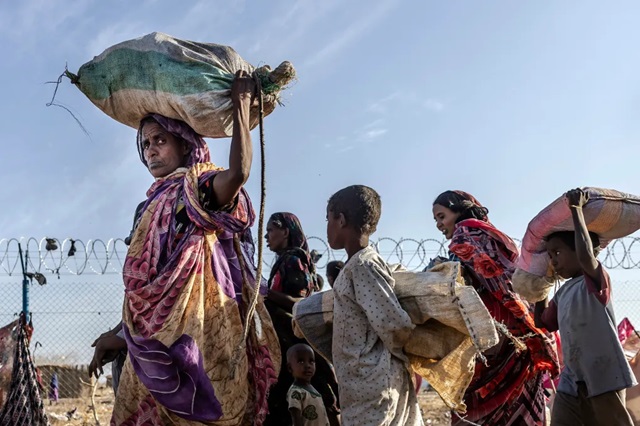
Reports suggest that South Sudan, an African nation struggling with the aftermath of civil war and facing the threat of famine, has held discussions with Israel about the possibility of hosting Palestinians from the Gaza Strip in refugee camps.
South Sudan, which gained independence from Sudan in 2011 as the world’s youngest country, is seeking to strengthen diplomatic ties with Israel and its allies after facing United States visa bans, sanctions targeting members of its ruling elite, aid reductions, and restricted access to international markets.
Joe Szlavik, a Washington-based lobbyist hired by South Sudan to improve relations with the US, said he had been briefed on the talks by officials in Juba, the capital. He told the Associated Press that an Israeli delegation planned to visit South Sudan to assess the feasibility of establishing camps for Gaza residents.
The South Sudanese foreign ministry, however, denied the reports, stating they “do not reflect the official position or policy” of the government.
Israel’s Deputy Minister of Foreign Affairs, Sharren Haskel, posted on X that she met South Sudanese President Salva Kiir Mayardit and her foreign ministry counterparts, signing a diplomatic memorandum of understanding (MoU) and visiting an Israeli trauma center that had treated children from conflict zones.
An Israeli source speaking to Haaretz confirmed that “quiet talks” had taken place to find a country willing to host Gaza residents, but noted there had been no progress beyond initial discussions.
Critics warn that relocating Palestinians from Gaza could prevent them from returning home and potentially facilitate Israeli annexation and settlement expansion, policies promoted by far-right ministers in Israel. Egypt has also opposed plans to move Gaza residents, citing concerns over a potential influx of refugees across its border.
Prime Minister Binyamin Netanyahu previously described a policy of “voluntary migration” for much of Gaza’s population, linking it to earlier statements by US President Donald Trump. In a recent interview on Israeli television, Netanyahu said, “I think that the right thing to do, even according to the laws of war as I know them, is to allow the population to leave, and then you go in with all your might against the enemy who remains there,” without specifying where Gaza residents would be relocated.
Human rights organizations warn that such a plan could constitute forcible expulsion, ethnic cleansing, and a violation of international law, relocating Palestinians from one war-torn, famine-threatened area to another. Israel has previously proposed similar schemes involving Sudan, Somalia, and Somaliland, sometimes in connection with hosting US military bases, but details of these discussions remain undisclosed.
Edmund Yakani, a South Sudanese human rights activist, expressed concern about the plan, saying the country “should not become a dumping ground for people … and it should not accept taking people as negotiating chips to improve relations.”
South Sudan, despite its oil wealth, remains heavily dependent on international aid and struggles with corruption and the legacies of a civil war that killed approximately 400,000 people. The nation already hosts large refugee populations fleeing neighboring conflicts and has in the past accepted deportees from the United States in an effort to improve relations with Washington.
Observers caution that any Palestinian settlement in South Sudan would likely face local hostility, given the nation’s history of religious and ethnic divisions dating back to its struggle for independence.









