


by Our Foreign Affairs Editor
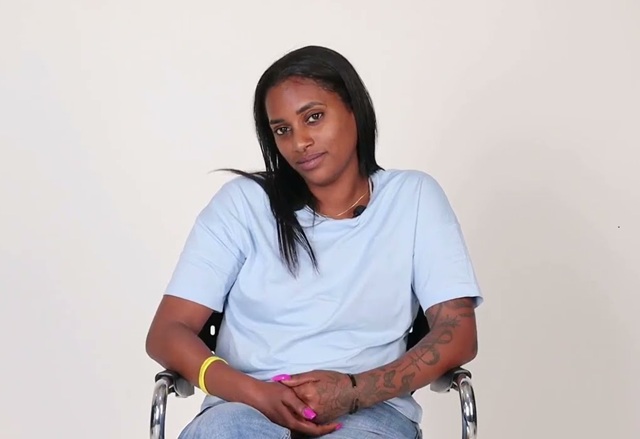
It began like a grotesque parody of cinema: the sudden rupture of joy by carnage. “That was all of a sudden — started like a horror movie,” recalled Mazal Tazazo, her voice trembling yet deliberate. “All were enjoying the Nova Festival, then people started screaming, running here and there. Nothing but gunshots and screaming, while music was still playing loud.” The memory is seared into her consciousness, an indelible collision between the utopia of communal celebration and the abyss of human cruelty.
The Nova Festival, she explained, had always symbolised a transcendent gathering of light, rhythm and tolerance. “It is a community of love, people smiling of all types, of all colours, of all religions. There is no racism — you can be whatever you want, however you want, spreading love.” That morning, as the sun rose and thousands prepared for the ecstasy of dawn, the soundscape was punctured by rocket fire. For Mazal, who grew up accustomed to the intermittent bombardments in southern Israel, the initial response was muted. “I live in Netivot. I live in an area that always suffers from rockets. There is always a period when they decide to bomb us, so I wasn’t too excited. I calmed others. I told them, ‘It’s just rockets. Only rockets.’”
But what unfolded in those moments was unprecedented. “It was no ordinary bombing. Too many rockets. It wasn’t right,” she said, the understatement clashing against the horror that followed. As crowds attempted to flee the festival grounds, she and her friends, Daniel Cohen and Yohai Ben Sachariya, became ensnared in what they believed to be traffic. “In the end it turned out that it wasn’t a traffic jam but cars that were abandoned, because at the ends of the roads the terrorists murdered those who were in the cars. That’s what caused the terribly big traffic jam.”
The nightmare crystallised when language cut through the chaos: Arabic voices, near and unmistakable. “We realised that we had no choice and we also had to abandon our cars… we just ran. Bullets hit the cars. There is no way to explain the scene. I see legs running. I don’t know where they are running to. People ran into the fields, people ran towards the bushes.”
It was there, crouching in the undergrowth, that death’s proximity became absolute. “They arrived. They said in English, ‘Get up, get up, get up, you, you, you.’ I received the blow of the weapon to the head. My whole hand exploded and my head split open too.” She describes with chilling precision how they tied her legs, spoke among themselves, and — by some inexplicable calculation — let her be. “At that point I realised I needed to hold my breath, and that’s what I did. He lifted my face, looked at me, and they just went. I passed out. I was sure they killed me.”
When consciousness returned, reality was more savage still. “The first thing I did was call my girlfriend’s name: Daniel, Daniel. She didn’t answer. I looked up and saw that she was dead. I looked to the right and saw that Yohai was also dead. The first second I looked, I saw they were dead.” The paralysis of survival mingled with an existential disorientation. “You don’t understand what you see. You don’t understand nothing. Just talking to God and saying, I’m staying here. This is my safest place.”
The shooting did not subside. Hours passed in grotesque repetition — gunfire, shouting, silence, and return. “No one came to rescue me. I lay there. They burned everything. They came, killed everyone, and then set fire to all the bushes. They waited on the road for people like me, who were injured, to come out, and then they would kill everyone.”
The choice that followed was between fire and gunfire, an existential arithmetic of terror. “As soon as I noticed there was a fire, I waited for the fire to come closer. When it got really close, I talked to God and made a decision. I ran to the road like crazy, knowing there were terrorists, but the fire scared me more.” The gamble, astonishingly, saved her life. She found temporary concealment in an abandoned car until, as she put it, “an angel named Atai came and opened the door and just took me out.”
Her survival is inseparable from her grief. “When I woke up after two hours and saw Daniel dead, saw Yohai dead… I didn’t look again. I kept my head down. I didn’t want to know. I just prayed, asking the Creator to make this hallucination end.” In survival studies, there is an oft-quoted dictum: to witness atrocity is to inherit an impossible debt. For Mazal, that debt is embodied in the friends who shielded her. “Yohai deserves to be called a hero. He behaved like a fighter in everything. Thanks to him I got to this stage. Thanks to him I am alive.”
The brutality has stripped away illusions of coexistence. “There is no forgiveness for the things they did. It’s okay to protest, it’s okay that you want something and you fight for it. But to come and destroy souls, to murder people while they are still alive… I feel they took a part of my soul, my spirit, my joy. I was a different Mazal before that. I loved and wished we were all together, that there would be peace, and I believed. But today — I am not that Mazal.”
Her academic work in architecture and interior design, and her professional background with at-risk youth, now seem refracted through the prism of survival. The mother of a young son, she measures her existence against the near-obliteration of that bond. “My son thinks I was wounded by shrapnel, so everything is normal for him. Even with the children, rockets are normal. He is my great love, all my strength. I thank God that my child has a mother. I didn’t understand in that moment how close I came to him losing me.”
Reunion with her family was fractured by trauma. “My parents are still having a hard time. My mother is mostly still digesting the fact that I was almost murdered. She is very anxious about everything, very worried.” When she eventually returned home after hospitalisation and rehabilitation, her son clung to her. “He slept with me for a long time in bed, and we say thank you every day.”
Her words expose both the specificity of individual trauma and the collective shattering of a community. Academic discourse often speaks of “ontological insecurity” — the destabilisation of one’s very sense of being-in-the-world. Mazal embodies this rupture. “I will never be safe now. No Jew, no Israeli can be safe unless this ends and there will be no more of this terrorist organisation.”
Yet, in her testimony, there persists a countercurrent of reverence — for her friends, for the strangers who helped her, for her son who anchors her will to endure. “Daniel and Yohai looked after me there. I want their families to be forever a part of my life. Because their son really saved me, and Daniel too.”
Her story is not simply one of victimhood, but of resilience articulated through the most harrowing of lexicons: survival by feigning death, survival through silence, survival by sprinting towards fire rather than bullets. It is testimony that resists the anaesthetising abstraction of numbers and casualty figures. It insists upon the human voice, trembling yet unbroken.
“I don’t know how to explain the fear,” Mazal said, her cadence momentarily faltering. “I didn’t know what fear was until that day. I thought I was dying. But somehow I am here. And I will carry this with me forever.”









