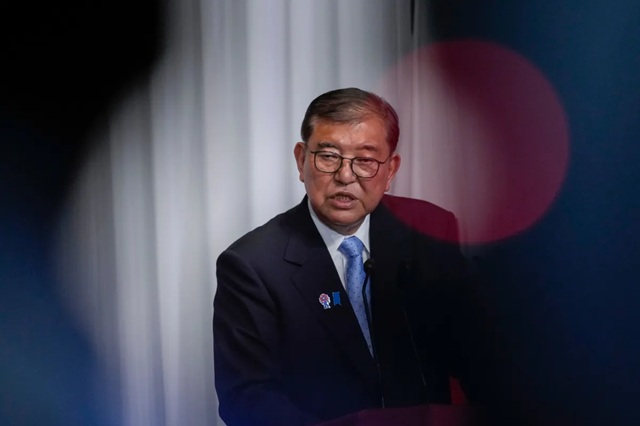
Japanese Prime Minister Shigeru Ishiba is set to resign ahead of a ruling party vote on whether to hold a leadership election, NHK reported on Sunday. The timing of his departure has not yet been announced.
Ishiba’s resignation would come less than a year into his premiership, which has been marked by a series of election setbacks. Following a disappointing showing in July’s parliamentary election, the ruling coalition lost its majority in both chambers of parliament, prompting intense pressure from within the Liberal Democratic Party (LDP) for Ishiba to step down.
The prime minister’s impending exit is expected to create a period of political uncertainty until the LDP selects a successor. Media reports indicate that lawmakers are already positioning themselves for a potential leadership bid. Prospective candidates must secure the support of at least 20 fellow lawmakers to enter the race.
The winner of the party contest will then face a parliamentary vote to officially become prime minister. Despite losing its majority, the LDP-led coalition remains the largest bloc in the lower house, giving its candidate a strong—but not guaranteed—path to premiership.
Restoring public support will be a critical priority for the LDP’s next leader. Ishiba’s tenure has seen consecutive setbacks, beginning with last October’s lower house election and culminating in the July upper house election. The LDP is now governing without a parliamentary majority in either chamber for the first time since its founding in 1955.
Potential successors include former Internal Affairs Minister Sanae Takaichi, who finished second to Ishiba in last year’s leadership race; Agriculture Minister Shinjiro Koizumi, son of former Prime Minister Junichiro Koizumi; and former Economic Security Minister Takayuki Kobayashi. Current Chief Cabinet Secretary Yoshimasa Hayashi and Finance Minister Katsunobu Kato are also being considered as possible contenders.
Ishiba will be the third LDP leader to step down since the assassination of former Prime Minister Shinzo Abe in 2022, a tragedy that left the party struggling to consolidate its leadership.
In the July upper house election, the LDP lost support to the right-wing populist Sanseito party, which campaigned on a “Japanese-First” platform. The Democratic Party for the People gained seats advocating higher take-home pay, while the main opposition Constitutional Democratic Party of Japan maintained its seat count without capitalizing on the LDP’s losses.
An internal LDP review largely attributed the electoral setbacks to the party’s policies, including unpopular inflation measures, rather than to Ishiba personally. Nevertheless, disillusioned party lawmakers had increasingly called for his resignation.