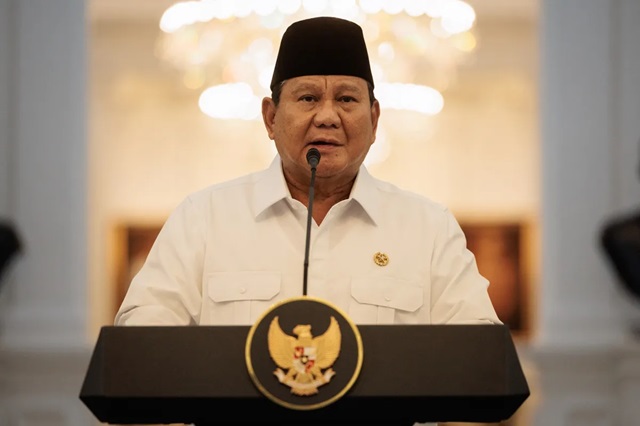
Indonesian President Prabowo Subianto is pursuing an ambitious and risky effort to remake Southeast Asia’s largest economy, consolidating power and targeting the country’s wealthiest business elites, according to a detailed report from Bloomberg.
The push follows deadly riots in Jakarta last month, which nearly prompted the former general to declare martial law. Advisers were split between a heavy-handed crackdown and restraint, Bloomberg reported, citing people familiar with private discussions. Ultimately, Prabowo chose not to deploy the military, but the unrest reinforced his conviction that sweeping action was needed to curb inequality, weaken entrenched business interests, and assert his vision of state-led capitalism.
The first major move came with the abrupt dismissal of Finance Minister Sri Mulyani Indrawati, widely respected by international investors for her fiscal prudence. She was replaced by Purbaya Yudhi Sadewa, who shares Prabowo’s view that the government should be able to take on more debt and exert greater control over the central bank.
Indonesia’s billionaires are now in the president’s sights. Bloomberg reported that Prabowo has signaled plans to claw back what he sees as ill-gotten wealth, including through seizures of palm oil plantations and mining assets. Business elites, wary of further demands, have slowed new investments in response.
Prabowo is also sidelining allies of his predecessor, Joko Widodo. Funding for Jokowi’s $30 billion new capital project has been slashed, while resources are being shifted to Danantara, a new sovereign wealth fund that has absorbed state-owned assets worth around $1 trillion. The president envisions Danantara as the cornerstone of a China-style model of state-driven economic growth.
Markets have shown unease since Sri Mulyani’s removal, even as stocks have held steady. Foreign funds have pulled a net $1.3 billion from local bonds and equities this month, amid fears of eroding central bank independence. “Nervousness is clearly building among investors,” Anders Faergemann, senior portfolio manager at Pinebridge Investments, told Bloomberg.
Meanwhile, Prabowo is stepping up pressure on Indonesia’s richest families. He has held closed-door meetings with magnates including Prajogo Pangestu, the country’s wealthiest man, urging them to contribute more to the economy as he rolls out costly welfare programs like a $21 billion free-lunch initiative. Already, his administration has confiscated roughly 1.5 million hectares of plantations deemed to violate regulations.
Bloomberg’s reporting also highlights fractures within Prabowo’s camp. Some aides worry about his reliance on loyalists over technocrats and warn that his confrontational stance toward tycoons and political rivals risks alienating his parliamentary coalition and sparking further unrest.
Still, the 73-year-old leader has made clear he sees himself as the architect of a historic shift. “Just as a body cannot survive if its blood keeps flowing out, a nation cannot endure if its wealth continually flows abroad,” he said in a speech last month.