


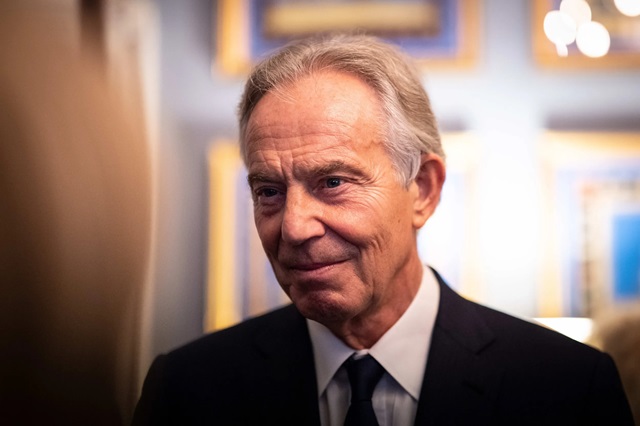
Sir Tony Blair is reportedly preparing to head an interim governing body for Gaza, following discussions with President Donald Trump last month, Times UK reports. The proposed Gaza International Transitional Authority (Gita) could serve as the “supreme political and legal authority” in the territory for up to five years, according to sources familiar with the plan.
Blair, 72, has long been involved in Middle East diplomacy, serving as special envoy for the Quartet — comprising the UN, EU, US, and Russia — from 2007 to 2015. He has been collaborating with Jared Kushner, Trump’s son-in-law, on a post-ceasefire framework for Gaza, which they reportedly discussed with Trump and special envoy Steve Witkoff at the White House in late August. Neither Blair’s foundation nor the White House has publicly commented on the plan.
Under the proposal, Blair would lead a secretariat of up to 25 staff and chair a seven-member board overseeing an executive body administering Gaza. The initiative draws on precedents set in Timor-Leste and Kosovo, aiming to establish governance structures capable of restoring order and ultimately unifying Palestinian territories under the Palestinian Authority.
The plan envisions Gita initially operating from Arish, an Egyptian city near Gaza’s southern border, before relocating into the territory under the protection of a UN-backed multinational force, primarily composed of Arab nations. It aims to provide a transitional framework to facilitate peace and reconstruction in the aftermath of conflict.
At the UN General Assembly in New York, Witkoff presented a 21-point plan to Arab and Muslim leaders, who expressed support in a joint statement. “We reaffirm our commitment to co-operate with President Trump and emphasise the importance of his leadership in order to end the war and open horizons for a just and lasting peace,” they said. Witkoff indicated optimism about reaching a breakthrough in the coming days.
The proposal positions Blair at the center of an unprecedented diplomatic initiative in Gaza, blending international oversight with local governance in an effort to stabilize the region and lay the foundations for long-term peace.









