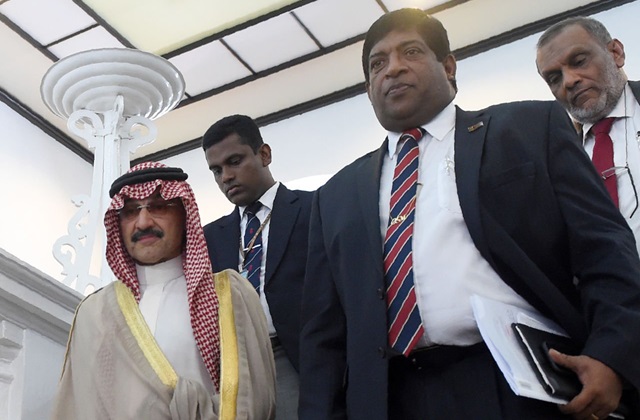
Former Sri Lankan Finance Minister Ravi Karunanayake has raised serious concerns about the government’s planned purchase of 1,775 double cab vehicles, claiming the acquisition is being conducted outside the prescribed international tender process.
Speaking at a media briefing in Colombo yesterday, Mr. Karunanayake highlighted that the government intends to spend Rs. 42.8 billion on the vehicles. He criticized the short 12-day window for the international tender, noting that proper procedure requires 42 days and strict qualifications for applicants, including a minimum annual turnover of Rs. 10 billion and nationwide service capability. According to Karunanayake, only one institution meets these criteria, casting doubt on the fairness and transparency of the process.
The former minister also questioned the necessity of importing such vehicles when local manufacturers could provide them at significantly lower costs. “If purchased locally, each vehicle would cost Rs. 16.5 million, compared to Rs. 24.5 million if imported,” he said, warning that the government’s current plan represents a “waste of foreign exchange” and could be considered a financial misstep.
Karunanayake emphasized the broader economic impact, pointing out that fuel-powered vehicles consume significant resources. He argued that switching to electric vehicles could save Sri Lanka approximately Rs. 8 billion annually on fuel and up to Rs. 40 billion over five years—enough, he remarked, to fund major infrastructure projects like another Mahaweli development.
“Why continue to import fuel-powered vehicles when electric alternatives are available?” he questioned. “If we import electric vehicles, the saved money could even be invested in charging infrastructure across the country, benefiting all Sri Lankans.”
Recalling his earlier parliamentary intervention three months ago, Karunanayake said the government initially planned to procure 2,000 double cabs for members of Parliament. After his objections, the number was reduced to 1,775, excluding 225 vehicles for MPs.
He also drew attention to the scale of government vehicle ownership in Sri Lanka, noting that the state currently has 87,000 vehicles, compared to just 7,800 in Australia, a developed country, highlighting what he described as an inefficient and excessive expenditure.
Karunanayake concluded by urging the government to reconsider its approach and prioritize sustainable and cost-effective alternatives for public vehicle procurement.