


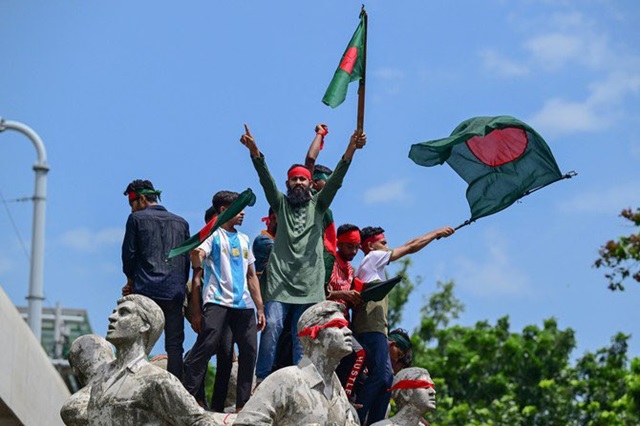
Bangladesh, a nation shaped by the vision of its founding father Sheikh Mujibur Rahman, is facing a perilous political and social crisis, according to former Prime Minister Sheikh Hasina. In a detailed article for The Week, Hasina reflects on her country’s journey from independence to rapid economic growth and warns that recent developments risk undoing decades of progress.
As the daughter of Bangladesh’s founding president, Hasina grew up steeped in politics. She recalls early mornings spent discussing world events with her father and witnessing the hardships faced by ordinary citizens during visits to rural areas. These experiences shaped her lifelong commitment to democratic governance, social welfare, and economic development, principles she sought to uphold throughout her tenure as Prime Minister.
Following Bangladesh’s independence from Pakistan in 1971, Hasina highlights the immense challenges her father faced in building a sovereign nation. Under his leadership, per capita income rose from below $100 in 1972 to over $250 within three years, laying the foundations for social and economic progress. His assassination in 1975, however, triggered a period of military rule that stalled the nation’s development and left a lasting legacy of political instability.

Hasina argues that Bangladesh is now witnessing a similar threat under the unelected interim administration led by Dr Mohammad Yunus. She points to a surge in political violence, lawlessness, and attacks on religious minorities, women, and Awami League supporters. She describes streets filled with fear, sectarian tensions rising, and extremist groups gaining influence—conditions reminiscent of the country’s darkest periods.
During her tenure, Hasina emphasizes, Bangladesh achieved remarkable growth. The country maintained nearly 8 percent GDP growth before the global pandemic, expanded infrastructure, improved healthcare and education, and empowered women to join the workforce in unprecedented numbers. Per capita income rose, foreign reserves increased, and millions were lifted out of absolute poverty. Yet, she stresses, these gains are fragile under the current political climate, with inflation rising, factories closing, and essential public services deteriorating.
She also criticizes Dr Yunus for lacking governance experience and argues that his administration has allowed extremist factions to influence civil life. Attacks on media independence and judicial impartiality have become routine, with journalists harassed and courts described as increasingly politicized. Hasina calls out the so-called International Crimes Tribunal for being weaponized to suppress opposition, warning that the legal system has been used to delegitimize the Awami League while ignoring ongoing abuses by the interim administration.
Central to Hasina’s argument is the need for genuine, participatory elections. She warns that excluding major political parties from the electoral process threatens the country’s democratic foundations and risks disenfranchising millions of citizens. She stresses that only the people of Bangladesh can decide their nation’s future and insists that freedom of speech, political participation, and constitutional rights must be restored for democracy to survive.
Despite the turmoil, Hasina expresses hope in Bangladesh’s resilience. She recalls the country’s history of overcoming genocide, authoritarian rule, and repeated political setbacks, insisting that it is possible to return to true democracy, revive economic growth, and protect the rights of women, minorities, and ordinary citizens. She concludes with a plea for the restoration of democratic governance, social justice, and stability, calling on all stakeholders to safeguard the country’s hard-won progress.

Bangladesh, Hasina argues, stands at a critical crossroads. The choices made today will determine whether the nation reclaims the vision of its founders or slides back into political chaos, social unrest, and authoritarian control.










