


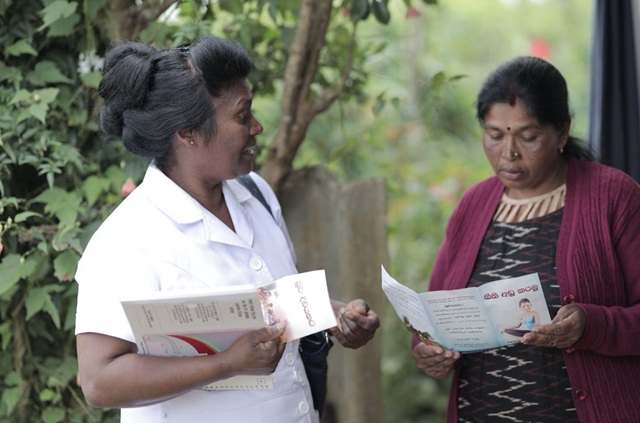
Community members drawn from the grassroots—those who have experienced and dealt with challenges at that level and who have much to share with countless others in similar situations—become community scientists. These individuals offer suggestions for advancing the health and well-being of communities based on their lived experience and acquired expertise. This represents a unique bottom-up approach that contrasts with the traditional top-down methods, which have often yielded less than satisfactory outcomes.
A recent international conference titled “Shaping Our Future through New Coalitions” (SOFTN 2025) was held in Colombo at the Cinnamon Lakeside Hotel. The conference was conducted in collaboration with the University of East Anglia (UK), General Sir John Kotelawala Defence University (Sri Lanka), University of Sharjah (UAE), Federation University (Australia), and the University of the West Indies, St. Augustine Campus (Trinidad and Tobago), as well as the University of Technology, Jamaica. It drew 50 overseas delegates and 90 local participants.
A special feature of the conference was a symposium titled “Successful Change through Community Engagement,” for which a full day was set aside by the organizers. While the entire conference was of immense benefit to attendees and participating countries, including Sri Lanka, this article focuses particularly on the one-day symposium on successful change through community engagement. The community scientists concept was introduced by Professor Duminda Guruge of Rajarata University as a means of engaging communities in health promotion decision-making. The symposium was chaired by Professor Guruge, with Dr. Kalpani Abhayasinghe from General Sir John Kotelawala Defence University serving as co-chair. The keynote address was delivered by Professor Diyanath Samarasinghe, a distinguished academic, clinician, public health advocate, and recipient of an Honorary Doctor of Science degree from Rajarata University.
The speeches, presentations by community scientists, and wide-ranging discussions were particularly valuable. The central message emphasized giving a voice to communities at the grassroots level—acknowledging the importance of their engagement and advice in shaping policies that affect them—and advocating for bottom-up rather than top-down decision-making.
The session showcased a unique initiative rarely seen before in Sri Lanka, or perhaps anywhere else. It transformed the long-standing model of disseminating health promotion knowledge—traditionally dominated by theorists—into one led by individuals from the grassroots with firsthand experience, knowledge, and expertise, aptly referred to as community scientists. This represents a practical and appropriate transformation arising from a change in mindset that calls for a bottom-up strategy to make health promotion more effective and efficient. It contrasts with traditional top-down advocacy that often proceeds without consultation with the grassroots, regardless of impracticality or inappropriateness at that level.
The symposium provided a forum for community scientists—activists working at the grassroots level—to make presentations, share case studies, and engage in meaningful discussions with participants. The event explored practical ways in which ordinary community members apply health promotion principles to achieve measurable and sustainable improvements in well-being across Sri Lanka.
As stated in the introduction to the Foundation for Health Promotion (FHP)—a non-profit training and research organization dedicated to advancing the discipline of health promotion in Sri Lanka—FHP was established in September 1999 to introduce, advocate for, and strengthen the understanding and application of health promotion principles nationwide. At its inception, health promotion was a relatively unfamiliar concept in Sri Lanka. The Foundation emerged to fill this gap, providing a formal organizational base for training, advocacy, and applied research aimed at integrating health promotion philosophy and practice into health and community development.
Participants at the symposium included community scientists, practitioners, and partner organizations representing a wide range of settings, approaches, and outcomes. Their work demonstrated how:
- Local knowledge, participatory methods, and simple, context-sensitive interventions have strengthened health literacy, fostered social support, reduced risk factors, and improved access to services.
- Health promotion theory is translated into practice—how to initiate and sustain processes, assess community health and its determinants, and address those determinants using simple, locally developed tools. The abstract book provides examples from urban, rural, and plantation communities, along with accounts of coalition-building, youth engagement, monitoring and evaluation, and adaptations made in response to cultural and resource constraints.
The abstract book, published by the Foundation for Health Promotion, Sri Lanka, is intended as a practical resource for community leaders, public health professionals, policymakers, researchers, and funders who wish to learn from grassroots experiences and replicate or adapt successful practices. Those interested in the abstract book, symposium outcomes, or further information about the Foundation and its activities can contact FHP via their website.
Panel Discussions
The panel discussions featured community scientists as panellists, sharing their experiences, challenges faced, and solutions developed at the grassroots level, forming a critical backdrop to the discussions that followed.
1. The Community-Led Early Childhood Development in Sri Lanka’s Plantation Sector: A Participatory Model for Transformative Change
Panellists: V. Mallika, S. Subani, V. Malini
Key takeaway: This initiative demonstrated the effectiveness of community-owned, low-cost, and culturally embedded processes in marginalized communities. It offered a replicable model for other underserved populations seeking to break intergenerational cycles of poverty through education. Between December 2022 and July 2025, participation grew from 75 to 134 families. Families documenting their children’s learning increased from 40 to 95; households creating educational toys rose from 8 to 115; and village playhouses tripled from 3 to 9. Notably, 39 children showed improved verbal expression and 33 improved colour recognition, indicating a cultural shift toward collective responsibility for child development.
2. Combating Childhood Malnutrition through Community-Led Nutrition Education in Sri Lanka’s Plantation Sector
Panellists: V. Sivaranjani, S. Darshani, P. Sivapkkiyam
Key takeaway: This case study highlighted the power of community-owned, culturally sensitive approaches to addressing malnutrition. A key innovation was the “Keetkkara Pillai” (Clever Baby) method, using emotive face symbols to encourage children to eat nutritious meals. Nutrient tracking and dietary adjustments were implemented at the household level, including among pregnant mothers. The results were significant—by 2025, only 2.56% of children under five were underweight, and no cases of low birth weight were reported in 2024 or 2025.
3. The Kitchen Calendar: A Youth-Led Initiative to Reduce Non-Communicable Disease (NCD) Risks through Household Dietary Change
Panellist: Dewmini Chamathka – Anuradhapura
Key takeaway: This initiative empowered youth and reshaped household dietary management. Inspired by it, children’s groups in Matara (over 300 km away) and Kegalle adopted the same method with similar results. The low-cost, replicable “Kitchen Calendar” model helped families track and reduce consumption of high-risk foods such as oil, refined flour, sugar, salt, and instant foods. Over one month, 47 participating families achieved measurable outcomes, including average monthly savings of LKR 6,000–7,000 (USD 20–25) per household and reduced reliance on medication for NCD management.
4. Empowering Communities to End Malnutrition: Lessons from a Maternal-Led Nutrition Program in Kegalle, Sri Lanka
Panellist: Wasana Damayanthi – Kegalle
Key takeaway: By June 2025, 16 of 19 children reached optimal weight, and 22 of 26 tracked children achieved healthy weight and height. The program’s success underscored the power of collective maternal leadership, peer support, and culturally adapted, community-led tools in combating malnutrition. It offers a scalable framework for improving child health outcomes in resource-limited settings.
5. From Savings to Sustainability: Collective Behavioural Change and Community Gardening for Rural Well-being
Panellist: Samanthika Jeewanie – Anuradhapura
Key takeaway: This initiative fostered economic resilience, improved nutrition, and strengthened social cohesion. The “Samuha Gowipola” (Communal Home Garden) program, started by seven women, demonstrated how collective savings (LKR 100 daily per household) could finance sustainable agriculture. Over one year, they accumulated LKR 252,000 (USD 830) in a shared fund, “Sepa Ketaya” (Happy Till), which financed gardening tools and materials. During COVID-19 lockdowns, the garden ensured food security and enabled surplus sharing within the community.
6. Children Leading Change: A 13-Year-Old’s Happiness Calendar for Reducing Conflict and Building Empathy
Panellist: Nethsarani Sandaruwani – Matara
Key takeaway: This child-led initiative used a “Happiness Calendar” with visual cues (angry faces for conflict, smiley faces for peaceful interactions) to promote emotional intelligence and conflict resolution. Over three months (June–September 2025), conflicts decreased markedly, and peer adoption of the calendar demonstrated its replicability. The project fostered empathy, self-awareness, and improved family relationships.
Conclusion
The health promotion initiatives based on the concept introduced by Professor Duminda Guruge, and the case studies presented, demonstrate a successful model for fostering environments in which communities are partners and drivers of activities that improve their own health and well-being. Collective ownership of initiatives to address sociological, economic, health, and well-being challenges—as shown during this symposium—encourages sustainable development and empowerment.
This concept could form the basis for expanding the government’s Praja Shakthi (Rural Community Empowerment) program to transform and empower the rural population, which constitutes about 80% of Sri Lanka’s total population. Meaningful participation by communities in implementing policies they have helped shape is not only desirable but a moral and ethical imperative—and a more effective, efficient means of delivering sustainable benefits. The symposium sessions, led by community scientists, provided compelling evidence of the advantages and successes derived from the simple yet powerful practice of listening to and consulting communities at the grassroots level when formulating policies that directly affect them.











