China’s economy showed its softest factory output and retail sales growth in more than a year in October, according to data reported by Reuters, adding urgency to Beijing’s struggle to counter mounting structural pressures and the drag from U.S. President Donald Trump’s trade policies.
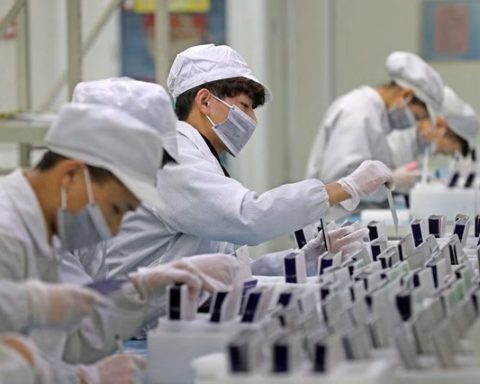
China’s factory output rose just 4.9% year-on-year, the slowest pace since August 2024 and well below expectations. Retail sales also faltered, expanding only 2.9% and marking another month of sluggish consumer spending. For decades, policymakers relied on China’s massive industrial engine and state-funded infrastructure projects to offset downturns at home. But the latest figures underscore how limited those tools have become as both supply and demand strains intensify.
Reuters reported that the escalating tariff war has exposed the vulnerability of China’s export-driven model. Even with a $19 trillion economy, Beijing can no longer depend on simply building more industrial parks or roads to sustain growth. October’s data paints a picture of an economy losing momentum on multiple fronts. Industrial output missed forecasts from a Reuters poll, and consumption remains weak despite earlier hopes of a post-pandemic rebound. Economists, including HSBC’s Fred Neumann, warn that domestic demand is unlikely to fill the widening gap unless stimulus measures expand significantly.
Signs of deterioration extend well beyond factories and retail. Fixed-asset investment contracted 1.7% in the first 10 months of the year, a sharp reversal from earlier expectations. China’s crucial property market, long a pillar of household wealth, continued to slump. New home prices saw their steepest monthly drop in a year, falling 0.5% in October after a 0.4% decline in September, according to Reuters calculations. Even the typically strong fourth-quarter auto market could not avoid the downturn, with car sales breaking an eight-month streak of growth.
The sustained housing slowdown is particularly troubling for policymakers who have resisted large-scale stimulus this year. Despite targeted support measures introduced in late 2024, demand remains fragile, especially in smaller cities facing shrinking populations and an oversupply of resale listings. Analysts like Zhang Dawei argue that further mortgage easing is needed to restore confidence, which has fallen sharply according to surveys by the China Index Academy. Second-hand home prices are dropping in nearly all major surveyed cities, reaching what some economists describe as a critical threshold that could trigger swift government intervention if declines deepen.
As the Communist Party outlines its 2026–2030 development plan, Beijing faces a difficult crossroads. Officials pledge to significantly raise the share of household consumption while maintaining industrial strength, yet the worsening data heightens concerns that the government may again resort to its traditional playbook of directing resources toward large state firms and infrastructure. Economists caution that such an approach may offer short-term growth but risks prolonging the structural imbalances dragging on the world’s second-largest economy.
With exports weakening, property markets contracting, and consumers spending cautiously, China’s path forward appears increasingly constrained. The latest indicators, as highlighted by Reuters, suggest that without deeper economic reforms and more forceful action to stabilize demand, growth may continue to slow well into next year.