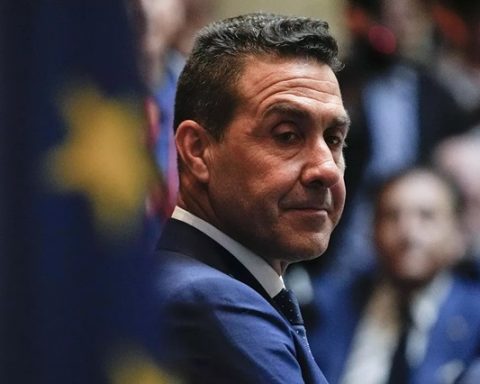
The event marked the departure of the first ore shipment from the world’s largest known untapped deposit of high-grade iron ore, a major victory for the Simandou consortium. The Chinese delegation, led by Vice-Premier Liu Guozhong, emphasized Beijing’s interest in securing premium ore for its steel industry’s decarbonization efforts and reducing dependence on Australian supplies.
Guinea’s Simandou 2040 plan aims to leverage mining revenues to support infrastructure, agriculture, and education, while simultaneously reinforcing the mine’s immediate global relevance. Most of the ore is expected to be exported to China, reflecting the country’s significant investment in the project. However, Guinea and British-Australian mining giant Rio Tinto have pledged to collaborate to stabilize global iron ore prices, concerned that a majority Chinese stake could disrupt the market.
“We are closely following the formation of China Mineral Resources Group (CMRG),” said Bouna Sylla, Guinea’s minister of mines and geology. “It tells us how we must engage in discussions with Rio Tinto about maintaining high iron ore prices.” Sylla highlighted the complex interplay of interests between Guinea, Rio Tinto, and Chinese partners, noting that the country sometimes aligns with Rio Tinto’s focus on price stability and other times with the logistics expertise of Winning Consortium Simandou (WCS).
The Simandou project is expected to ramp up production over 30 months to reach a full commercial capacity of 120 million tonnes annually, positioning Guinea as a top global exporter. The project overcame long-standing infrastructure challenges through the joint funding and construction of a 650km railway and port at Morebaya.
High-grade Simandou ore, particularly its 65 percent iron content blend, targets the premium market alongside Brazil’s Vale, while offering complementary options to Australian Pilbara ore. Industry experts have dubbed the project a potential “Pilbara killer,” signaling its long-term threat to Western Australia’s market dominance.
Hu Wangming, chairman of China Baowu, described the project as “a significant milestone” for the global mining industry. “The stable supply of Simandou’s premium iron ore resources will provide a solid foundation of low-carbon raw materials for China’s steel industry and the global steel sector,” he said. Rio Tinto’s Chris Aitchison added that the ore’s quality enables emerging steelmaking technologies to reduce energy input and carbon dioxide emissions.
Legal and geopolitical analysts, including Beijing-based lawyer Kai Xue, note that China’s transition to a high-tech economy is gradually reducing domestic steel demand, making the strategic development of Simandou even more critical. Xue also emphasized geopolitical factors, citing Australia’s Aukus pact with the United States and United Kingdom as a driver for China to diversify its iron ore supply.
Initiated by Rio Tinto in 1997, the Simandou project faced decades of delays due to political and legal challenges. Final construction began in 2022, with the first shipment now marking the entry of Guinea’s premium ore onto the global stage—a development with potentially transformative implications for markets in China, Europe, the Middle East, and beyond.
Conclusion:
The Simandou launch signals a major shift in the global iron ore landscape. With Chinese, Guinean, and international stakeholders aligned on production and distribution, the high-grade ore is poised to reshape supply chains, influence pricing, and strengthen China’s ambitions in low-carbon steelmaking, while challenging Australia’s Pilbara dominance.