On November 18, 2025, an official press release announced, Today morning, between 6.30 am and 7.00 am IST, an exchange of fire (EOF) occurred between Maoists and the police party in the Maredumilli Mandal area. During the encounter, six Maoists were neutralised.
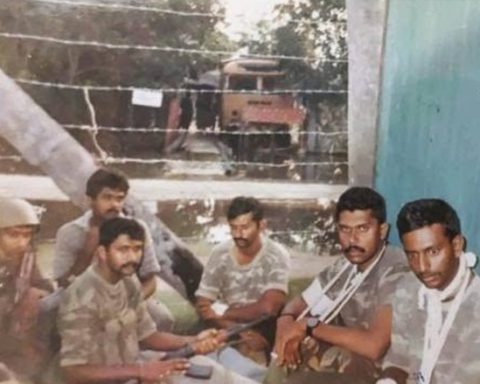
Based on reliable sources and field verification, Police confirmed that Madvi Hidma aka Hidmanna aka Santosh, second in command in the Maoist ranks, a ‘Central Committee (CC)’ member, People’s Liberation Guerrilla Army (PLGA) Battalion No.1 ‘commander’, his wife Madakam Raje, and four of his security team, Deve, Lakmal aka Chaitu, Malla aka Mallalu and Kamlu aka Kamlesh, had been killed.
The killing of Madvi Hidma – arguably the most lethal military strategist of the CPI-Maoist – in the Maredumilli Forests of Andhra Pradesh marks one of the most consequential setbacks for the insurgency since the decimation of the People’s War Group (PWG) leadership in the early 2000s. For two decades, Hidma embodied the Maoists’ capacity for high-impact violence, orchestrating a series of devastating ambushes across South Bastar. His death, following cascading surrenders and a rapid attrition of leadership through 2024-25, significantly accelerates the trajectory toward the Union Government’s declared deadline for ending Naxalism by March 31, 2026.
Born in the Puvarti village of Sukma District of Chhattisgarh in 1981 and inducted into the ‘Bal Sangham’ [Children’s Wing] as a teenager, Hidma rose – exceptionally for a Bastar tribal – into the elite ‘CC’. His operational imprint is visible across some of the deadliest attacks in India’s history of insurgency: the Tadmetla massacre (2010) that killed 76 Central Reserve Police Force (CRPF) personnel; the Jhiram Ghati attack (2013) that eliminated top Chhattisgarh Congress leaders, among 27 killed; the Burkapal ambush (2017), which killed 25 CRPF personnel and one Maoist; and the Tekulguda/Minpa encounter that left 21 security personnel dead, among others. His mastery over guerrilla manoeuvres, deep local networks, and obsessive documentation of tactical errors made him the Maoists’ most formidable battlefield asset.
The CPI-Maoist’s violence entered a sustained decline from around 2011. However, the most significant territorial contraction, particularly the erosion of core zones such as Abujhmaad, once the outfit’s ‘safest sanctuary’, accelerated after 2020, and by 2024-25, driven by intensifying counter-insurgency operations and development interventions, forced Hidma and his Battalion No. 1 to shift repeatedly across the Chhattisgarh-Telangana-Andhra Pradesh tri-junction. Successive operations, including the 21-day Karregutta Hills operation that neutralized 31 Maoists between April 21-May 12, 2025, and the tightening intelligence grid, left his group increasingly exposed. While Maharashtra and Chhattisgarh facilitated an outreach to Hidma’s family, urging surrender, the eventual encounter underscores the narrowing space for negotiation within the outfit’s hardline ranks.
The broader organisational picture is now stark, as leadership attrition in the party has been catastrophic. The status of the list of 2014 CPI-Maoist ‘Politburo’ and ‘CC’ members, for instance, discussed earlier, has been left with only nine members, five ‘Politburo’, two ‘CC’, and two ‘alternate CC’ members, remain elusive, and some of these may no longer be ‘operational’, as many are elderly, medically unfit, or geographically isolated. Recent losses include ‘General Secretary’ Nambala Keshava Rao aka Basava Raju aka Ganganna aka Krishna aka Vijay aka Prakash (70), while ‘Politburo member (PBM)’ Mallojula Venugopal Rao aka Sonu aka Bhupathi aka Abhay and ‘CC’ members Sujata aka Pothula Padmavathi, Chandranna aka Pulluri Prasad Rao aka Somanna, and Rupesh, surrendered. Neutralised ‘CC’ figures in 2025 include Kadari Satyanarayan Reddy aka Kosa aka Gopanna aka Buchanna, Katta Ramchandra Reddy aka Gudsa Usendi aka Vikalp, Chalapati aka Ramachandra Reddy Gari Pratap Reddy aka Appa Rao, Gajrala Ravi aka Uday, Vivek Chandri Yadav aka Prayag, and Thentu Laxmi aka Sudhakar, TLN Chalam aka Gautham aka Anand aka Chanti Balakrishna.
Simultaneously, mass surrenders – 258 Maoists in Gadchiroli and Jagdalpur in October 2025 alone – demonstrate organisational demoralisation and the success of rehabilitation measures such as Chhattisgarh’s Rehabilitation-to-Rejuvenation programme, which absorbs ex-cadres into livelihood schemes, training initiatives, and community-run establishments. Field reports indicate a visible erosion of the Maoists’ parallel governance structures in South Bastar, with media reports estimating cadre strength at 100 to 150 armed fighters, fragmented across the Kanger National Park, Gariabandh, and inter-State border zones.
The tactical environment has similarly shifted. CRPF, Commando Battalion for Resolute Action (CoBRA), Greyhounds, Indo-Tibetan Border Police (ITBP), and State Police formations [District Reserve Guards (DRG), Bastar Fighters, etc.,] have sustained a high operational tempo, increased night and deep-penetration patrols, and consolidating newly liberated zones through road-building, telecom installation, and community engagement. With Hidma’s death, the Maoists lose not just battlefield expertise but ideological symbolism – he was their only Bastar tribal face in the ‘CC’, crucial for sustaining recruitment among impoverished local youth.
Hidma’s elimination does not signify the absolute end of Maoist violence, but it closes the movement’s most potent chapter. From Tadmetla to Maredumilli, his trajectory defined the insurgency’s violent apex. His death now defines its irreversible decline. With sustained pressure, community integration, and rehabilitation frameworks, the State appears closer than ever to meeting the March 2026 objective.