Sri Lanka’s nationwide electricity blackout on 17 October caused economic losses exceeding 4 billion rupees, according to former electricity minister and United Republican Front leader Patali Champika Ranawaka, who has called on the government to establish responsibility through an independent investigation.
Speaking on 18 October, Ranawaka questioned who would be held accountable for the financial damage caused by the sudden collapse of the national electricity transmission system, which he said had left the country without power for more than seven hours.
He said reports indicated that electricity companies had incurred losses exceeding 400 million rupees as a result of the disruption. The wider economic damage, however, was estimated to be more than ten times that amount, or over 4 billion rupees, he said.
Ranawaka based his estimate on his assertion that electricity contributes between 15 and 20 per cent of Sri Lanka’s gross domestic product. He argued that the impact of a prolonged interruption to the national power supply extended beyond electricity providers to the broader economy.
Although power failures can occur because of natural disasters and technical problems, Ranawaka said Sri Lanka had invested substantial sums since 2019 in establishing and maintaining a system control centre intended to help prevent nationwide electricity disruptions.
He questioned why the system had failed to prevent the latest blackout and said an investigation should establish the precise sequence of events and identify those responsible.
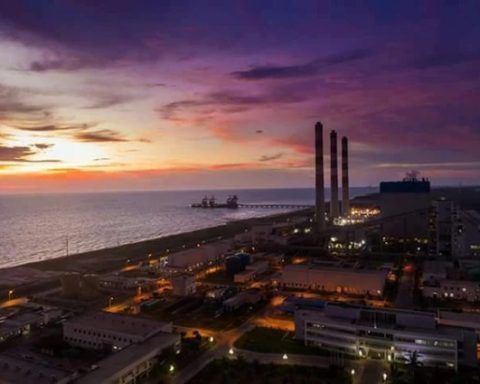
Ranawaka cited unofficial reports suggesting that the nationwide failure had been triggered by a breakdown at the Lakvijaya coal power plant in Puttalam, also known as the Norochcholai power plant. He did not present the reported link as an officially established finding.
The National System Operator has separately said that a generating unit disconnected from the national grid on 17 October, creating an imbalance that caused the entire power system to collapse in less than 30 seconds. The operator has launched an internal investigation to determine the underlying causes of the outage.
Ranawaka also referred to a similar incident on 9 February 2025, claiming that neither an internal nor an external investigation had been conducted to identify those responsible for that failure.
He said the government had a responsibility to ensure that the law was applied equally and to commission a formal, independent inquiry into the circumstances that caused the latest disruption and the resulting losses to electricity companies and the national economy.
“Who is responsible for a process that caused such losses to electricity companies and the country’s economy?” he asked, arguing that those found responsible should face appropriate punishment.
Ranawaka also raised concerns about what he described as a government effort to restrict solar power generation by using the recent electricity failures as a pretext. He urged vigilance over what he characterised as a deliberate attempt to curtail solar energy.
He provided no further details in his statement to substantiate that allegation.