


In the Lincolnshire countryside of England, Alex Leiserach and his wife Louise experienced a technological shock after moving from West Sussex: internet so slow that web pages seemed to load pixel by pixel, a near throwback to the dial-up era. Frustrated by the limitations of the existing copper telephone line and the slow rollout of Project Gigabit—the UK government’s £5 billion initiative to bring fibre broadband to 99 percent of households—the couple turned to an unconventional solution: Starlink, the satellite internet service operated by Elon Musk’s SpaceX.
For £75 per month, plus a £299 one-time fee for the Starlink dish, the Leiserachs now enjoy high-speed internet beamed from nearly 9,000 satellites orbiting just 340 miles above Earth. “There could potentially be our five units in the garden, plus us, streaming video at the same time—and we’ve never noticed anything buffer,” Alex Leiserach told Times UK. The service is critical to their glamping business, The Layby Lincs, powering everything from their website to social media channels and online bookings, enabling them to operate in a location previously considered digitally isolated.
Starlink’s expansion is not limited to rural England. Globally, the service reached eight million paying customers this month, nearly quadrupling from 2.3 million at the start of 2024, according to Times UK. Sales are estimated at $7.7 billion for 2024, surpassing SpaceX’s revenue from rocket launches for government and commercial clients. SpaceX now launches rockets roughly every other day, adding about a dozen satellites per flight to its low Earth orbit constellation. Unlike traditional geostationary satellites situated 22,000 miles from Earth, Starlink’s low orbit minimizes latency, delivering speeds comparable to terrestrial broadband. This has opened the door to high-speed internet for communities and businesses worldwide that were long left offline.
The implications are vast. Starlink connects not only remote villages in England but also farmers with smart farm technology, deep-sea fishing vessels in the North Pacific, and military operations in Ukraine. Ofcom estimates that 2 percent of Britons over the age of 16—1.3 million people—lack access to broadband, highlighting a problem mirrored in many countries. Globally, the World Economic Forum estimates that over two billion people remain without internet access, leaving them unable to participate fully in the modern economy. Starlink’s satellite network promises to bridge this digital divide.
Experts caution, however, that reliance on a single private provider carries risks. A software outage in September briefly cut service across the network, affecting users from remote Ukrainian battlefields to Leiserach’s glamping site. Jonathan McDonnell, an astronomer at the Harvard-Smithsonian Center for Astrophysics, warned that the rapid growth of satellites—traveling at 17,000 miles per hour—raises the risk of collisions, generating debris that could endanger other satellites and critical space-based infrastructure.
Despite these concerns, the benefits are tangible and immediate. In Kingsdown, a village near Bath, retired tech worker Simon Burton turned to Starlink after waiting a year for BT Openreach to install fibre. “We can see Bath out the window, but there is no fibre in the village,” he said. “Starlink was the obvious answer.” Steve Durkin, founder of Rutland Broadband and installer of Starlink systems, told Times UK, “The rural community absolutely needs internet connectivity. Farmers all have smart farms. There’s no good alternative. Starlink has been a game-changer.”
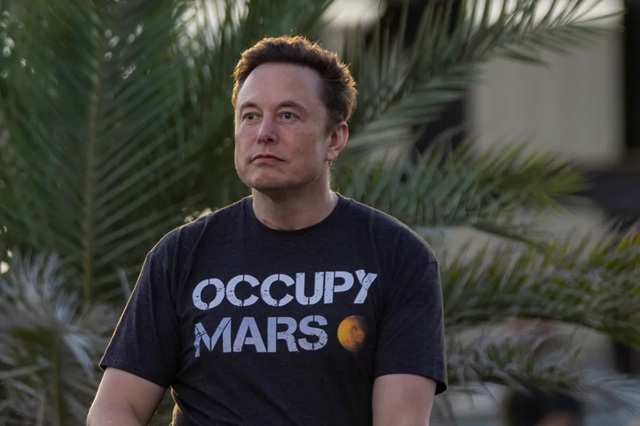
Starlink is part of a broader vision by Musk, whose goal of building reusable rockets and low-cost launch systems has revolutionized spaceflight. The Falcon 9 rocket, SpaceX’s workhorse, now launches satellites, cargo, and even passenger hardware into orbit with unprecedented frequency and precision. Musk’s ambition extends beyond Earth, but his immediate achievement is reshaping global communications infrastructure, offering high-speed connectivity to millions of people previously left offline.
While Starlink’s global rollout is accelerating, experts and users alike recognize the potential vulnerabilities inherent in depending on one company, especially one led by a figure as unpredictable as Musk. Alex Leiserach noted, “He seems to be very flighty. You don’t want it to be the only option because really, you’re at Starlink’s mercy. No one likes a monopoly.” Yet for countless users worldwide, Starlink is more than a convenience—it is the digital lifeline to education, commerce, and connection, a technological bridge to the 21st century for regions long ignored by traditional infrastructure.











