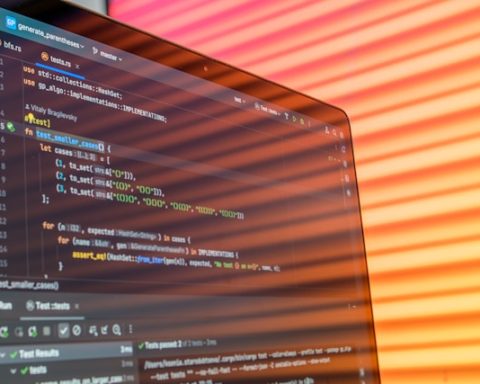
Artificial intelligence research is entering a bold new era as scientists push to combine neural networks with symbolic reasoning, the so-called “good old-fashioned AI” that relies on formal rules and logical relationships. According to a recent discussion among members of the Association for the Advancement of Artificial Intelligence (AAAI), neural networks alone are unlikely to achieve human-level intelligence. Instead, experts argue that a heavy dose of symbolic AI will be essential for building systems capable of general reasoning and reliable decision-making.
Symbolic AI, which dominated early efforts in the field, can encode knowledge in a clear, interpretable way, from mathematical equations to ‘if–then’ statements. Neural networks, by contrast, excel at learning from massive datasets and have powered the rise of large language models like ChatGPT. The emerging field of neurosymbolic AI seeks to meld these approaches, offering a path toward artificial general intelligence (AGI) that can generalize knowledge across tasks as humans do. Research highlighted in Nature shows a surge in interest in neurosymbolic AI since 2021, with applications ranging from robot training to solving complex mathematics problems.
Neurosymbolic systems already demonstrate impressive capabilities. Google DeepMind’s AlphaGeometry, for example, combines neural networks with symbolic reasoning to solve mathematics Olympiad questions accurately. Other approaches include logic tensor networks, which encode symbolic logic for neural systems, and hybrid methods like Program-Aided Language (PAL) models that use symbolic code to guide large language models. Such systems promise greater reliability than neural networks alone, which can generate errors when reasoning about concepts they haven’t explicitly learned.
Despite growing enthusiasm, the field is not without controversy. Some AI pioneers, such as Richard Sutton, argue that large-scale neural networks trained on raw data outperform symbolic systems and that adding symbolic elements may be unnecessary or even counterproductive. Others, like Gary Marcus and Leslie Kaelbling, see the integration of neural networks and symbolic reasoning as a pragmatic strategy to achieve smarter and more trustworthy AI. Research in neurosymbolic AI continues to explore how to combine the two paradigms effectively, with the ultimate goal of creating systems that can invent new rules, discover previously unknown concepts, and even teach humans in the process.
The challenge remains formidable. Symbolic knowledge can be difficult to encode, neural networks can be prone to “black box” errors, and building a flexible AI conductor to manage both approaches is still largely theoretical. Yet the potential rewards—AI that reasons logically, adapts flexibly, and possibly surpasses human intelligence—have researchers racing to develop the next generation of intelligent machines. As highlighted by Nature, the convergence of these two AI worlds could redefine what machines are capable of, signaling a new chapter in humanity’s quest to create thinking machines.