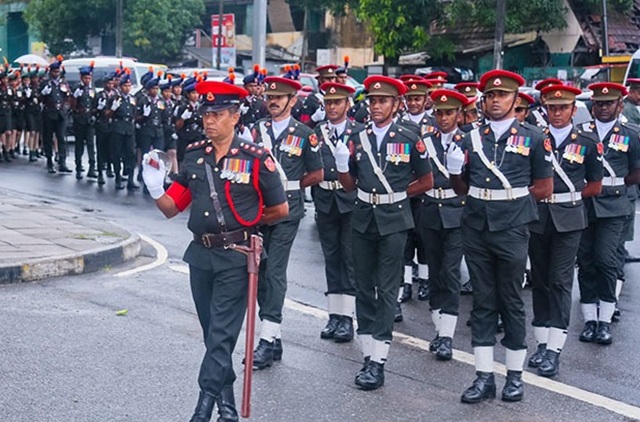
Late Brigadier Vipul Botejue’s death on 25 Nov 25 after a debilitating illness brought sorrow and grief that will take a very long time to heal, not only for his family and relatives but also for his many friends from school and his lifelong companions in the Armed Forces. They all came in numbers rarely seen at a military funeral in peacetime.
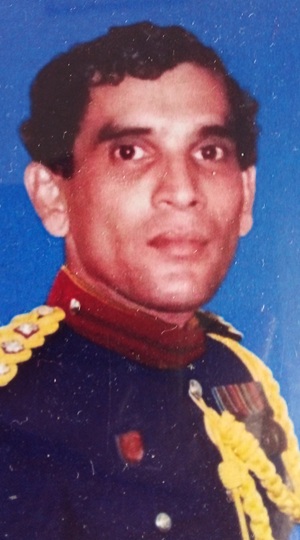
He blazed a glorious path in the Army. He was the very epitome of a professional and ethical combat leader. He was a very handsome, powerfully built, tall, extremely fit and tough, highly skilled infantry officer who proved himself many times in command and close combat from South to North, winning awards for gallantry in the face of the enemy. He was a natural, inspiring leader, intelligent, widely read, thoroughly knowledgeable, not only about his profession, and courageous. He did not tolerate incompetents, shirkers, or crooks.
Coming from a family background that respected the best in culture, traditions, and morality, he was exemplary. He never exulted in taking life in combat. His constant concern in battle was for his soldiers’ lives. He was apolitical, as were the best military officers. His leadership was such that those whom he served and cared for would literally follow him in battle anywhere, with absolute confidence.
He was a man of his word, straightforward, unafraid to speak his mind, extremely bold, with unquestioned integrity, unselfish and helpful to many. He had received the best of battle training in India and in England. Being ambitious, he qualified at a competitive examination and passed the Staff and Command course in Bangladesh. This is the sine qua non for high command, which he would have reached under normal circumstances. He was also a Chief Instructor at the Combat Training School, Ampara, and Instructor, Officer Cadet Wing, SL Military Academy, Diyatalawa. Only outstanding officers are selected to be instructors there. He imparted his knowledge with enthusiasm and flair. His character and proven military competencies gave his wards overwhelming confidence.
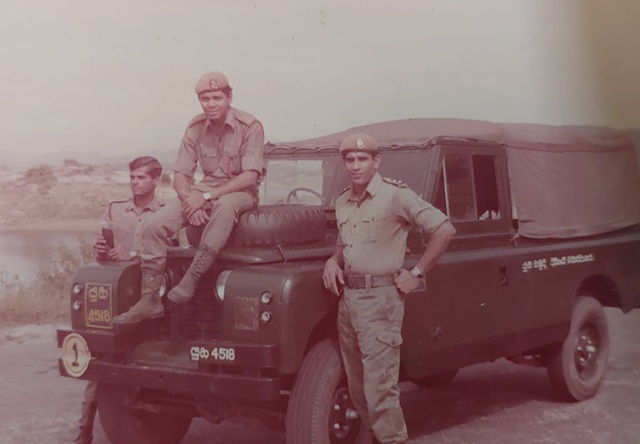
When he made decisions, combat or otherwise, he never changed them, possibly causing tremors and grief to some of his seniors.
He was a rare military officer, even among a special breed whose contract with the nation is that they do their duty even if they have to die doing it.
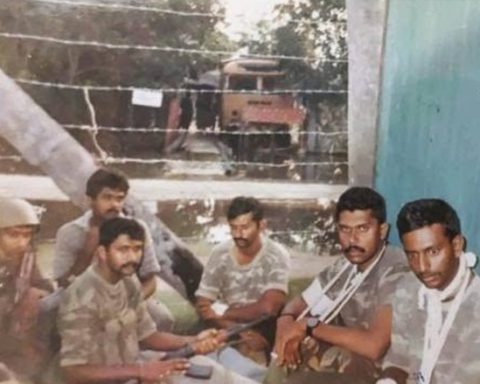
The highlight of his career was the splendid victory of the First Battalion Gemunu Watch over the LTTE under his command at the Vadamarachchi battle in 1987. This was a stunning victory, the first ever in conventional warfare against the LTTE. It gave hope of an early end to the conflict. It was, however, not to be, with the advent of the IPKF. He served in Colonel (later Major General) late Wijaya Wimalaratne’s brigade, flanked by Major (later Colonel) Gotabaya Rajapakse’s Gajaba Battalion. He took his objective well ahead of the flanking battalion, to the surprise and delight of all. The flanking brigade was commanded by Brigadier (later Lt Gen) Denzil Kobbekaduwa.
In earlier night operations in the same area, he, as Commanding Officer, was by the side of his Company Commander and good friend, the effervescent Major Srimal Mendis, who was killed by a grenade attack. This had a devastating and haunting effect on him.
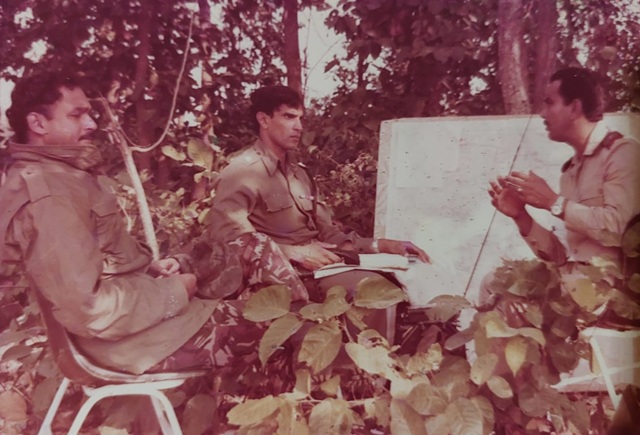
A Royalist, he started his career in 1969 as an Army officer cadet of Intake Two at what is now the SL Military Academy, Diyatalawa. He was a cut above most. He played basketball, where it was whispered that the cadets ‘bumped’ their instructor, the brilliant PMA-trained Lieutenant (later Lt Col) Jayantha de Silva, just to see if he could be injured. They failed. He played a robust game of rugby for the Diyatalawa Army XV that won the SLRFU ‘C’ Division championship, and later for his Regiment. Few know he also played a little cricket for Army Diyatalawa at Badulla, where he enthusiastically bowled rip-roaring fast balls, most erratically.
His operational career began on anti-illicit immigration operations on the beaches and in the seas of Mannar. Needing no supervision, together with Lieutenant (later Lt Col Sunil Peiris, founder Commander of the Commandos), he patrolled diligently with his men by day and three nights weekly on land and on boat patrols at sea along Adam’s Bridge. This included swimming in mid-sea to avoid being struck by a shore-skirting maduwa (skate)’s vicious tail. He also carried out anti-smuggling duties equally well in Jaffna with Lt (later Brig) T. D. Rajapakse.
He came into national limelight when leading the search for survivors, there being none of the 191 passengers, with his company soldiers in the horrific Martin Air plane crash on the Seven Virgins Mountain range in Maskeliya in 1974. The elusive black box was found after a few days of relentless searching in the treacherous ravine below the hills.
Before the Vadamarachchi battle, the Brigadier trained his men very hard and thoroughly. He then gave them a week’s leave prior to the impending battle. His Division Commander, Maj Gen C. H. Fernando, warned him that his men might not report back for duty, as desertion was not uncommon. Lt Col Botejue had implicit faith in his men. Except for a couple of privates who remained absent forever, the rest came back singing lustily in hired buses after their trucks had broken down, shortly after dusk, to the relief of an anxious Commanding Officer.
After Vadamarachchi came the IPKF, which was uninvited by the people of Sri Lanka but was technically not an invader. A few days later, an Indian Colonel arrived at the First Battalion’s gate. He was invited in, warmly received, and pleasantries exchanged. The Indian officer then casually said he would be coming with his battalion the next day to take over the camp. He was told in no uncertain terms to leave immediately and warned that if he came again it would lead to unpleasant consequences. An obsequious Army HQ panicked when informed of the Brigadier’s riposte. The Battalion was immediately packed off to the South, AHQ, taking counsel of its fears of a trend developing, ordered that the battalion should go not as a unit but broken into companies. Vipul was sent to Hambantota and later was Security Force Commander and Coordinating Officer, Badulla, during the JVP’s terror campaign (1989/90).
Having operated against the JVP in Polonnaruwa in the 1971 insurgency, Brig Botejue’s career was cut short when serving in Badulla. He refused to obey the criminal orders of the Deputy Minister of Defence. A servile Army Commander, instead of standing up for an outstanding Commanding Officer who had proved himself in battle and had lawfully refused to obey criminal orders, abruptly ended Brigadier Botejue’s career.
This was an outstanding officer who could have, in time, possibly commanded the Army. The irony was that this Army Commander had never been under fire, except when he literally shot himself in the foot at an Army shooting competition, and had miserably failed to qualify for the Staff College course. He may not have heard that Napoleon had said that any ‘commander who carries out a plan which is defective is at fault…and should tender his resignation rather than be an instrument for his army’s downfall’. So when he was ordered to arrange delivery of weapons and ammunition to the enemy (LTTE), an act of treachery, he did so without a squeak. The Deputy Minister, a lacklustre tea planter, was promoted General.
This bucking of the dreaded Deputy Minister started with Lt Col Sunil Peiris (founder Commander of the Commandos, formerly from the Gemunu Watch). After Vipul came Lt Col Lalith Guneratne (Armoured Corps). Major (later Brigadier) Hiran Halangode, Vipul’s second-in-command serving in Monaragala, also stood his ground just as uncompromisingly when confronted, but survived.
These actions must be seen in their proper context. This was not mutiny. The Commander-in-Chief, two retired Generals in the Defence Ministry, and the Army Commander did not have the courage to stand up to that devil incarnate of a Deputy Minister. The stains will never be erased. Would the Brigadier’s example set a standard so that no one in the future would ever dare create a disconnect with the Army again? The consequences clearly shattered Brig Botejue, who became disillusioned and psychologically distressed thereafter.
Leaving the Army with his head held high, he was held in respect by all good men of the Forces. He served as a Vice President of the Gemunu Watch Ex-Servicemen’s Association, looking after soldiers’ welfare, a timeless tradition for senior Commanding Officers. He was also a prominent official of the Sri Lanka National Aquatics management, in which sports, together with his brothers, late Asitha and Mayura, they had an enviable family contribution in performance at national level too.
He served in various commercial companies thereafter, including one boastfully described as the biggest business conglomerate in Sri Lanka. He was appointed Controller of its flagship bank by the Chairman, without an interview, based mainly on his personality and reputation. The Chairman, however, did not know that while he and other CEOs made decisions that affected people’s livelihoods, Brig Botejue, like Army leaders, had made decisions that affected people’s lives. Integrity was inviolable. So when that Chairman decided on a diabolical plan to make use of the Brigadier’s credentials to circumvent Sri Lanka Customs laws on his return from Dubai, it flopped. When the Brigadier learned what a near escape he had, he was furious and wanted to physically deal with that CEO. His friends dissuaded him. He resigned.
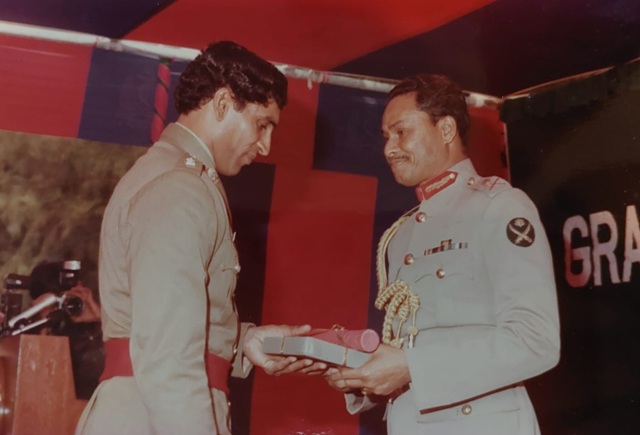
This possibly compounded his already traumatised mind, leading on to his final journey that ended in the Army Hospital, where the staff worked wonders to keep him alive in his final battle.
The following, sent by his Military Academy Diyatalawa Intake Two and long-time friend Lt Col (Retd) Pastor Geoffrey Kathiriarachchi from Australia, is a most fitting epitaph: ‘It is the saddest news I’ve had for a long time. Our dear friend, batch mate, brother-in-arms, with a personality larger than life, is no longer with us. We grieve together with his family and friends. Their loss is our loss. We farewell our fallen hero with heavy hearts. We thank him for the good times we had together, the wonderful memories that will live in our hearts. May he rest in peace.’
Brigadier Vipul Botejue, predeceased by his brother Asitha, left behind his daughter Lilanka and son Viren, sisters Chandani and Dineli, and brother Mayura. He would have entered Valhalla, the abode reserved for fallen warriors.