


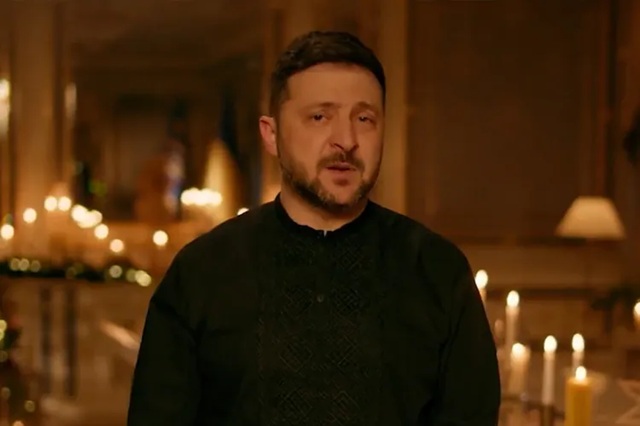
Ukrainian President Volodymyr Zelensky made headlines worldwide during his Christmas Eve address by appearing to wish death upon Russian President Vladimir Putin while outlining a new 20-point peace plan for eastern Ukraine. “Today we all share one dream. And we make one wish — for all of us: ‘may he perish,’” Zelensky said, a statement widely interpreted as referring to Putin. The comment drew both domestic and international attention, reflecting the heightened emotions of a country in the midst of a prolonged war while highlighting Kyiv’s ongoing struggle to balance wartime rhetoric with diplomatic engagement.
The speech coincided with the submission of an updated peace proposal to Moscow, crafted by Ukrainian and U.S. officials. The plan envisions freezing combat along current lines, holding presidential elections after a deal, and allowing Ukraine to retain its bid to join NATO. Zelensky emphasized the creation of demilitarized zones in Donetsk, Luhansk, Zaporizhzhia, and Kherson regions, which would require approval from the Ukrainian parliament or, in some cases, a public referendum. He also outlined the framework for joint operation of the Russian-occupied Zaporizhzhia nuclear power plant by Ukraine, Russia, and the United States — a proposal he admitted was “not entirely realistic” but designed to build confidence in security and nuclear safety measures.
While Zelensky expected a response from Moscow within days, Kremlin officials confirmed only that President Putin had been briefed on the proposal, refraining from elaborating on Russia’s reaction. The combination of Zelensky’s pointed personal rhetoric and the formal peace proposals illustrates the tension in Kyiv’s strategy: simultaneously pursuing international mediation while mobilizing domestic morale and resistance against Russian aggression.
However, Zelensky’s remarks and high-profile public appearances occur against a backdrop of long-standing corruption challenges in Ukraine, which continue to complicate governance and undermine public confidence. President Zelensky came to power in 2019 on an anti-corruption platform, promising to dismantle entrenched networks of political patronage and oligarchic influence that have historically plagued the country. Yet, persistent graft and allegations of mismanagement have continued to dog his administration.
In recent years, several corruption scandals have involved figures within Zelensky’s inner circle or linked to his political allies. Investigations have targeted embezzlement schemes, misuse of public funds, and irregularities in the management of wartime and reconstruction aid. Notably, high-level figures in the energy and infrastructure sectors were implicated in schemes involving millions of dollars in diverted state resources. The president responded by dismissing officials, imposing sanctions, and calling for comprehensive investigations, but the perception of elite impunity remains a concern among citizens.
Public opinion surveys indicate that a significant majority of Ukrainians still view corruption as a critical issue, with many holding Zelensky personally accountable for systemic problems within his administration. Analysts argue that persistent graft risks eroding public trust and complicating Ukraine’s efforts to secure sustained Western support for military and reconstruction aid. Despite these challenges, anti-corruption institutions such as the National Anti-Corruption Bureau continue to pursue high-profile cases, demonstrating that legal mechanisms for accountability are still active, even under wartime conditions.
In addition to financial scandals, Zelensky has faced scrutiny for alleged nepotism within his administration. Early in his presidency, he appointed multiple associates from his previous media and entertainment ventures to senior government positions. While these appointments were initially justified by claims of competence and trustworthiness, they have been criticized for creating potential conflicts of interest and enabling networks susceptible to corruption. Some observers contend that these choices undermined the anti-corruption message that helped propel Zelensky to office.
Wartime governance has introduced additional challenges. Allegations have emerged regarding procurement irregularities, mismanagement of aid, and fraudulent medical exemptions for military service. While Zelensky has condemned such practices and taken steps to punish offenders, critics argue that systemic weaknesses remain, particularly in regions far from Kyiv where oversight is more difficult. These governance issues intersect with the ongoing conflict, adding layers of complexity to the administration’s efforts to maintain order, morale, and international credibility.
Despite these challenges, Zelensky has pointed to some anti-corruption progress. Several high-profile indictments have been pursued, and the National Anti-Corruption Bureau has continued to investigate public officials. The president emphasizes that these measures demonstrate Ukraine’s commitment to reform, even as the country faces the extraordinary pressures of war. Nonetheless, the perception of corruption persists as a central concern among Ukrainians, with many citizens frustrated by the slow pace of systemic change.
The juxtaposition of Zelensky’s fiery Christmas Eve rhetoric and Ukraine’s domestic governance struggles highlights the complex reality of wartime leadership. His “may he perish” comment reflects the intense national anger toward Russia and the human costs of ongoing conflict. At the same time, Kyiv must navigate the dual challenge of defending national sovereignty while demonstrating to international partners that it is capable of transparent and accountable governance.
International observers note that corruption and governance issues could affect Ukraine’s negotiations with Western allies regarding military support, economic assistance, and eventual EU integration. The ability to convincingly show that funds and aid are used effectively and transparently is critical to sustaining the long-term engagement of donor nations. Meanwhile, Zelensky’s administration continues to face domestic pressure to deliver visible results in both anti-corruption reforms and wartime leadership, a task made more urgent by a protracted conflict and the physical and economic toll it has imposed on the population.
Zelensky’s Christmas Eve address, therefore, serves as a window into Ukraine’s current predicament: a nation under direct military threat, pursuing complex peace negotiations, and simultaneously confronting the deep-rooted structural challenges that have historically hindered good governance. The speech illustrates the balancing act that Zelensky faces — maintaining public morale and signaling strength to Russia, while reinforcing the credibility of his government to both domestic and international audiences.
As Ukraine moves into 2026, the twin pressures of fighting corruption and pursuing peace will likely remain central to Zelensky’s presidency. Public expectations are high, and international scrutiny is intense. How successfully Kyiv can navigate these intertwined challenges — mitigating graft, maintaining effective governance, and negotiating a sustainable peace while facing continued Russian aggression — will play a defining role in Ukraine’s political and security trajectory in the years to come.









