


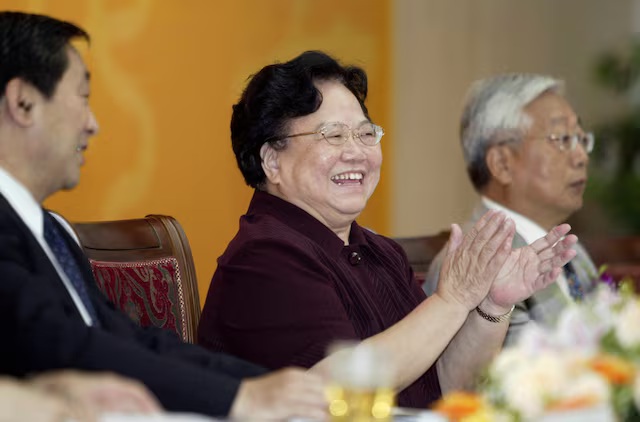
The death of a former senior official who once oversaw China’s one-child policy has triggered a wave of online criticism, reviving public anger over a policy that reshaped millions of lives and is now widely blamed for the country’s deepening demographic crisis.
According to Reuters, state media praised Peng Peiyun, who headed China’s Family Planning Commission from 1988 to 1998, as “an outstanding leader” for her work on issues related to women and children following her death in Beijing on Sunday, just days before her 96th birthday. On Chinese social media, however, the reaction was starkly different.
Posts on platforms such as Weibo were filled with condemnation rather than condolences, with users recalling the human cost of the near-universal one-child mandate that was enforced from 1980 until 2015. Some comments accused the policy’s architects of responsibility for forced abortions, sterilisations and the loss of unborn children, reflecting long-simmering resentment toward the era of strict population control.
The one-child policy was introduced as Beijing feared population growth would spiral out of control, but enforcement was often harsh, particularly in rural areas where Peng’s commission focused much of its work. Large families had traditionally been seen as a form of social security, and a cultural preference for sons led to the abandonment of baby girls and sex-selective abortions, leaving lasting social scars.
Reuters noted that critics on social media linked Peng’s death directly to China’s current demographic troubles. Some argued that if the policy had been relaxed earlier, the country might not now be facing a sharp population decline. China’s population fell to about 1.39 billion last year, dropping for the third consecutive year and slipping behind India as the world’s most populous nation. Demographers warn the decline is likely to accelerate, with new data due next month.
By the 2010s, Peng herself had publicly shifted her stance, saying the one-child policy should be eased. Beijing formally ended it in 2015 and has since introduced measures such as childcare subsidies, longer maternity leave and tax incentives in an effort to encourage births. So far, those efforts have had limited success.
The shrinking and ageing population has become a major concern for policymakers, as a declining workforce threatens long-term economic growth while rising costs for pensions and elderly care place added strain on already indebted local governments. As Reuters reported, the reaction to Peng’s death highlights how unresolved the legacy of the one-child policy remains, even as China struggles to reverse the demographic consequences of its past decisions.









