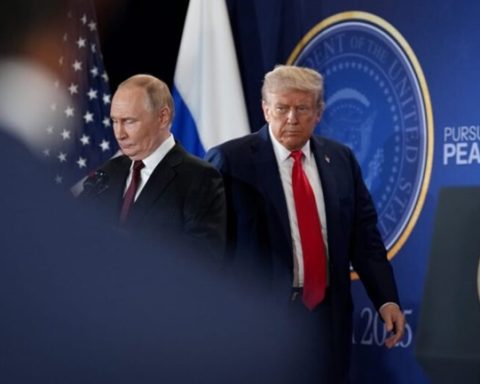
President Donald Trump on Friday blocked a $3 million acquisition by U.S. photonics firm HieFo Corp of assets belonging to New Jersey-based aerospace and defence specialist Emcore, citing national security risks linked to China, according to Reuters. The decision was outlined in a White House order that said HieFo was “controlled by a citizen of the People’s Republic of China,” raising concerns about the potential impact of the transaction on U.S. security interests.
In the order, Trump said HieFo’s 2024 purchase of Emcore’s businesses led him to believe the company could “take action that threatens to impair the national security of the United States.” While the White House did not identify the individual involved or provide detailed reasons for the concern, the president made clear that the transaction would not be allowed to proceed.
“The Transaction is hereby prohibited,” Trump said, directing HieFo to divest all interests and rights in the Emcore assets within 180 days. Reuters reported that the Committee on Foreign Investment in the United States (CFIUS), which reviews foreign investments for security risks, had identified a national security issue during its investigation of the deal. The Treasury Department confirmed the finding but did not specify the nature of the risk.
Emcore, which was publicly traded at the time of the sale and later taken private, has said HieFo acquired its chip business and indium-phosphide wafer fabrication operations for about $2.92 million. HieFo had previously disclosed that it was co-founded by Genzao Zhang, a former Emcore vice president of engineering, and Harry Moore, described on LinkedIn as a former senior sales director at Emcore.
Neither HieFo nor Emcore immediately responded to requests for comment, Reuters said, and no public statements had been posted on their websites as of late Friday. The move underscores the heightened scrutiny faced by deals involving U.S. technology assets and Chinese-linked investors amid ongoing concerns over supply chains, defence technologies, and national security.