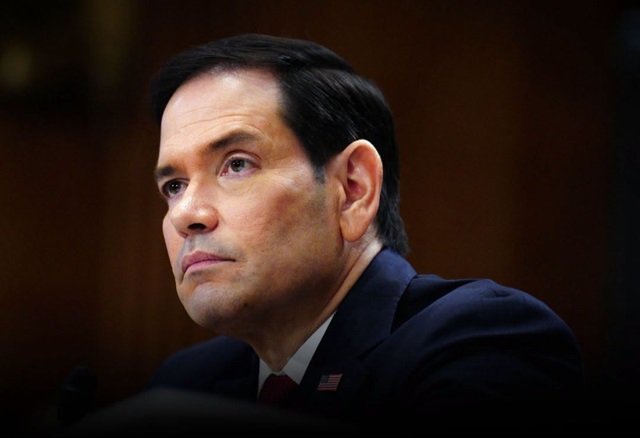
US Secretary of State Marco Rubio has delivered a forceful criticism of open borders, globalism and what he described as the erosion of national sovereignty in Europe, warning that the West risks “atrophy, servitude and decline”.
Speaking on Wednesday at the Pnyx, the ancient assembly site beneath the Acropolis in Athens, Rubio argued that Western governments had spent decades abandoning principles that he said had contributed to the success of Western civilisation.
“‘Nationalism’ became a dirty word,” Rubio said. “So we tore down our monuments, we condemned our own history, and in too many places we taught our children to be ashamed of the countries they would inherit.”
“In the process we opened our borders, and outsourced our industry, and allowed our militaries to wither and to decay,” he added.
Rubio contrasted what he described as the globalist approach of much of Europe’s political establishment with the Trump administration’s “America First” policy. He argued that governments have a responsibility to put their own citizens ahead of international institutions and rejected the idea that prioritising national interests was inherently incompatible with international engagement.
“It has become fashionable today to believe that enlightened foreign policy means prioritizing the global community over one’s own people,” Rubio said. He argued that the ancient Greeks recognised “nothing selfish or wrong about loyalty to your nation” and defending its interests “above all else”.
The speech represents the latest expression of an increasingly sharp ideological dispute between Washington and the European Union over migration, free speech and national sovereignty. The Trump administration has repeatedly criticised Brussels and Western European governments, arguing that they have failed to protect the interests of their own populations.
Vice President JD Vance has previously warned that Europe risks “civilizational suicide” because of uncontrolled migration and restrictions on free expression. At the Munich Security Conference last year, Vance argued that Europe’s greatest threat came not from Russia or China but from what he described as an internal retreat from democratic values. The administration later formalised much of that criticism in its 2025 National Security Strategy, which warned of possible “civilizational erasure” in Europe.
Immigration has become one of the most visible areas of disagreement. This week, President Donald Trump attributed violent unrest in France to “out of control mass migration”, rejecting claims that nationwide student protests were primarily driven by underfunded schools. US Ambassador to the United Nations Mike Waltz also blamed Europe’s “open borders” and “unchecked immigration” for growing public anger.
Rubio did not call for a break with Europe. Instead, he urged European countries to embrace what he described as a renewed nationalist direction, while praising Greece as a “model ally” and saying there were signs of a wider political shift across the continent.
“We believe that Europe can awaken from its long slumber and rekindle the fire that was lit here millennia ago,” he said.
Rubio said the United States under Trump had already committed itself to the “unapologetic pursuit of national power”. He cited reindustrialisation, securing critical supply chains, rebuilding the military and seeking dominance in artificial intelligence, advanced manufacturing, weapons, space and other strategic industries.
The secretary of state said the West had reached an “inflection point”, arguing that decisions taken during the next decade could determine whether Western countries remained at the centre of global power or faced a future of decline.