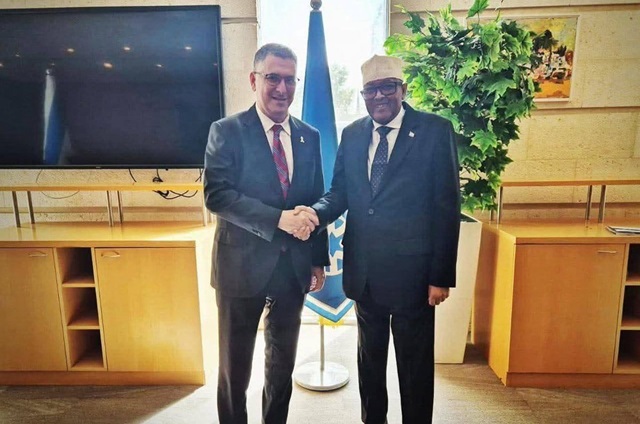
Israeli Foreign Minister Gideon Saar visited Somaliland on Tuesday, marking the first high-level Israeli diplomatic trip to the self-declared republic since Israel officially recognised it as an independent state on December 27. The visit, confirmed by two sources to Reuters, signals a deepening of bilateral relations between the two governments, which have long been informally engaged in investment and security cooperation.
During the visit, Saar met with Somaliland President Abdirahman Mohamed Abdullahi to discuss economic, technological, and health cooperation. Prime Minister Benjamin Netanyahu has previously emphasized Israel’s interest in working with Somaliland in agriculture, technology, and the broader economy, while also inviting Abdullahi to visit Israel.
Somaliland, a region that broke away from Somalia in the early 1990s but remains largely unrecognised internationally, has sought formal recognition for decades. Israel’s decision to recognise the territory has drawn sharp criticism from Somalia, which continues to assert sovereignty over the region. Despite the lack of broader international recognition, Somaliland has signed multiple bilateral agreements with foreign governments, particularly in investments and security coordination.
Strategically located along the Gulf of Aden and sharing borders with Ethiopia and Djibouti, Somaliland sits across from Yemen, where Iran-backed Houthi forces have launched missile and drone attacks on Israel since the Gaza conflict escalated in October 2023. Both Israeli and Somaliland officials have insisted that the recognition agreement does not allow for military bases or the resettlement of Palestinians in the territory, though Israel has publicly supported voluntary migration from Gaza.
Analysts view the move as part of Israel’s broader strategy to strengthen alliances amid strained relations with several traditional partners over its policies in Gaza and the West Bank. Somaliland’s potential inclusion in the Abraham Accords, which initially brought Israel into formal relations with the UAE and Bahrain, could further expand Israel’s influence in the Horn of Africa and the Gulf region.