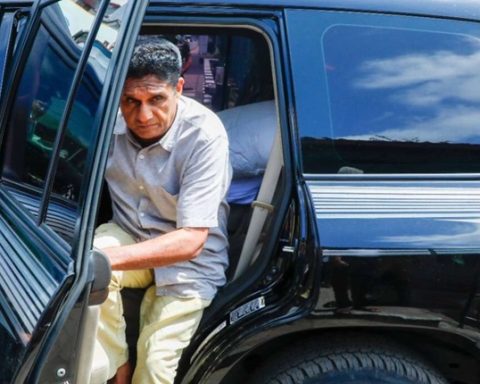
Abdel Jaleel Hunjul has built his career around reaching people when every minute matters. The 39-year-old intensive care specialist runs a private ambulance service in Nablus, in the occupied West Bank, transporting critically ill patients between hospitals, treating emergencies and transferring newborns who need specialist care. But as violence intensifies and restrictions on Palestinian movement multiply, getting patients to treatment has become increasingly difficult, with military checkpoints, closed roads and attacks posing obstacles to his work.
When Hunjul drives his ambulance out of Nablus, concrete barriers and military checkpoints funnel traffic into narrow routes. A broad road, marked by Israeli flags and apparently clear of traffic, is closed to Palestinians. Vehicles are forced onto a narrow, roughly paved road, where the ambulance must negotiate congestion even with its siren sounding. The restrictions mean that journeys which should be straightforward can become prolonged and unpredictable.
Hunjul established his service eight years ago after working in hospital emergency departments and internal medicine. He employs 12 paramedics and drivers, five office staff and four doctors who work on commission and cover night shifts. His ambulance is equipped for intensive care, including a ventilator, electrocardiogram equipment, an extracorporeal membrane oxygenation system, or ECMO, and a defibrillator. The Mercedes Sprinter cost the equivalent of €120,000, making it a substantial investment in a region where transporting patients safely has become increasingly complicated.
The German newspaper Die Zeit accompanied Hunjul and his team to document how emergency medical services operate amid escalating violence in the West Bank. Its reporting follows the ambulance crew through hospital transfers, encounters with military restrictions and incidents involving Israeli settlers, revealing the practical consequences of movement controls for patients who cannot wait for medical assistance.
On a Friday morning in Nablus, a call interrupts breakfast at the ambulance office. A newborn with a heart defect urgently needs transferring to one of the few specialist clinics. Hunjul and his team grab an incubator and rush to the vehicle. At the hospital, the baby’s father climbs into the ambulance in tears. Hunjul reassures him as the siren sounds and the vehicle sets off. The journey takes less than ten minutes. At the destination, the crew transfers the infant to waiting medical staff, while Hunjul offers the father an encouraging nod.
“It is important that the doctor remains calm,” he says afterwards. The composure he considers essential in an emergency is also evident when he discusses the risks facing his staff.
Hunjul chose bright yellow for his ambulance, the same colour used by Israeli intensive care vehicles. He says he hoped the similarity would help protect his team from attacks by settlers. The precaution has not prevented violence. Two days before Die Zeit’s report on 27 August, settlers allegedly threw stones at the ambulance during a night-time emergency outside Nablus, leaving two large dents above a rear wheel and chipping the paintwork.
“I have nothing against Israelis, but I have a problem with how some of them treat us,” Hunjul says.
According to figures cited by the United Nations, 26 Palestinians had been killed and hundreds injured in settler attacks that year. The Israeli human rights organisation B’Tselem said in a report that Israeli attacks on Palestinians in the West Bank had increased dramatically “in all areas of life” since the Hamas attack of 7 October three years earlier. The report described access to work, education, medical care and municipal services as being under constant threat and, at times, entirely denied.
The restrictions also affect Hunjul’s ability to transfer patients to Israel, whose hospitals he says are better equipped than Palestinian facilities. Until the previous year, his service regularly undertook such journeys. That changed after he was wounded during an Israeli military incursion into Balata refugee camp in Nablus the previous autumn. Hunjul says he was treating a man shot by a soldier when gunfire continued. Only after delivering the patient to hospital did he realise that fragments from a bullet had struck his own forearm.
His injury was entered into the Palestinian Authority’s register. The authority shares information about injuries connected to military operations with Israel as part of security co-operation against militants. Hunjul later learnt that he had been barred from entering Israel after a member of staff at an Israeli hospital contacted him about the restriction. The metal fragments remain in his arm because they are too small to remove surgically.
He can no longer personally accompany patients across the border, including a young woman with cancer who required transfer to an Israeli hospital. In her case, his ambulance carried her to the crossing, where an Israeli ambulance was waiting. The handover proceeded without incident, but the journey illustrated the additional arrangements now required to obtain treatment across a border only about 30 kilometres from Nablus.
Road closures create further delays within the West Bank. According to B’Tselem, approximately 1,000 barriers now restrict movement around roughly 600 Palestinian communities. Instead of closing every crossing, Israeli restrictions often leave major roads available to settlers while blocking access to Palestinian villages. Ambulance crews may have to wait, contact the army and hope soldiers arrive to open a route. Hunjul recalls being stopped on the way to Jenin and made to wait an hour, despite insisting that he was transporting an unconscious patient.
His work extends beyond emergency transport. Hunjul assembles medical kits containing medicines, dressings and equipment to control severe bleeding, including tourniquets used to prevent patients with serious limb injuries from bleeding to death. A US humanitarian organisation working in the West Bank recently ordered several hundred kits. He has also commissioned protective vests for his paramedics, made in the same red colour as the emergency bags.
On 11 September, Hunjul encountered three masked men in uniform while driving back from Jenin. They stopped vehicles, shouted at him and demanded to know what he was doing there. Hunjul showed his documents and repeatedly explained that he was a doctor. The men eventually let him go, but he could not establish who they were.
“I am not sure whether they are soldiers,” he said. The Israeli human rights organisation Yesh Din has warned that armed settlers sometimes disguise themselves as soldiers and behave like militias. The men confronting Hunjul wore no identifying insignia, and no military jeep was visible.
As he drove away, he passed the car ahead of him, which one of the men had kicked in anger. An elderly man sat behind the wheel with his hands clasped behind his head. Hunjul continued on his route. He could not help him.