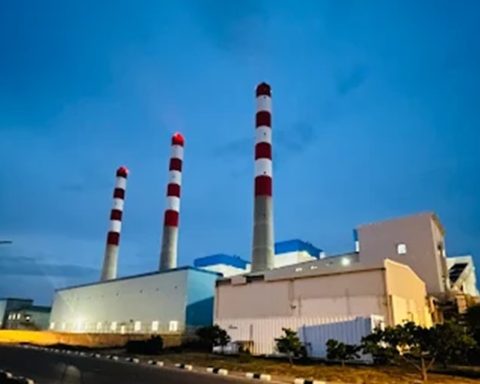
Questions over alleged corruption in Sri Lanka’s energy sector intensified in Parliament on Tuesday as opposition lawmakers accused the government of irregularities in the awarding of a major coal supply tender for the Lakvijaya Coal Power Plant, the country’s largest source of electricity generation.
The controversy centers on claims that tender conditions were altered to favor a particular supplier and that the coal ultimately imported failed to meet required quality standards, resulting in significant financial losses. Despite the seriousness of the allegations, the Minister of Energy did not address the issue during parliamentary proceedings, even as oral questions were taken earlier in the day. The minister left Parliament without making a statement on the matter.
The issue was raised by Samagi Jana Balawegaya (SJB) Member of Parliament Ajith P. Perera, who chairs Parliament’s Energy Sub-Committee and is a senior opposition figure on energy policy. He described the tender as one of the most consequential in the country, noting that the energy sector accounts for roughly one-third of Sri Lanka’s economy.
Perera said concerns emerged soon after the tender process began, with lawmakers observing what he described as unprecedented changes to the original conditions. According to him, key requirements and deadlines were revised during the process, prompting suspicions that the rules were being adjusted to benefit a specific company.
Those concerns deepened, he said, when the winning bidder delivered coal that did not meet the standards stipulated in the tender. Although the coal was imported from South Africa, Perera claimed it generated less electricity than expected, forcing the power plant to burn larger quantities to produce the same output. He estimated the resulting loss to the state at nearly one billion Sri Lankan rupees.
“This is no longer a matter of doubt,” Perera told Parliament. “It is clear that fraud has taken place. It is clear that corruption has taken place.” He questioned where responsibility should lie, asking whether blame rested with the entire government, the minister in charge of the energy portfolio, or public officials who may have misled political leaders. He also suggested the possibility that all these factors were involved.
The allegations strike at the heart of the government’s credibility, particularly as it came to power pledging to eradicate corruption. Perera accused the administration of presiding over “massive corruption” in what he described as the country’s most important and influential procurement process.
He contrasted the current situation with his own tenure overseeing coal procurement in the past, saying that the process had been conducted transparently and without a single complaint or legal challenge.