Canada’s Prime Minister Mark Carney departs for Beijing on Tuesday for high-stakes talks on trade and international security, marking a rare diplomatic engagement at a moment of mounting uncertainty in Ottawa’s relationship with the United States. According to Reuters, the visit comes as Canada grapples with the fallout from a trade war with Washington and repeated annexation threats from U.S. President Donald Trump, prompting the government to explore new economic and strategic partnerships.
The trip, running from January 14 to 17, is the first visit to China by a Canadian prime minister since 2017 and could signal a significant shift in bilateral relations. Carney agreed to the visit last October after meeting Chinese President Xi Jinping in South Korea, an encounter that hinted at the possibility of thawing ties following years of tension. Relations deteriorated sharply under former prime minister Justin Trudeau after Canada arrested Huawei executive Meng Wanzhou in 2018 at the request of U.S. authorities, triggering a prolonged diplomatic and trade dispute.
This time, expectations are higher. Reuters reports that senior Canadian officials anticipate the signing of several memoranda of understanding, though discussions are still ongoing. Analysts say the visit is likely to deliver more than symbolism, even as it carries political risk. Greg MacEachern, a former senior adviser to a Liberal minister, said the invitation itself suggests substance, noting that the trip will be closely watched in Washington. He added that while the outreach could irritate President Trump, Carney appears determined to signal that Canada remains open to business beyond its southern neighbour.
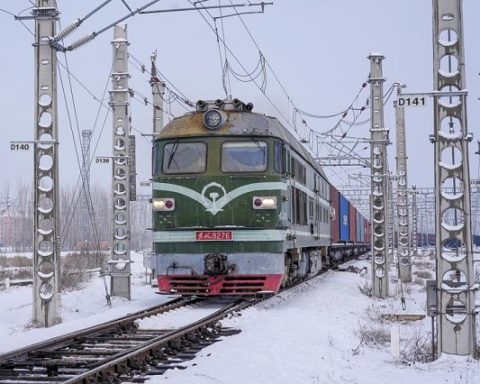
Trade will be central to the talks, with Canadian crude oil and canola exports high on the agenda. A source familiar with the discussions told Reuters that increased crude shipments to China are under consideration, a move that could help Canada diversify away from the United States, which currently takes about 90% of Canadian oil exports. Planned increases in U.S. oil imports from Venezuela could further reduce American demand for Canadian crude, heightening Ottawa’s interest in alternative markets.
Canola remains a more contentious issue. Chinese anti-dumping duties imposed last August have effectively shut Canadian canola out of what was once its largest export market, escalating a dispute that began when Ottawa introduced tariffs on Chinese electric vehicles a year earlier. Canadian officials say they expect progress during Carney’s visit but do not anticipate the immediate removal of the canola tariffs. China’s foreign ministry said it looked forward to deepening mutual trust during the visit, suggesting both sides may be prepared to make limited concessions.
Experts say the broader geopolitical context is shaping the talks. Lynette Ong, a professor of Chinese politics at the University of Toronto, told Reuters that the deterioration in Canada’s ties with Washington has reduced the strategic value of strict alignment with U.S. policy, including on electric vehicle tariffs introduced during the administration of former president Joe Biden. China is Canada’s second-largest trading partner after the United States, a reality that is increasingly difficult for Ottawa to ignore.
Not all voices at home support a softer line. Ontario Premier Doug Ford urged Carney not to retreat on EV tariffs unless China commits to building manufacturing capacity in Canada, particularly in Ontario’s auto sector. Farm groups, meanwhile, are cautiously optimistic. Colin Hornby of Keystone Agricultural Producers said he did not expect an immediate breakthrough on canola but believed an agreement could emerge in the months ahead.
Beyond trade, the visit raises sensitive questions about national security and human rights. Vina Nadjibulla of the Asia Pacific Foundation of Canada warned that deeper cooperation with China in areas such as artificial intelligence and critical minerals could carry security risks, stressing that clear red lines must be maintained. Canada has previously criticized Beijing over human rights issues, including the imprisonment of pro-democracy media tycoon Jimmy Lai, the execution of four Canadians in China last year, and alleged interference in Canadian elections.
Democracy advocates have also voiced concern. Cheuk Kwan of the Toronto Association for Democracy in China said Ottawa should avoid appeasing Beijing in pursuit of trade gains. Reflecting the sensitivity of the moment, two Canadian members of parliament cut short a visit to Taiwan this week to avoid sending mixed signals ahead of Carney’s arrival in Beijing.
China’s decision to welcome Carney at the Great Hall of the People has been interpreted by some analysts as part of a broader charm offensive. Joseph Torigian, a China expert at American University, suggested Beijing may be seeking to improve its global image following the recent U.S. seizure of Venezuelan President Nicolas Maduro. He said Chinese officials could use the meetings to contrast what they portray as U.S. unpredictability with China’s willingness to expand trade ties, positioning Beijing as a more reliable partner if Canada is prepared to engage.