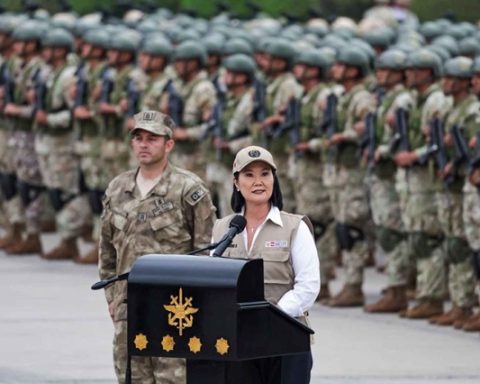
A rare mass funeral in Havana has laid bare the perilous moment facing Cuba as pressure mounts from the United States and hardship deepens at home. White-gloved soldiers marched through Plaza de la Revolución carrying the ashes of 32 Cuban troops killed in an American raid in Venezuela, a ceremony unseen for almost three decades. As the regime denounced the operation as imperialist terrorism, the display underscored how Cuba has been drawn into Washington’s escalating confrontation with its allies — and how exposed the island has become.
President Trump has openly warned that Cuba is next in his bid to remake the western hemisphere, declaring that the regime should “make a deal before it is too late”. His secretary of state, Marco Rubio, went further, hinting at direct intervention and signalling to Havana that its leadership should be worried. According to reporting by Times UK, the rhetoric has pushed a government already struggling with shortages and unrest closer to the edge, even as analysts caution against assuming an imminent collapse.
The timing could hardly be worse for the Cuban leadership. Sixty-seven years after Fidel Castro’s revolution, the country is enduring the worst crisis of its modern history. Empty shelves, rolling blackouts and mountains of uncollected rubbish have become everyday features of life in the capital. Children go hungry, pensioners beg from dwindling numbers of tourists and frustration simmers in streets once animated by revolutionary slogans.
This economic, social and political “polycrisis” has triggered the largest exodus since 1959. Since 2021, when the government crushed the biggest protests in a generation, the population has fallen by as much as a quarter. Hundreds of thousands fled to escape repression, followed by millions more seeking opportunity abroad. Omar Everleny Pérez Villanueva, an economist dismissed from the University of Havana for criticising state mismanagement, said the scale of migration showed that people had lost faith in improvement at home.
Yet resilience, not revolt, has long defined Cuban society. Pérez argued that Trump’s warnings ignored decades of adaptation to pressure. Unlike Venezuela, Cuba has spent generations adjusting to sanctions and hostility, cultivating a survival instinct that makes predictions of sudden collapse uncertain. That capacity to endure is visible in daily life, where improvisation has become second nature.
For Dayron Cabañas, 40, adaptation has been a lifelong necessity. Trained as a naval engineer on an island with little navy, he once served chasing would-be emigrants across the Florida Strait, returning them after they had risked everything to escape. Later, work with a biotech firm took him to Thailand, only for the pandemic to force him back to Havana. On his return, he found most of his friends gone, part of an entire generation that had slipped quietly away.
Like many who stayed, Cabañas survives through the informal economy, delivering packages sent by relatives abroad and driving taxis when fuel allows. Digital queuing apps have replaced chaotic petrol lines, a technological fix that symbolises both Cuban ingenuity and the depth of scarcity. He said people are conditioned to endure rather than rebel, substituting charcoal for gas or bicycles for cars, anger dulled by the need to get through another day.
Cuba’s long reliance on foreign patrons has also been a story of adaptation. After the Soviet Union collapsed, Venezuela stepped in, trading oil for Cuban doctors, teachers and security advisers. At its height, Venezuelan support accounted for nearly a quarter of Cuba’s economy. As US sanctions squeezed Caracas, Mexico emerged as a new supplier, hiring Cuban medics and exchanging hard currency for oil. Even so, Washington’s campaign against Venezuelan exports has rippled through Havana, disrupting fuel supplies and jolting daily life.
The future role of Russia and China remains uncertain. While both have historically valued Cuba as a counterweight to US influence, analysts cited by Times UK suggest that Trump’s assertive doctrine could prompt Moscow and Beijing to retreat in return for dominance elsewhere. For now, Havana clings defiantly to its alliances, preserving symbols of solidarity even as resources dwindle.
US policy towards Cuba has swung sharply over decades. The trade embargo imposed in 1960 hardened after the missile crisis and was reinforced by terrorism designations under Ronald Reagan. Barack Obama’s decision to ease restrictions and encourage travel ushered in what many Cubans remember as a brief golden era, as tourists flooded Havana’s decaying streets. But Congress refused to lift the embargo fully, and Trump reversed Obama’s reforms in his first term, courting hardline Cuban-American voters in Florida.
Those decisions have fractured the Cuban exile community that once spoke largely with one voice. Older exiles, who lost property and status to the revolution, largely backed the blockade in the belief it would topple the regime. Younger Cuban-Americans, many of whom maintain close family ties on the island and send vital remittances, have grown resentful of policies that restrict migration and deport relatives. That generational divide has begun to reshape Florida politics, contributing to Miami electing a Democratic mayor for the first time in nearly three decades.
Critics of Trump’s approach warn that even if pressure succeeded in bringing down the Cuban government, the outcome could be chaotic rather than liberating. Pérez argued that a sudden collapse might empower hardline military figures or tip the island into failed-state status, with ordinary Cubans paying the heaviest price. Others see opportunism rather than principle in Washington’s stance, noting Trump’s past interest in doing business on the island.
On Havana’s streets, the choice increasingly feels binary: wait for change or find a way out. Cabañas is applying for Spanish citizenship under a law for descendants of those who fled Franco, while thousands of others head for Brazil, Uruguay or Mexico. Many leave reluctantly, convinced they have no future at home. Those who stay, like fisherman Heriberto Cabezas, say goodbye to children and neighbours while insisting they will die on Cuban soil.
Standing amid shuttered houses and tied-up boats, Cabezas said he does not dream of America, only of witnessing the end of the system that has defined his life. For now, Cuba waits, caught between revolution and escape, its fate shaped as much by forces in Washington and Miami as by the quiet endurance of those who remain.