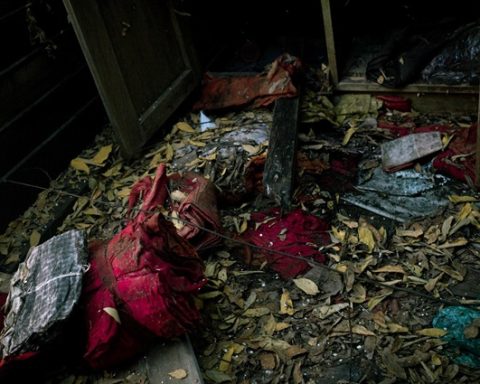
Sri Lanka’s recent landslide tragedy, described by officials as a “model disaster,” has once again exposed a stark truth: the country’s development has advanced without the guidance of its own long-established planning system. In the Central Province, geologists warn that the disaster was not simply a natural event but the consequence of years of neglect, poor enforcement, and the failure to integrate national planning rules into everyday construction. With thousands of high-risk areas still unregulated and settlements spreading toward city centers, experts say Sri Lanka may be hurtling toward another disaster unless urgent action is taken.
Kandy District Chief Geologist Chathurie Subhasinghe delivered a chilling warning at the Kandy District Coordination Committee on January 13, stating that there are 2,377 high-risk zones in the Central Province where a serious disaster could occur again. Her comments underscored the growing fear that Sri Lanka is not merely facing the aftermath of one catastrophic event, but is living on the edge of repeated disasters. She stressed that the problem is not just heavy rainfall or natural forces, but human negligence and the failure of governance systems designed to prevent such tragedies.
The geologist said the recent landslide should be treated as a “model disaster” with lessons that must be learned. She pointed out that the government has had strict rules and regulations for construction and rural settlement planning for more than 80 years, yet these regulations have not been implemented effectively. The result, she warned, is a dangerous pattern where people, driven by the lure of compensation and the rush toward urban life, continue to build homes in sensitive zones around major cities like Kandy and Nuwara Eliya. She urged immediate action to stop settlement expansion near urban centers and to evacuate residents living in vulnerable areas, stressing that without such steps, the country may not be able to prevent another catastrophic event.
The tragedy has also highlighted the disconnect between citizens and the institutions meant to regulate development. Many residents in the Central Province report structural damage to their homes—cracks, leaking mud, and rising water—yet they find no clear official authority to address these risks. This gap exists despite the presence of the National Physical Planning Department, a state institution established under the Town and Country Planning Ordinance No. 13 of 1946. The department is responsible for preparing national physical plans that integrate development policies, protect the natural environment, and guide construction across the country. Yet, as the recent disaster showed, the department’s authority appears to have been sidelined, and its guidance is rarely applied in practice.
The National Physical Planning Department’s mission is clear: to create a national framework for planned development, prevent informal and irregular construction, and direct infrastructure investments to the most suitable locations. It is tasked with coordinating development plans across government institutions and ensuring that every proposed project is reviewed through the Inter-Ministerial Coordination Committee. However, the fact that a disaster of this scale occurred suggests that the planning system has not been able to enforce its rules or integrate them into local development practices.
Experts argue that the absence of a strong relationship between institutions is at the heart of the problem. Sri Lanka’s development projects—urban expansion, highways, expressways, railways, and other infrastructure—could be more sustainable and safer if they followed a national physical plan. Instead, construction is happening without coordination, leaving the country with widespread irregular development across its 62,705 square kilometers of land. The problem is not limited to one region; it is systemic, affecting rural, urban, and protected areas alike.
The audit of Sri Lanka’s planning failures reveals a stark imbalance: while the country has established planning laws and a dedicated department for decades, more than 60 percent of land development occurs without formal oversight. In rural areas, houses and plantations expand without adherence to approved plans. In urban areas, infrastructure projects and housing developments proceed without proper environmental assessment. Even protected zones such as the Horton Plains and other ecologically sensitive regions have been affected by unchecked settlement and agricultural expansion. The absence of enforcement has allowed illegal development to grow, often driven by political and financial interests.
The current crisis is not only a matter of law and governance but also a matter of social reality. Many rural families build homes for their children and grandchildren, unaware that they are doing so in sensitive zones without permission. Meanwhile, relief programs, road projects, and other development initiatives proceed without rigorous investigation into their legality. This creates a dangerous cycle: development and settlement expand into fragile terrain, and when heavy rains come, the land collapses, triggering landslides and devastation.
The geologist’s warning about waste accumulation on hilltops is particularly alarming. As cities expand, waste and wastewater seep into the soil, weakening the ground and increasing the risk of collapse during heavy rains. Development on hilltops without proper infrastructure and waste management can turn residential zones into ticking time bombs. Experts say that without urgent infrastructure planning and enforcement, such disasters may become more frequent.
The recent landslide tragedy also raises questions about the governance of protected areas. Sri Lanka’s natural resources have been compromised by illegal land sales and unauthorized settlement in protected zones. The disaster has become an example of how political and financial interests can override environmental protections, leading to catastrophic consequences. If protected areas are sold or settled without oversight, the country risks losing not only its natural heritage but also the safety of its people.
Sri Lanka’s experience is not unique. Many countries around the world have successfully implemented national physical plans to guide development, prevent disasters, and protect the environment. For a small nation like Sri Lanka, implementing such a plan should be feasible. Yet, political interests and financial gains have undermined the process, allowing unplanned construction to continue unchecked. The recent disaster in the Central Province serves as a harsh reminder of what can happen when planning systems are ignored.
As Sri Lanka faces the prospect of future disasters, the message from geologists and experts is clear: the country must restore the authority of its national planning institutions, enforce construction regulations, and stop illegal settlement in high-risk zones. Otherwise, the nation may be forced to confront a series of repeated disasters, each more devastating than the last. The question now is whether Sri Lanka will learn from this model disaster or allow the cycle of unplanned development to continue until the next tragedy occurs.