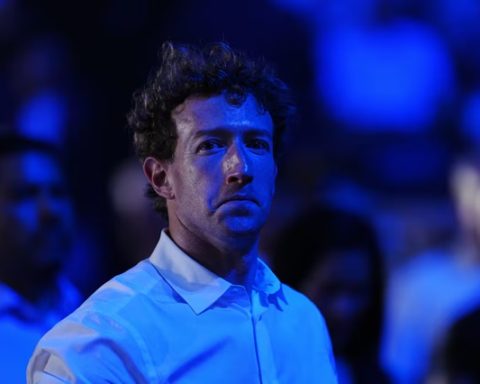
Eric Schmidt, one of Silicon Valley’s most influential figures of the past two decades, has issued a stark warning to Europe over its approach to artificial intelligence, arguing that the continent is drifting toward technological dependence. Speaking last week to international journalists in Davos, the former Google CEO said Europe lacks a clear AI strategy and risks ending up reliant on Chinese models if it fails to invest heavily in its own systems.
Schmidt, who led Google and later Alphabet between 2001 and 2017, remains deeply engaged in technology and geopolitics. Now CEO and investor at aerospace company Relativity Space, he has also been a prominent supporter of the US Democratic Party and maintained close ties to former president Barack Obama. In Davos, he presented himself as both an insider and a critic, drawing on decades of experience at the intersection of innovation, capital, and power.
“Europe doesn’t really have any AI strategy,” Schmidt said, contrasting what he sees as the competing approaches of the United States and China. In his view, the US strategy is largely oriented toward the pursuit of artificial general intelligence, or AGI, while China’s focus is on embedding AI across society, industry, and government at scale. Europe, he suggested, sits uncomfortably between the two without a unifying vision or sufficient resources.
A central concern for Schmidt is the structure of AI development itself. He warned that leading US companies are increasingly moving toward closed-source models that must be licensed at high cost, while China has embraced open-weight, open-source systems. All major Chinese models, he said, follow this approach. Without a European-led open-source alternative backed by serious funding, Schmidt argued, European governments and companies will inevitably turn to Chinese technology, an outcome he described as undesirable for Europe’s autonomy and security.
The obstacles, he said, are structural as much as political. Europe faces high energy prices, a shortage of large-scale data centers, and insufficient capital for the kind of compute-intensive development modern AI requires. While he praised Europe’s “tremendous” technical talent, Schmidt stressed that talent alone is not enough. What is needed, he said bluntly, is “lots of money and lots of hardware,” alongside cheaper and more abundant energy.
His remarks underscored the scale of investment required and the limits of fragmented national efforts. The demands of AI development, from energy consumption to data access, push strongly toward coordinated European action. That point was echoed in Davos by European Central Bank President Christine Lagarde, who described AI as capital-intensive, energy-intensive, and data-intensive. Without cooperation and shared rules, she warned, capital and data flows would shrink, undermining a sector that holds major promise for productivity and growth.
Schmidt also sought to temper some of the more aggressive timelines circulating in the technology world. While many in San Francisco believe AGI could arrive within two to three years, he said that view reflects what he called a “San Francisco consensus” rather than reality. In his assessment, AGI will take longer to materialize, while the emergence of superintelligence lies much further out, perhaps 10 to 20 years away.
He outlined a staged evolution of AI capabilities, from today’s language-based systems to models capable of reasoning, then to systems that can independently choose which problems to solve. Superintelligence, he said, would mark a profound rupture, defined as the point at which machines surpass the combined intelligence of all humans. Whether that point is ever reached remains uncertain, but its implications would place humanity in an entirely new regime.
Schmidt’s intervention came against a backdrop of shifting political alignments in the technology sector. Once closely associated with liberal and Democratic causes, much of Silicon Valley has recently moved closer to Donald Trump, as symbolized by the presence of tech leaders such as Elon Musk, Jeff Bezos, Mark Zuckerberg, and even Google co-founder Sergey Brin at Trump’s second inauguration. Schmidt, by contrast, has maintained his Democratic alignment, even as he engages with a technology landscape increasingly shaped by geopolitical rivalry.
At Davos, AI dominated discussions alongside global tensions and questions about regulation, security, and power. Schmidt’s message to Europe was clear and urgent: without a coherent strategy and massive investment, the continent risks surrendering control over a technology that will shape economic strength, political sovereignty, and social life for decades to come.