


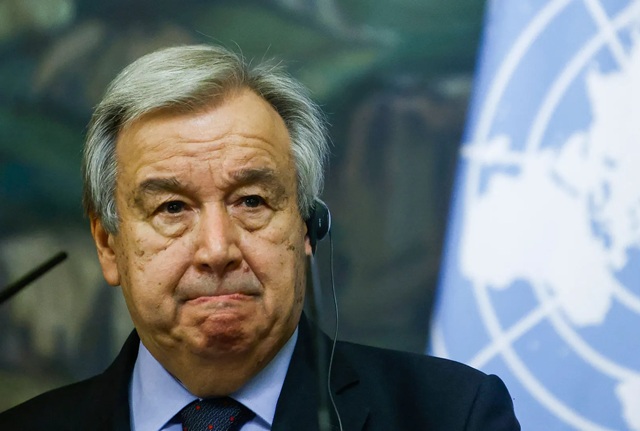
If the United Nations is to survive, those who represent it must bolster it; those who advocate it must submit to it; and those who believe in it must fight for it. ~ Norman Cousins
The Existential Reality
The recent warning by United Nations Secretary-General António Guterres that the Organization may be running out of funding, coupled with his public appeal to Member States to settle unpaid assessed contributions, is more than an administrative lament. It is a moment of existential candour that invites reflection on what the United Nations is, what it does, and what it risks becoming if political indifference continues to hollow out its financial foundations. To speak of a funding crisis is not merely to speak of budgetary shortfalls; it is to speak of a potential erosion of multilateral resolve, of collective responsibility, and of faith in an institution that was never meant to be ornamental, rhetorical, or episodic in its relevance.
From its inception, the United Nations was conceived as a moral and legal response to catastrophe. It was born not of optimism but of exhaustion—after a century that had twice nearly extinguished civilization through industrialized warfare. Kofi Annan’s remark that “we share a common destiny. We can master it only if we face it together” captures with quiet precision the philosophical premise of the United Nations. The Organization exists because fragmentation is fatal in a world where problems no longer respect borders. Annan’s words were not aspirational poetry; they were a statement of operational necessity. The United Nations was designed as the institutional embodiment of that shared destiny, imperfect yet indispensable.
Ban Ki-moon echoed this realism when he observed that if the United Nations did not exist, a similar institution would have to be created. The statement is revealing in its restraint. It does not claim perfection, nor does it deny dysfunction. Instead, it acknowledges inevitability. The international system, in its modern form, cannot function without a permanent, universal forum where States meet not as adversaries alone, but as co-inhabitants of a fragile planet. The question, therefore, is not whether the United Nations is flawless, but whether the world can afford its weakening through neglect, underfunding, or cynical disengagement.
Just a Talking Shop?
Those who dismiss the United Nations as a “talking shop” misunderstand both its scale and its function. The UN is not merely a debating chamber; it is a vast workshop in which the often invisible labour of international cooperation is carried out daily. Words spoken in the General Assembly may capture headlines, but they represent only a fraction of the Organization’s work. Beneath the surface of diplomatic rhetoric lies a machinery of implementation, expertise, and field-based action that touches lives in ways that rarely make the evening news.
The United Nations operates simultaneously in three interlocking dimensions. First, there is the United Nations of governments, where sovereign States articulate interests, negotiate norms, and contest power. This is the UN most visible to the public, and also the most criticized. Second, there is the United Nations of staff—approximately 37,000 professionals working in over 170 countries—who translate mandates into action. Third, there is the United Nations of associated non-governmental organizations, experts, academics, and consultants who form a dense ecosystem of knowledge, advocacy, and implementation. To speak of the UN as a single monolith is therefore to misunderstand its plural nature. It is less a pyramid than a network.
It is within the second and third of these “UNs” that funding shortfalls are most acutely felt. UN staff are not abstract bureaucrats; they are agronomists helping farmers improve crop yields in arid regions, health workers training women in prenatal care, engineers designing sustainable housing, educators establishing schools in refugee camps, logisticians distributing vaccines, and specialists setting global standards—from airworthiness of aircraft to maritime safety. These activities do not pause politely when political will falters. Human need is not cyclical; it is continuous.
The Compelling Need
Multilateralism, at its core, is about hope, opportunity, and human dignity. It is the belief that collective action can mitigate suffering even when it cannot eliminate it. In the twenty-first century, this belief has been tested as never before. The United Nations of 1945 did not confront a global refugee population of unprecedented scale, nor did it anticipate a pandemic capable of halting the world economy in a matter of weeks. COVID-19 exposed not only vulnerabilities in national health systems but also the indispensability of global coordination—on data sharing, vaccine distribution, and public health norms. The UN system, particularly through the World Health Organization and humanitarian agencies, became both a focal point of cooperation and, unfairly at times, a lightning rod for political frustration.
Similarly, the emergence of transnational terrorist organizations, cyber terrorism, human trafficking networks, and climate-induced displacement represents a category of threat that traditional notions of sovereignty were never designed to address. Climate change, in particular, is not merely an environmental issue; it is a multiplier of instability, intensifying food insecurity, water scarcity, and forced migration. These are precisely the kinds of problems that cannot be solved unilaterally. Yet they are also the kinds of problems that demand sustained funding, long-term planning, and institutional memory—qualities that are undermined when the Organization is forced to operate hand-to-mouth.
The UN Success Story
The irony is that many of the UN’s greatest successes are invisible because they are preventative. One does not see the wars that did not happen, the famines that were averted, or the diseases that were contained. The United Nations played constructive roles at pivotal moments of history: during the Suez Canal crisis, where diplomatic engagement prevented escalation; in the Korean War, where collective security principles were tested; and in the broader processes that accompanied the dismantling of the Berlin Wall and the end of the Cold War’s most rigid divisions. These were not moments of triumphalism but of careful, often understated, institutional engagement.
Peacekeeping, symbolized by the UN’s “Blue Berets,” remains one of the Organization’s most tangible expressions of solidarity. Peacekeepers are deployed not because peace exists, but because its absence threatens to metastasize. They operate under constrained mandates, in dangerous environments, often with limited resources. Yet their presence has saved countless lives and provided fragile breathing space for political processes to take root. To underfund peacekeeping is not to punish an institution; it is to endanger civilians who rely on its protective presence.
Beyond crisis response, the United Nations has invested in the intellectual infrastructure of global governance. The United Nations Intellectual History Project (UNHIP) reflects a recognition that institutions must understand their own evolution to remain relevant. Ideas matter in international law and politics. The Sustainable Development Goals represent another such intellectual and moral framework—an attempt to articulate a shared vision of progress that integrates economic growth, social inclusion, and environmental protection. These goals are aspirational, but they are also operational, guiding policies, funding priorities, and partnerships across the globe.
Critics may argue that the UN tries to do too much, that its mandates are diffuse, or that it lacks enforcement power. There is truth in these observations, but they do not negate the Organization’s necessity. The UN was never intended to be a world government. It is a forum, a facilitator, a standard-setter, and, at times, a moral compass. Its strength lies not in coercion but in coordination. To judge it by the standards of a centralized authority is to misunderstand its design.
The funding crisis, therefore, is not merely a technical issue of unpaid dues; it is a symptom of a deeper ambivalence toward multilateralism itself. When States withhold contributions, they are not simply balancing domestic budgets; they are signaling a retreat from shared responsibility. This retreat is often justified in the language of national interest, yet it is precisely the enlightened national interest that the United Nations seeks to articulate—one that recognizes interdependence as a fact, not a choice.
Is the United Nations running out of steam? The answer depends less on the institution than on its Member States. Institutions do not tire; commitments do. The UN continues to generate ideas, deploy expertise, and adapt to new challenges. What it lacks, increasingly, is the political and financial backing commensurate with the expectations placed upon it. There is a profound asymmetry between what the world asks of the United Nations and what it is willing to invest in it.
The question is not whether the United Nations deserves funding, but whether the world is prepared to pay the price of its absence or enfeeblement. History suggests that when cooperation collapses, the cost is measured not in currency but in lives. The United Nations remains, for all its flaws, the most ambitious experiment in organized hope that humanity has ever undertaken. To allow it to wither through neglect would not be an act of realism, but of collective amnesia.
My Take
My perspective on the United Nations is not formed from distance, abstraction, or episodic observation. It has been shaped over a quarter of a century spent within one of its specialized agencies—the International Civil Aviation Organization—where multilateralism is not a slogan but a daily discipline. For nearly twenty-five years, I observed, participated in, and contributed to the policy-making, treaty-making, regulatory, training, and technical assistance functions of ICAO, an institution that exemplifies what the United Nations can achieve when States choose cooperation over fragmentation. From that vantage point, the assertion that the UN is merely a “talking shop” is not only inaccurate; it is profoundly uninformed.
ICAO was established by the Chicago Convention of 1944, even before the United Nations itself formally came into existence. Yet it was seamlessly integrated into the UN system as a specialized agency, reflecting the foresight of States that understood aviation would be inherently international in character. Aircraft do not recognize borders in the way armies do, and neither can aviation safety, security, or environmental protection be confined within national silos. Over the years, I have seen how ICAO has served as a global forum where 193 Member States—large and small, developed and developing—sit as equals to develop standards, policies, and practices that make global air transport not only possible, but safe, secure, efficient, and increasingly sustainable.
One of the most compelling demonstrations of the value of the United Nations system is ICAO’s role in treaty-making and norm creation. The development of international air law is not a theoretical exercise; it governs real aircraft, real passengers, and real risks. ICAO has been at the center of negotiating, modernizing, and interpreting legal instruments that regulate everything from accident investigation to unlawful interference. Through annexes to the Chicago Convention and related treaties, ICAO has given the world a coherent legal and technical architecture that allows an aircraft registered in one state, piloted by a crew licensed in another, maintained in a third, and flying through the airspace of several others to operate under a harmonized system of rules. This level of legal integration would be inconceivable without a multilateral institutional framework.
Equally significant is ICAO’s role in the development of the rules of the air. These rules are not static; they evolve with technology, traffic density, and operational complexity. I have witnessed how technical experts from across the globe contribute to these rules, bringing with them diverse operational experiences while subordinating narrow national preferences to global safety imperatives. The result is a system in which pilots and air traffic controllers, regardless of nationality, operate under common expectations. This is multilateralism in its most practical form—quiet, technical, and life-preserving.
Accident investigation is another area where ICAO’s contribution underscores the indispensability of the UN system. Aviation accidents are tragedies, but they are also opportunities for learning. ICAO’s standards ensure that investigations are conducted not to apportion blame, but to identify causes and prevent recurrence. I have seen how States with limited technical capacity are supported through ICAO guidance and expertise, enabling them to conduct credible investigations that contribute to global safety knowledge. The sharing of accident data across borders reflects a level of trust and cooperation that few other sectors have achieved, and it rests squarely on the legitimacy and neutrality of a UN specialized agency.
Dispute settlement between States is often overlooked as a function of ICAO, yet it is one of its most constitutionally significant roles. Under the Chicago Convention, ICAO provides mechanisms for resolving disputes relating to the interpretation or application of the Convention. These disputes, if left unmanaged, could escalate into political or economic retaliation. Instead, ICAO offers a structured, legal pathway that reinforces the rule of law in international aviation. My experience has shown that States are far more willing to accept outcomes when the forum is perceived as impartial, expert-driven, and insulated from power politics—precisely the qualities the United Nations system is designed to provide.
Environmental regulation in aviation is perhaps one of the most demanding tests of multilateral governance in the modern era. Aircraft engine emissions and noise are global concerns with local impacts. ICAO’s work in developing global standards for noise certification and emissions, including its leadership in market-based measures such as CORSIA, demonstrates how a UN agency can balance environmental responsibility with economic and technological realities. These negotiations are complex, often contentious, and deeply political. Yet they have produced results that no single state, or even a small group of States, could have achieved alone. This is multilateralism not as idealism, but as necessity.
Technical assistance and training are among ICAO’s most transformative contributions, particularly for developing States. Over the years, I have seen how ICAO training programs have built regulatory capacity, improved oversight, and enhanced safety outcomes in regions that would otherwise struggle to meet international standards. Training civil aviation authorities, assisting in the drafting of aviation legislation, and providing expertise in airport certification or air navigation services are not glamorous activities, but they are foundational. They embody the UN’s commitment to human dignity by ensuring that safety is not a privilege of wealthier nations, but a global public good.
The sustainable development of aviation is another domain where ICAO’s alignment with broader UN objectives is unmistakable. Aviation is both a driver of economic growth and a source of environmental concern. ICAO has consistently framed aviation development within the context of the UN’s Sustainable Development Goals, recognizing aviation’s role in poverty reduction, connectivity, disaster response, and social inclusion. I have observed how ICAO initiatives support access to air transport for remote communities, facilitate humanitarian relief, and enable economic participation in a globalized world. These are outcomes that resonate far beyond runways and airspace.
Beyond these core functions, ICAO has demonstrated its value as a convenor of expertise and innovation. The Organization has provided leadership in areas such as aviation cybersecurity, recognizing early that digital vulnerabilities could have physical consequences. It has addressed the integration of remotely piloted aircraft systems into civil airspace, balancing innovation with safety and privacy. It has engaged with public health authorities, most notably during global health emergencies, to develop aviation-related measures that protect public health while preserving essential connectivity. Each of these areas illustrates how a specialized UN agency adapts to emerging challenges without losing sight of its foundational mandate.
What makes ICAO’s achievements particularly instructive is that they are the product of collective cooperation among 193 Member States. Consensus-building is often slow and frustrating, but it yields outcomes that are durable and widely accepted. I have seen States with vastly different political systems, economic capacities, and strategic interests agree on technical standards because they recognize a shared interest in safety and efficiency. This culture of cooperation does not arise spontaneously; it is cultivated through institutional continuity, professional expertise, and mutual respect—qualities nurtured within the UN system.
These experiences inform my broader view of the United Nations. The funding challenges now confronting the Organization threaten not only administrative efficiency but institutional memory and professional capacity. Specialized agencies like ICAO depend on predictable funding to sustain long-term programs, retain expertise, and respond to emerging risks. When contributions are delayed or withheld, the consequences are not abstract. Training programs are postponed, technical assistance missions are curtailed, and regulatory development slows. The cost of these disruptions is borne not by the institution alone, but by States and individuals who rely on its work.
From my vantage point, the United Nations is not running out of relevance or ideas; it is at risk of being starved of the means to implement them. The UN system, at its best, is a repository of collective wisdom and a catalyst for cooperative action. ICAO’s record demonstrates that when States invest politically and financially in multilateral institutions, the returns are tangible, measurable, and global in impact.
If there were no United Nations, the world would have to invent one—not out of sentiment, but out of necessity. Aviation alone would compel it. The same logic applies to health, climate, migration, and peace. My experience within ICAO confirms that the UN’s greatest strength lies not in its rhetoric, but in its capacity to translate shared interests into shared rules. To weaken that capacity through neglect would be to misunderstand the very lessons that history, and practice, have already taught us.










