


Ceylon is a beautiful, but unhappy land ~ D.N. Pritt
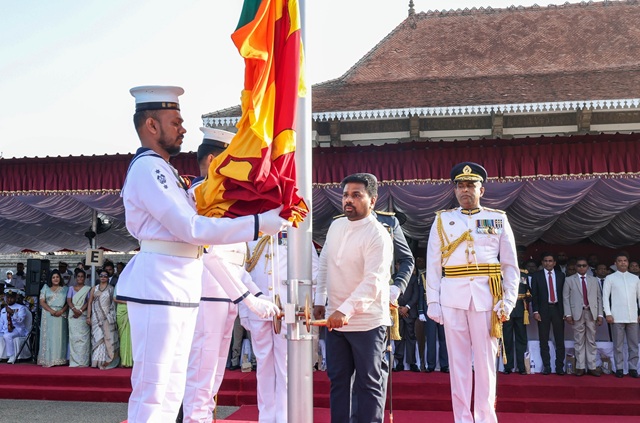
Independence is never a moment; it is a continuum. It is not a flag raised at dawn, nor a constitution promulgated in the chambers of a newly formed legislature. Independence is a promise—fragile, aspirational, and contingent on the moral stewardship of those entrusted with its guardianship. When Ceylon stepped into the light of self-rule on 4 February 1948, it did so with the quiet dignity of a nation that had endured centuries of colonial subjugation, yet retained its cultural soul. But the decades that followed would reveal that political sovereignty, once attained, is not immune to erosion. The story of Sri Lanka’s political degradation is not merely a chronicle of missteps; it is a meditation on the fragility of democratic institutions when confronted with majoritarian impulses, ethnic anxieties, and the seductions of power.
The independence of Ceylon was not born of violent revolution. Unlike many of its contemporaries in Asia and Africa, Ceylon’s path was one of constitutional evolution—incremental, negotiated, and shaped by a political elite that sought accommodation rather than confrontation. The island’s encounter with European colonialism began with the Portuguese in the 16th century, followed by the Dutch, and finally the British, who consolidated control in 1796. British rule introduced plantation capitalism, centralized administration, and Western education—forces that would later produce both a Westernized political class and deep socioeconomic fissures. By the early 20th century, a local intelligentsia—lawyers, civil servants, and professionals—began articulating demands for greater representation. The Donoughmore Constitution of 1931 introduced universal adult franchise, a radical experiment for a colony, but one that also sowed the seeds of ethnic tension by empowering the Sinhalese majority in unprecedented ways.
The Birth of Independent Ceylon
The decisive step came with the Soulbury Commission, whose recommendations formed the basis of the 1947 Constitution. This constitution established a bicameral legislature, with a popularly elected House of Representatives and a partly nominated Senate, and vested executive authority in a cabinet led by a prime minister. On 4 February 1948, Ceylon became a dominion within the British Commonwealth, with D.S. Senanayake as its first Prime Minister. The transition was ceremonially marked by the opening of the first parliament at Independence Square, attended by Prince Henry, Duke of Gloucester. Independence was thus achieved not through insurrection but through negotiation—a testament to the political maturity of the island’s early leaders, but also a harbinger of the elite-driven governance that would characterize the postcolonial state.
Problems on the Horizon
The early years of independent Ceylon were marked by optimism. The country possessed a functioning civil service, a robust agricultural economy, and a literate population. Yet beneath this veneer lay unresolved tensions—ethnic, linguistic, and class-based—that would soon erupt. The most consequential political development after independence was the rise of Sinhala-Buddhist nationalism. While the Soulbury Constitution contained minority safeguards, the political calculus of electoral democracy incentivized majoritarian appeals. The Sinhala Only Act of 1956 became a watershed moment, alienating the Tamil minority and setting the stage for decades of ethnic polarization. The framers of the Soulbury Constitution had assumed that Ceylon’s political class would uphold liberal democratic norms. But constitutional protections proved insufficient against the tide of populist nationalism. The Senate was abolished in 1971, removing a moderating institutional check. Subsequent constitutions in 1972 and 1978 centralized power further, culminating in an executive presidency with sweeping authority. The promise of 1948—self-rule grounded in pluralism and constitutionalism—was gradually supplanted by a politics of exclusion.
The marginalization of Tamil communities, combined with state-sponsored colonization schemes and discriminatory policies in education and employment, fueled the rise of Tamil militancy. The civil war that erupted in 1983 was not an accident of history; it was the culmination of decades of political failure. The war’s brutality—perpetrated by both the state and the LTTE—left deep scars on the national psyche. It also militarized governance, normalized emergency rule, and entrenched a culture of impunity. When the war ended in 2009, many hoped for a new era of reconciliation. Instead, the post-war period saw the consolidation of authoritarian tendencies. Militarization of civilian life, suppression of dissent, and the weakening of independent institutions became defining features of governance. The promise of peace was squandered by the politics of triumphalism.
Sri Lanka’s present political malaise is not a sudden phenomenon; it is the cumulative result of decades of institutional decay, economic mismanagement, and the erosion of democratic norms. The economic collapse of 2022—marked by fuel shortages, inflation, and sovereign default—was symptomatic of deeper structural issues: unsustainable debt, overreliance on imports, and ill-conceived fiscal policies. The crisis triggered mass protests, reflecting widespread disillusionment with political leadership. The repeated manipulation of the constitution—through amendments that alternately expanded and curtailed presidential powers—created a volatile political environment. Institutions meant to safeguard democracy, such as the judiciary and independent commissions, were repeatedly undermined. Far from healing the wounds of the civil war, post-war politics often exploited ethnic and religious divisions for electoral gain. This perpetuated mistrust and hindered national reconciliation.
An Analysis
Perhaps the most profound degradation lies in the political culture itself. Patronage networks dominate governance. Corruption is endemic. Public trust in institutions has eroded. Political dynasties overshadow meritocratic leadership. Independence, as some contemporary reflections note, was never meant to be an end point. It was a beginning. The promise of 1948 was not only self-rule, but better rule. Yet Sri Lanka’s political trajectory suggests that the promise remains unfulfilled. The story of Sri Lanka’s independence is also a story of struggles over whose freedom was truly secured and whose voices were left unheard. The tragedy of Sri Lanka is not that it failed to achieve independence, but that it failed to sustain the moral and institutional foundations necessary to protect it.
In reflecting on Sri Lanka’s journey, one is reminded that independence is not merely the transfer of power from colonizer to colonized. It is the cultivation of a political ethos grounded in justice, accountability, and inclusivity. The political decline of the present moment is not irreversible, but recovery requires more than constitutional tinkering or electoral change. It demands a reimagining of the social contract—a recommitment to pluralism, accountability, and the rule of law. Independence is a covenant between the state and its people. It is a promise renewed not through ceremonies or anniversaries, but through the daily practice of democratic virtue. Ceylon’s independence in 1948 was a triumph of constitutional negotiation. Sri Lanka’s political decline in the decades since is a cautionary tale of how fragile that triumph can be. Yet within this story lies the possibility of renewal. For nations, like individuals, are capable of redemption when they confront their past with honesty and their future with courage. The task before Sri Lanka is not to reclaim the promise of 1948, but to redefine it—to craft a political order worthy of the sacrifices, aspirations, and dignity of its people.
My Take
If I were to offer my take on the policies and practices Sri Lanka must adopt for its future, I would begin by acknowledging a truth that is both uncomfortable and liberating: nations do not decline because they lack resources, but because they lack the discipline to steward those resources with integrity. Sri Lanka’s predicament is not the result of a single miscalculation or a solitary act of political folly. It is the cumulative effect of decades of institutional neglect, economic short-termism, and a political culture that has too often rewarded loyalty over competence. The path forward, therefore, must begin with a reorientation of national priorities—away from the theatrics of politics and toward the sober, methodical work of rebuilding institutions.
The first and most urgent priority is the restoration of institutional independence. A nation cannot prosper when its public institutions are treated as extensions of political will rather than guardians of the public interest. Sri Lanka must recommit itself to the principle that the judiciary, the public service, and regulatory bodies must operate free from political interference. This is not a matter of idealism; it is a matter of national survival. Investors, citizens, and international partners alike require the assurance that decisions are made according to law, not according to political expediency. A depoliticized public service—recruited on merit, insulated from patronage, and empowered to act with professional autonomy—would be the cornerstone of such a transformation.
Equally essential is the cultivation of a political culture that values long-term planning over short-term gratification. Sri Lanka’s economic crises have repeatedly stemmed from the same pattern: borrowing without discipline, spending without strategy, and governing without foresight. The country must adopt a fiscal framework that enforces transparency, mandates parliamentary oversight of major borrowing decisions, and subjects public expenditure to rigorous cost-benefit analysis. Economic policy must be grounded in evidence, not populism. The temptation to offer unsustainable subsidies, tax cuts, or grandiose infrastructure projects must be resisted in favor of investments that yield durable returns—education, technology, agriculture, and sustainable energy.
Education, in particular, demands urgent attention. A nation’s future is written in the minds of its youth, and Sri Lanka cannot hope to compete in the global economy if its education system remains tethered to outdated curricula and rigid hierarchies. The country must embrace a model of education that prioritizes critical thinking, scientific literacy, and technological competence. It must also cultivate bilingualism and multicultural understanding, not as ornamental virtues but as essential tools for national cohesion. A society that understands itself—its diversity, its history, its shared destiny—is far less susceptible to the divisive rhetoric that has so often derailed Sri Lanka’s political progress.
Reconciliation, too, must be more than a slogan. The wounds of the past cannot be healed through silence or denial. Sri Lanka must adopt policies that acknowledge the suffering of all communities, ensure equal protection under the law, and create mechanisms for truth-telling and restorative justice. This is not about assigning blame; it is about creating the conditions for trust. A nation that refuses to confront its past is condemned to repeat it. A nation that confronts its past with honesty, however, can transform it into a foundation for unity.
In parallel with reconciliation, Sri Lanka must embrace a model of governance that is genuinely inclusive. The centralization of power has long been a source of tension and inefficiency. A more balanced distribution of authority—through meaningful devolution, empowered local governments, and participatory decision-making—would not only strengthen democracy but also improve service delivery. Local communities understand their needs better than distant bureaucracies. Empowering them is not a concession; it is an investment in effective governance.
Another critical area is the rule of law. Sri Lanka must adopt a zero-tolerance approach to corruption, not as a rhetorical device but as a practical policy. This requires independent investigative bodies, transparent procurement processes, and the digitalization of government services to reduce opportunities for graft. Corruption is not merely a moral failing; it is an economic tax that stifles innovation, deters investment, and erodes public trust. A nation that tolerates corruption cannot progress. A nation that confronts it can unlock its full potential.
Environmental stewardship must also become a national priority. Sri Lanka’s natural beauty is not only a source of pride but a vital economic asset. Yet deforestation, pollution, and unsustainable development threaten the island’s ecological balance. Policies that promote renewable energy, protect biodiversity, and regulate land use are essential. Climate resilience must be integrated into national planning, particularly in agriculture and coastal management. The future will belong to nations that adapt, not those that cling to outdated models of development.
Finally, Sri Lanka must cultivate a political ethos grounded in humility and service. Leadership is not the art of commanding; it is the discipline of listening. The country’s political class must adopt practices that prioritize transparency, public consultation, and accountability. Parliamentary debates must be substantive rather than performative. Policy decisions must be communicated clearly and honestly. Citizens must be treated not as subjects to be managed, but as partners in governance. A democracy flourishes when its leaders respect the intelligence and dignity of its people.
In offering these reflections, I do not suggest that the path forward will be easy. Reform is always difficult, particularly in societies where entrenched interests resist change. But Sri Lanka has faced adversity before and emerged with resilience. The same spirit that carried the nation through colonial rule, economic hardship, and civil conflict can guide it toward renewal. What is required is not a miracle, but a collective commitment to principles that are as old as civilization itself: justice, integrity, prudence, and compassion.
If Sri Lanka can embrace these values—not as abstractions but as daily practices—it can transform its present challenges into opportunities for rebirth. The nation’s future need not be defined by its past failures. It can be shaped by its capacity to learn, to adapt, and to aspire. Independence, after all, is not a date on a calendar. It is a continuous act of becoming. And Sri Lanka, with all its complexity and promise, is still becoming.










